
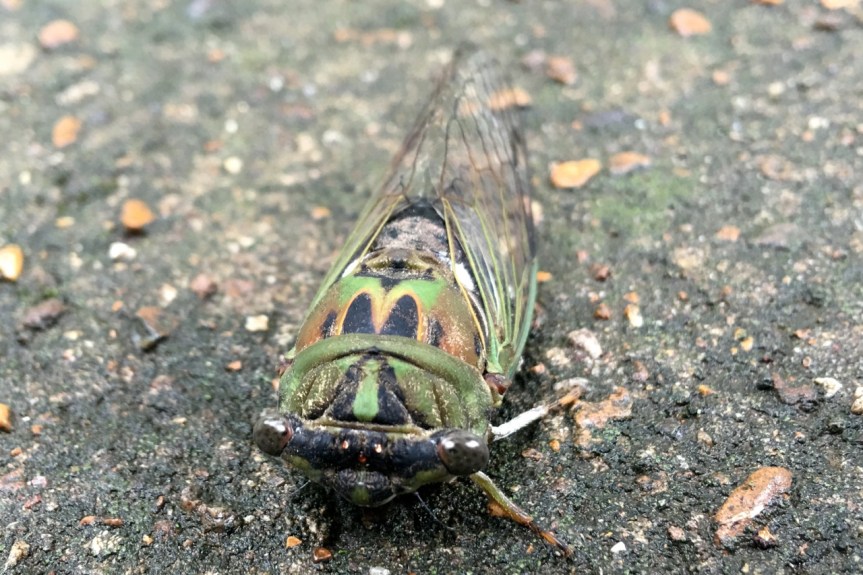
Please say the title of this post aloud as would Sir David Attenborough: with every “a” a long vowel. Cicahdah Drahmah. I can’t help but giggle when he hosts the periodical cicada segment of Planet Earth. Continue reading “Cicada Drama”
Category: Nashville
Parthenon Pawpaw
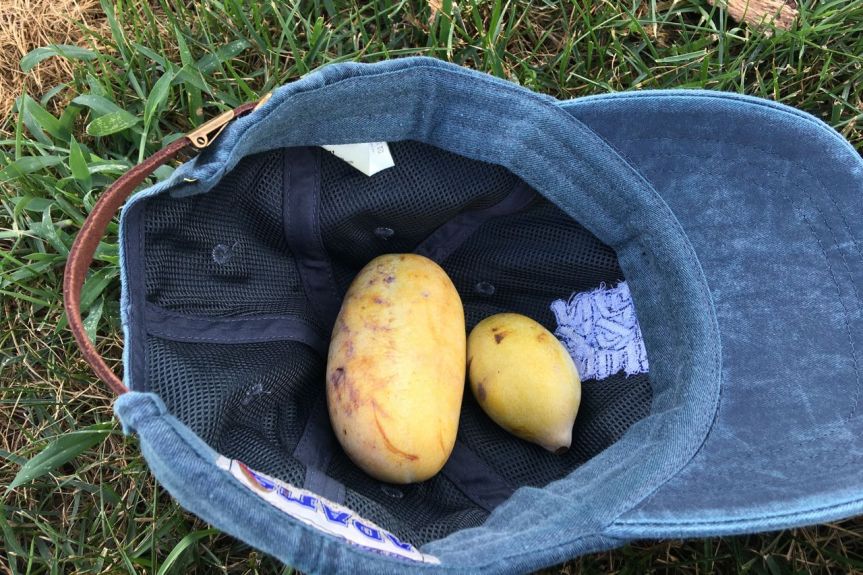
A windfall pawpaw yellow, overripe, and nibbled by ants is still a pawpaw. Continue reading “Parthenon Pawpaw”
Funnel Webs in the Yard

Morning mist advertises neighborhoods of webs I’d swear were not there yesterday. So wet and white, and so many: 23 just in the front strip of lawn between our porch and the driveway. Continue reading “Funnel Webs in the Yard”
Couchville Cedar Glade at Dawn
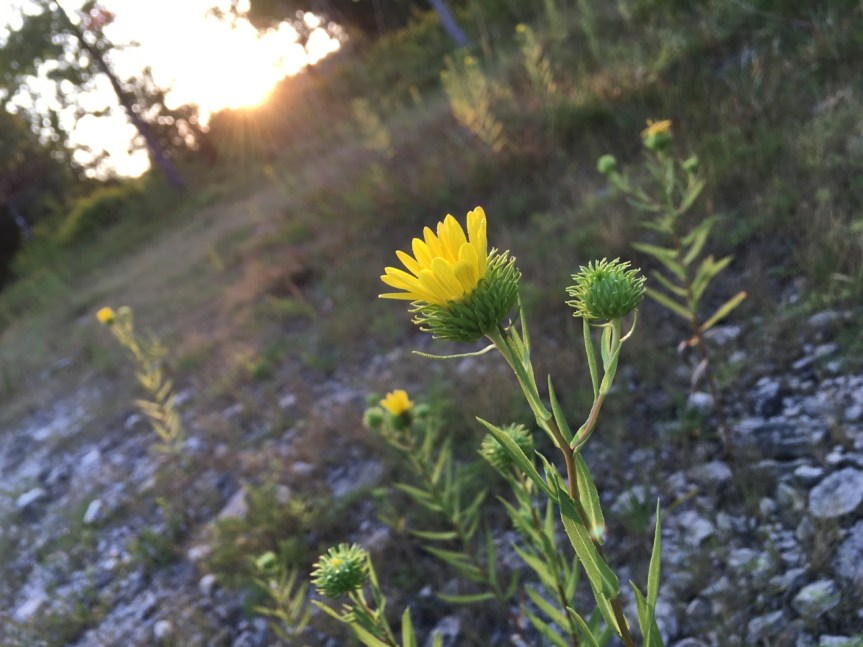
My first sunrise at Couchville Cedar Glade. Continue reading “Couchville Cedar Glade at Dawn”
Crepe Myrtle Confetti After a Storm

Last night’s quick storm left evidence, but mostly of the subtle kind. We didn’t have to leap over any downed hackberry trees on our morning dog-walk. We did step on confetti, and lots of it.
Crepe myrtle wins as leading indicator of subtle disturbance because blooms are at their peak, and the neighborhood—and the city, and the South—has plenty of crepe myrtle. The flowers are available to be ripped in quantities and spun where directed. Red, pink and white confetti line streets and sidewalks, and in more than one lawn lie atop as if sprinkled by a careful hand. Continue reading “Crepe Myrtle Confetti After a Storm”
Cicada, feather.

There’s a story here.
I think the feather came first: blown by wind, stuck by rain. Tufted titmouse is my guess from the grey, white and peach. Did it meet the feral cat I’ve seen slink past this very railing?
The annual cicada must have emerged last night when the rain softened packed yard dirt. It chose this spot to pop free from its old skin and try the new one with wings.
I hope the bird can still fly, too.
John and Hester Lane Cedar Glade (6/25/16)

Yesterday’s Division of Natural Areas hike was at a glade new to me: John and Hester Lane Cedar Glade. Look what happens to a cedar thicket after a managed burn:

I’ve never seen so many prairie coneflower (Ratibida pinnata) in one place.
How long had those seeds slept in shade till freed by fire? Continue reading “John and Hester Lane Cedar Glade (6/25/16)”
Driveway-Crack Flowers: true blue

This is my husband’s favorite driveway-crack flower because it is truly blue. Blue wildflowers usually lean toward violet or lavender or purple, but not this thing.
We’re talking Giotto fresco blue. Or Crayola crayon blue.
Continue reading “Driveway-Crack Flowers: true blue”Driveway-Crack Flowers: Venus’s Looking Glass

Before it’s gone, here’s another volunteer in the cracks of our driveway: Venus’s looking glass, Triodanis perfoliata. It’s in the bellflower family, and if it were a bell, it would tinkle rather than peal because the flowers are about the size of a fingernail (a fingernail that gardens and plays with Lego). And, it’s native. Continue reading “Driveway-Crack Flowers: Venus’s Looking Glass”
Catalpa flowers

Catalpas are in full bloom in Nashville. These are the big trees with leaves like giant hearts; with flowers like white, ruffled bells; and pretty soon, with dangling pods like green cigars. Hearts, bells, cigars. Catalpas bring out the similes. Continue reading “Catalpa flowers”
 SIDEWALK NATURE