This is it: the last few days with leaves still stuck on trees, so get outside if you can, no matter what the temps. Before the next breeze or freeze sweeps every leaf away, now is when to stare at your nearest favorite tree: the one at the mailbox or in the parking lot or beside the sidewalk or wherever. If you don’t have a favorite (yet), then the nearest tree will do.
Look at the bones, the branches: are they thick or thin, light or dark, rough or smooth, witchy or straight? Do they arch, do they weep, do they point down to the ground, out to the side, up to the sky?
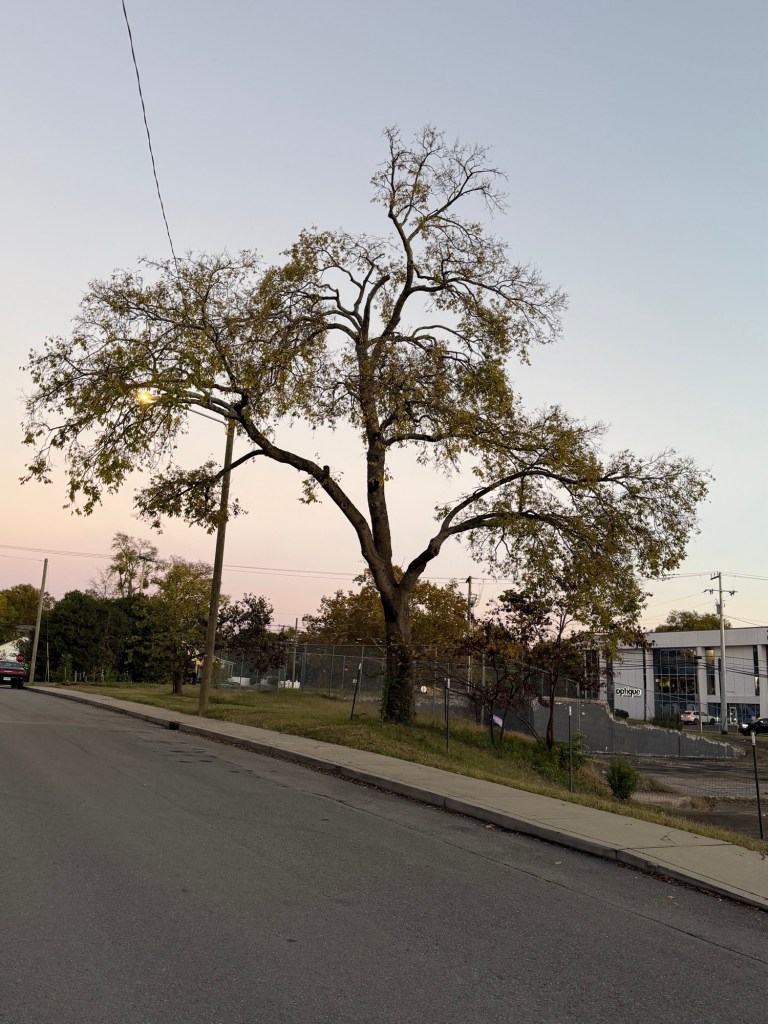
And then, no matter if you know the species, can you find a match? Another tree that looks the same? Same shape, silhouette, color, same leaves? This is one way to learn species, just by noticing what is similar.
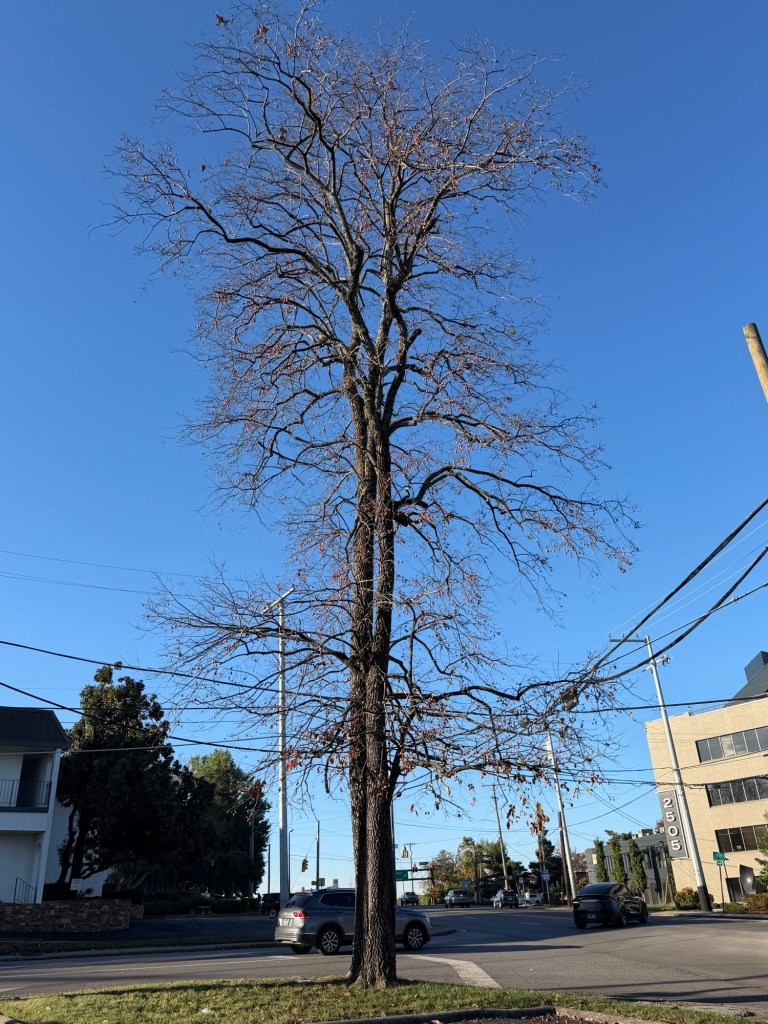
Once you’ve got a favorite tree, keep an eye on it. Those fat buds at the twig tips will be something to watch, come spring.
FROST FLOWER and GINKGO FORECASTS
More seasonal wonders not to be missed:
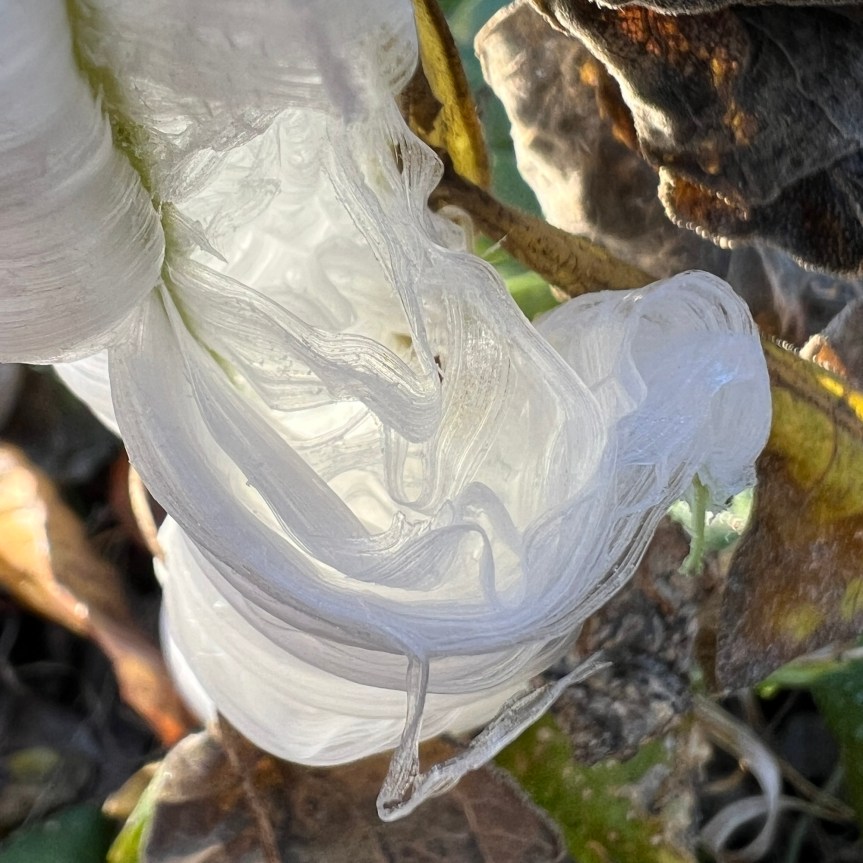
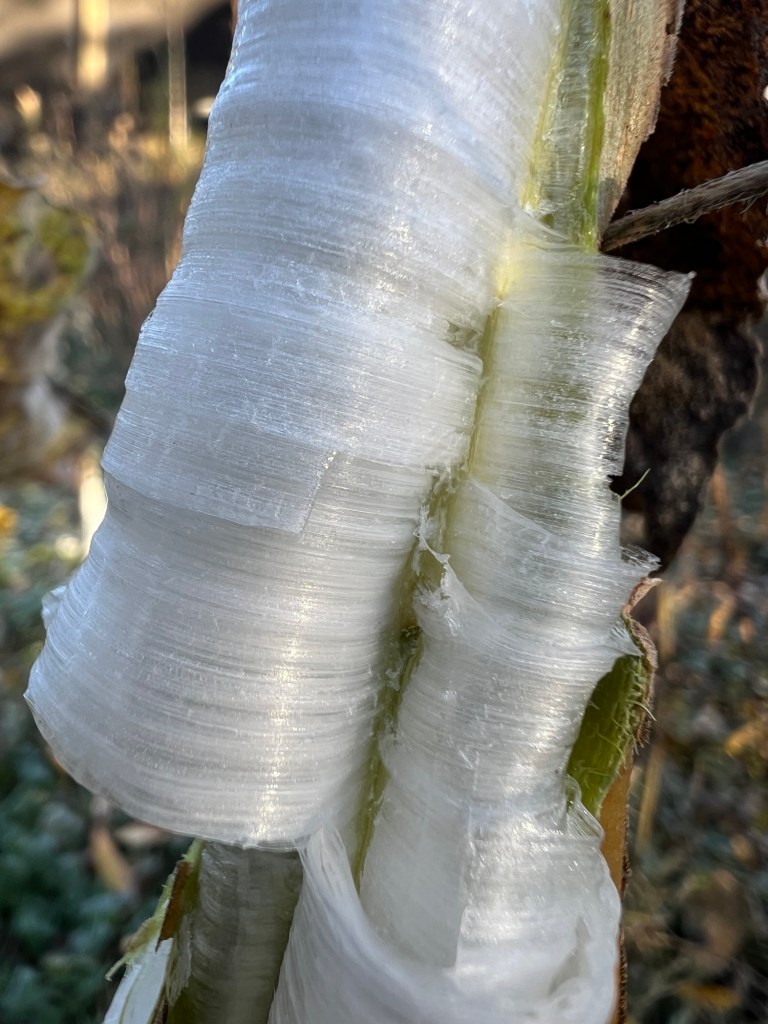
Watch for the first killing frost. Not a piddly, pucker-the-tomatoes chill, but our first hard freeze—the “Killing Frost”—where temps dip to 28 or below for a least a few hours. The next morning will be cold but magic. This is when frost flowers and ginkgo leaf-drop both happen.
Same day, different phenomenon. A frost flower is “ice segregation,” and ginkgo leaf-drop is “simultaneous abscission.”
But first, prepare. Find your nearest frostweed. You’ll need to know exactly where to run on the morning after the Killing Frost *before* morning sun heats ice flowers back into water.
Note that frost flowers can re-form when conditions are right, so if you miss the first batch, you can get a do-over.
Ginkgo Leaf-Drop
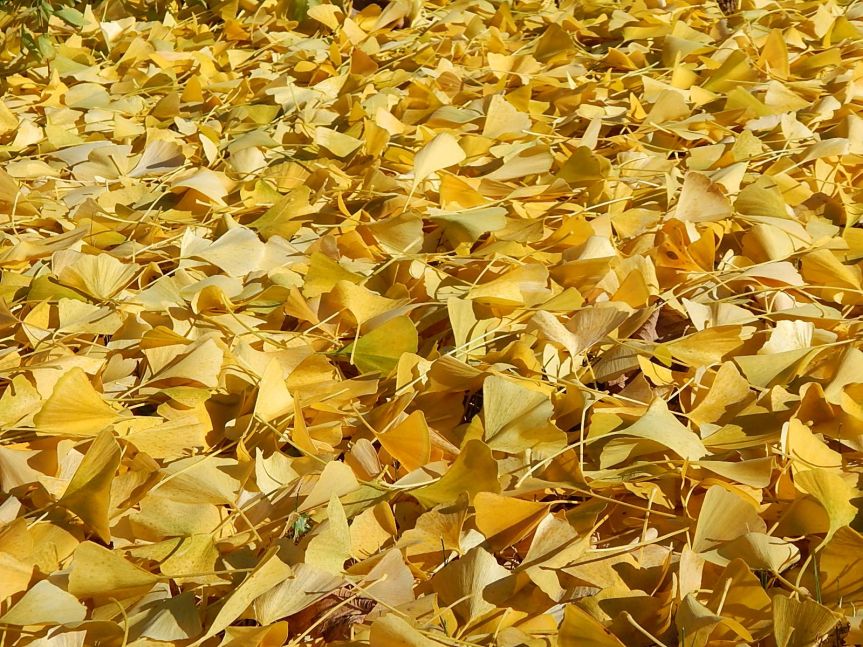
Then, find your nearest ginkgo. Nashville does not need more ginkgo trees—they can’t make butterflies or feed birds or contribute to our food web—but we humans can admire the beauty of the ones we’ve already got. Some are still green, some are gold, but either way, they’ll drop every leaf on the morning after the Killing Frost.
And you gotta see it.
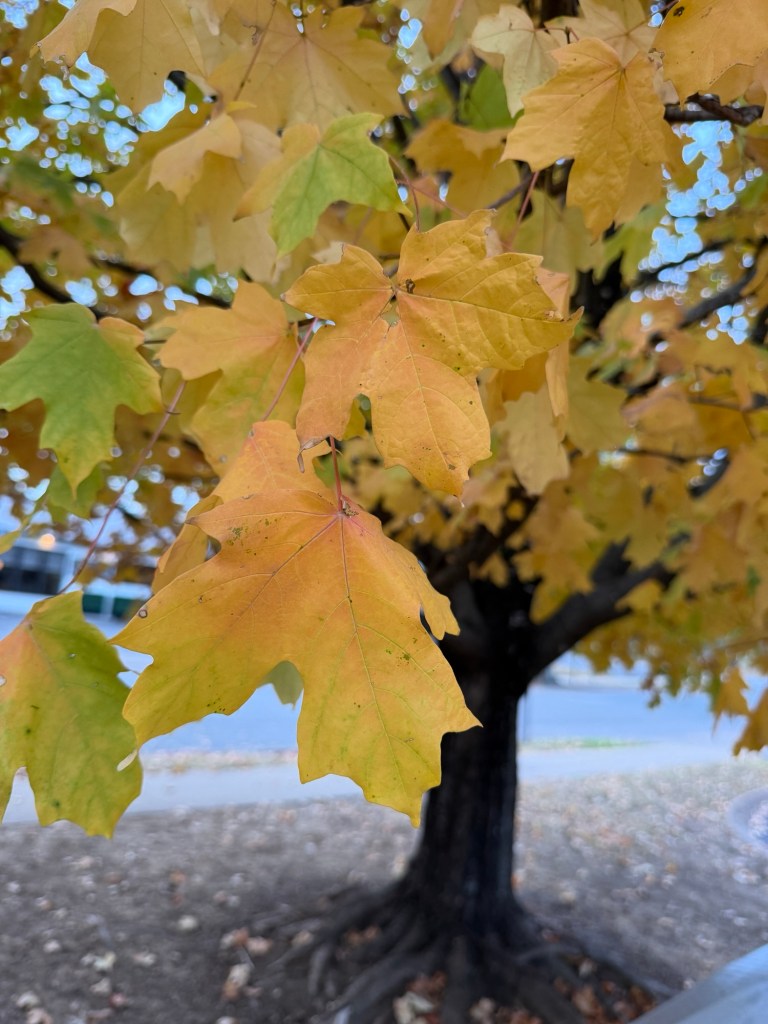
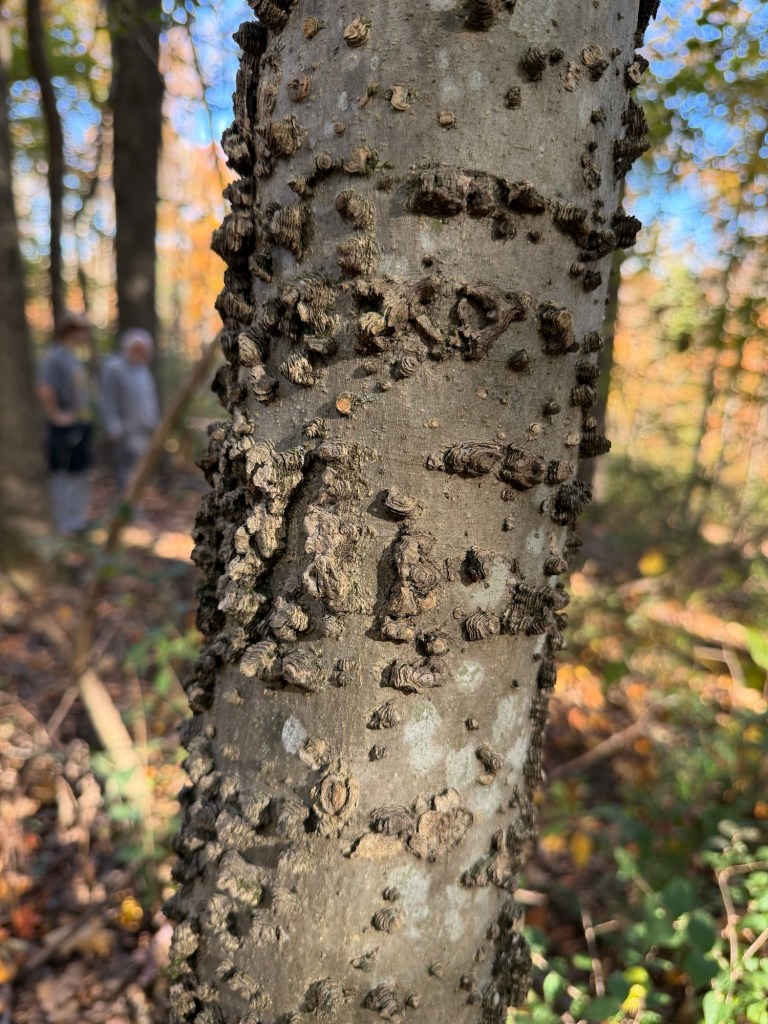
Tree pictured, from the top:
Sugar maple / Acer saccharum (see how the bark can look wet and dark against the peachy-orange glow of the leaves?)
Sugarberry / Celtis laevigata (with fabulous, corky warts, so diagnostic!)
Sugarberry again because I am obsessed (long, thick, spreading limbs, almost as graceful as elm, but a wee bit witchy)
Persimmon / Diospyros virginiana (straight-up trunk with crooked branches, alligator bark, and right now–if it’s a female, like this one–delicious fruit!)
Links:
-For info about the what and how of frost flowers, see this older SidewalkNature post, here.
-There’s a “Frost Flowers” excerpt from This is How a Robin Drinks published in Vanderbilt Magazine: link.
More
SidewalkNature:
-Subscribe to Sidewalk Nature to get an email when I update. I never share your info.
-Follow on Instagram or Facebook, where posts are 100% nature.
SUBSCRIBE
-Comment or question? Click Contact.
-Corrections, suggestions, new friends always welcome.
Bio:
Joanna Brichetto is a naturalist and writer in Nashville. Her book, This is How a Robin Drinks: Essays on Urban Nature, is an almanac of 52 true stories about the world “under our feet, over our heads, and beside us; the very places we need to know first.” Called “Nashville’s Sidewalk Naturalist,” Jo hopes to meet all her plant and animal neighbors, and to help human neighbors add native habitat where we live, work, and play.
She’s at work on her second book, “Hackberry Appreciation Society,” and you can find her at SidewalkNature.com (“Everyday wonders in everyday habitat loss”) and on Instagram @Jo_Brichetto.