
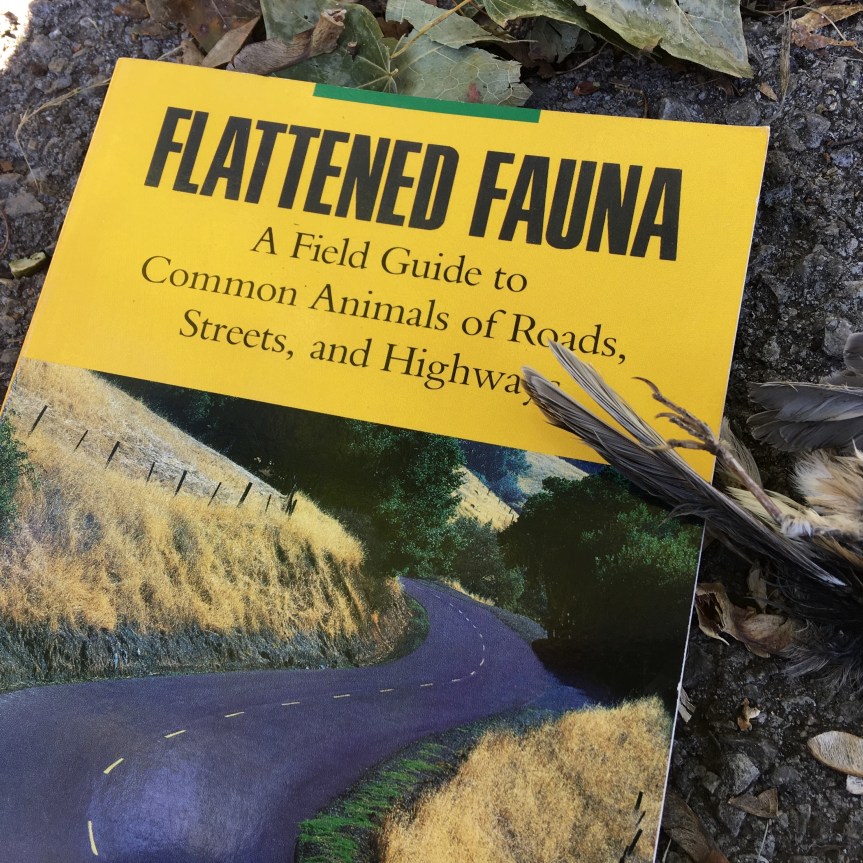
“The fall of a sparrow,” so I’ve heard, does not go unnoticed. Or in this case, the “smooshing of a sparrow” in the grille of a Toyota. Continue reading “Sidewalk Nature: Fall of a Sparrow”
“The fall of a sparrow,” so I’ve heard, does not go unnoticed. Or in this case, the “smooshing of a sparrow” in the grille of a Toyota. Continue reading “Sidewalk Nature: Fall of a Sparrow”
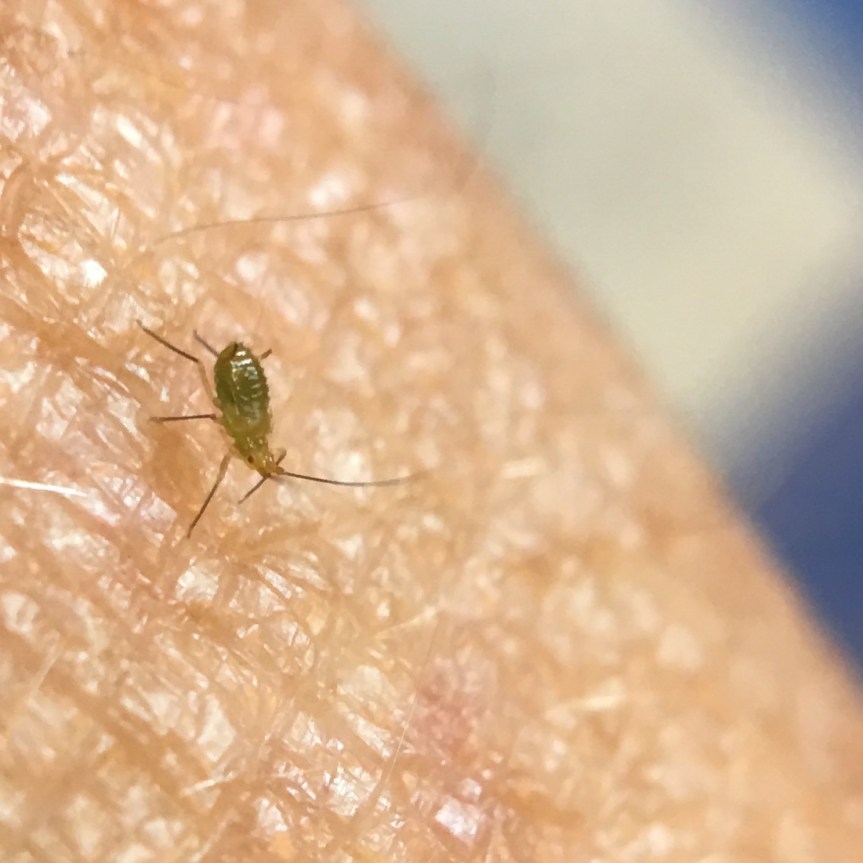
On the very day I learn about an aphid’s “twin tailpipes (cornicles) at the rear of the insect,” an aphid appears in my kitchen and shows me twin tailpipes. See here on my arm? 6 legs, 2 antennae, and then the 2 dealies poking out the back? Cornicles. Continue reading “Sidewalk Nature: Aphid Alarms”

“Bottlebrush buckeye!” I yelled on the sidewalk, but not super loud, so I wouldn’t embarrass the middle-schooler with me.
“Hmm,” said the middle-schooler. “I thought it was a ball in a sack.”
We were both right. All buckeye seeds hang in a ball in a sack. Continue reading “Sidewalk Nature: Bottlebrush Buckeye”
Sidewalk Nature: Wild black cherries are ripe! Prunus serotina.
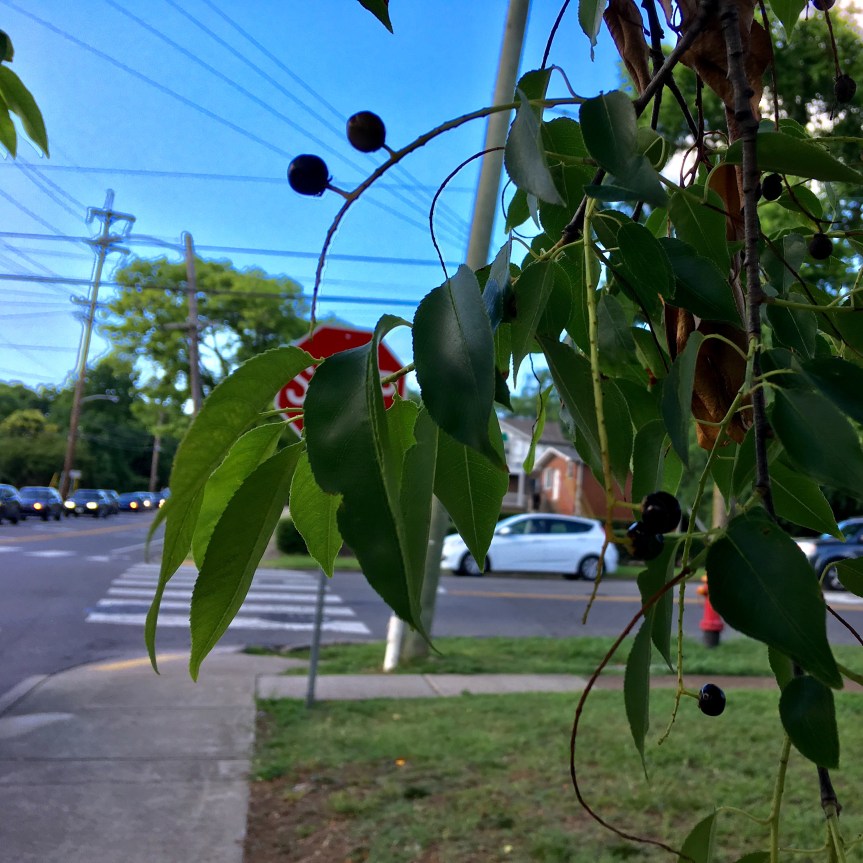
We need more native black cherry trees, so come chew a few drupes and plant the pits? Continue reading “Sidewalk Nature: Black Cherry”
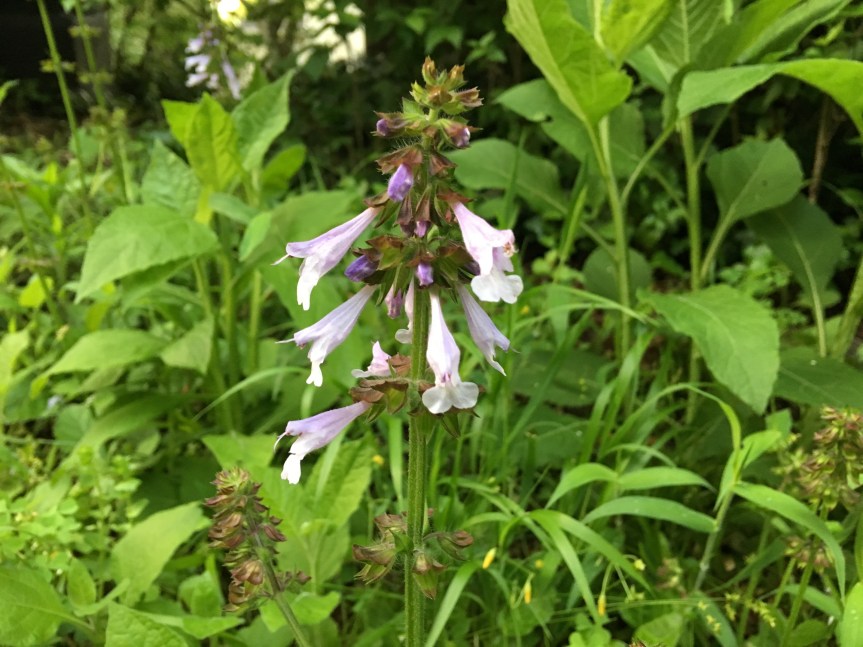
Lyre-leaf sage. Isn’t it a pretty name? And a pretty flower? But this is another of those “weeds” people poison and mow and pluck out of precious lawn grass. Lyre-leaf sage is native, it spreads by seed, it can make a lovely groundcover (a good native alternative to Ajuga / Bugle), and I just this minute learned it is an excellent nectar plant for hummingbirds. Continue reading “Sidewalk Nature: Hummingbird weeds”
Here’s my article from our neighborhood newsletter.
In it, I share what I’m trying at home
with my:
Our kid is sick, I’m stuck at home, and it’s too cold and wet to sit in the yard. But, I have been able to get out for two neighborhood walks.
Here is my report for Earth Day:
Saw confirmation the Osage Orange tree we drive past every day is a boy. I’m still learning the gender spectrum of tree species: some are male, some are female, some are both. Some have “perfect” flowers with male and female bits, and some trees can surprise you with twigs that morph into one or the other. Osage Orange trees are dioecious: either male or female (usually), and now I know not to expect fruit from this particular specimen. These flowers are male:

Here’s a few seconds of rain tapping hundreds of umbrellas. Mayapples (Podophyllum peltatum) were one of my first wildflowers, and are still a favorite. The fat, green parasols have a cartoony cuteness, as if the Lorax grew spring ephemerals under his Truffula trees. Continue reading “Park Nature: Early April”
Got this envelope in the mailbox today:

It reads: “Address lawn threats now. Love your lawn this summer” Continue reading “When lawncare means poison”
An experiment to see if I can round-up my recent Insta posts and organize them here . . . Continue reading “Insta nature”

