Dashboard Nature: Car Spider

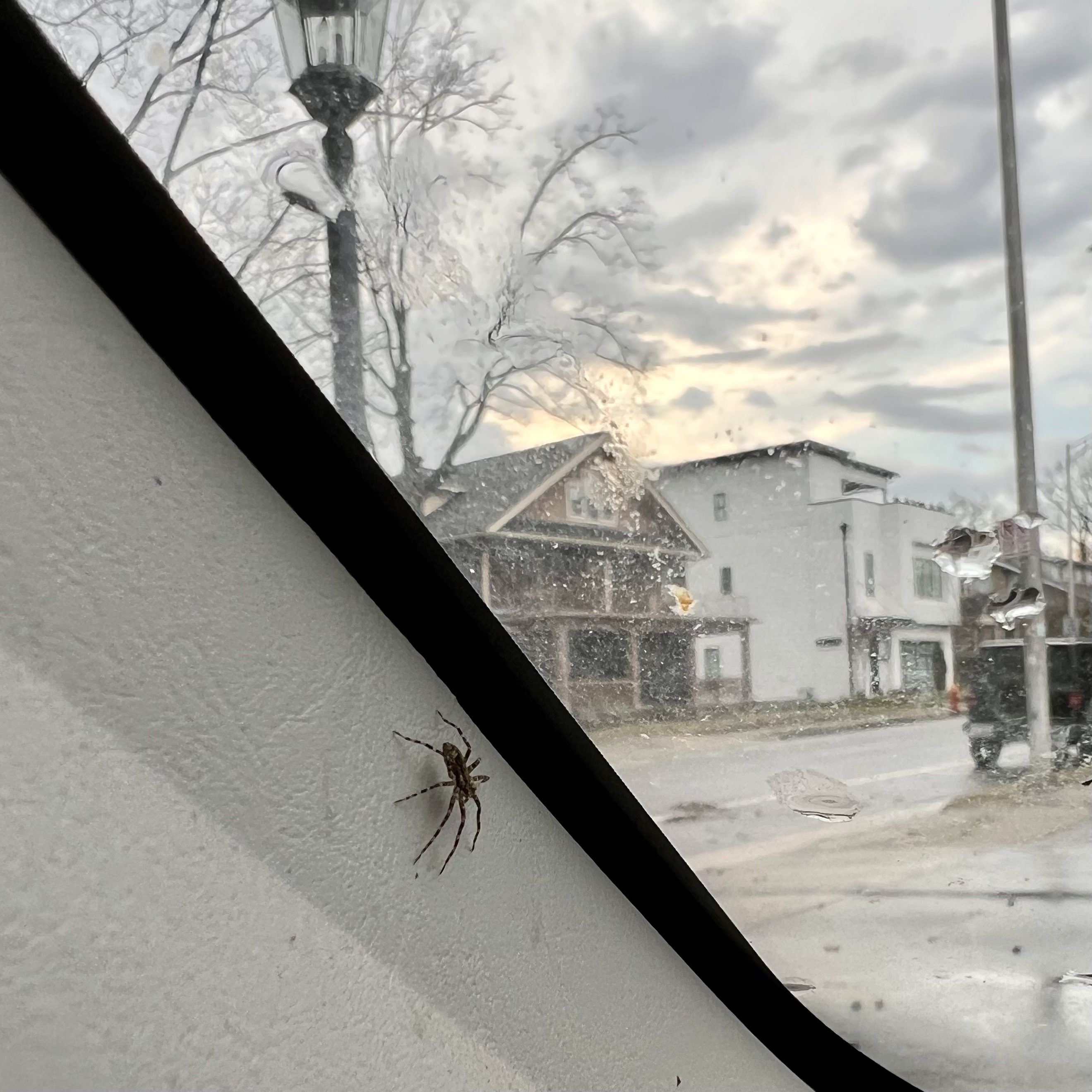
Today’s Dashboard Nature: the spider who lives in my car.

Funnel spider or Wolf spider?  Either way, it dashes in and out of the windshield gasket as I drive. 

“HELLO!” “GOODBYE!” “HELLO!” “GOODBYE!” etc, super-fast.
All the way to school, every day this week.

Today, it stood perfectly still through a red light at Music Row, which led me to imagine I had a chance to catch it. I pulled the car over, but my Spider Tupperware lives in the kitchen, not my car, and all I had on hand was yesterday’s teabag. Luckily, the bag was a nice, roomy pyramid which, I’ve just learned, can be pressed into a dome the perfect size to trap but not squish a car spider. 

But, if it’s a Wolf spider, all 8 eyes saw me coming, and if it’s a Funnel spider, all 8 eyes (in a different arrangement) saw me coming;
so the spider said “GOODBYE!” before my teabag got halfway there.

There were no more HELLOS! all the way home.

Continue reading “Dashboard Nature: Car Spider”

Swarm Weather

“Are you home now??” texted my neighbor. ”I think there’s hundreds or thousands of bees making a nest in our pine tree as we speak. It’s crazy!!”

To me, it wasn’t crazy: it was perfect. Two friends had already witnessed this very thing in their yards recently, and I was jealous.
So I texted back: “It’s swarm time!”

By the time I got to my neighbor’s yard, all the bees had gathered in one spot, AS one spot: one big blob of buzzing, crawling, and flying creatures, at about 30 feet up the tree. They looked like a giant dollop of bubbling goo about to drip from a branch. 

A honeybee swarm!

I am grateful my neighbor knew what to do: call me,
and I am grateful I knew what to tell her: call a swarm-catcher.

Continue reading “Swarm Weather”

The Sycamore Squeeze

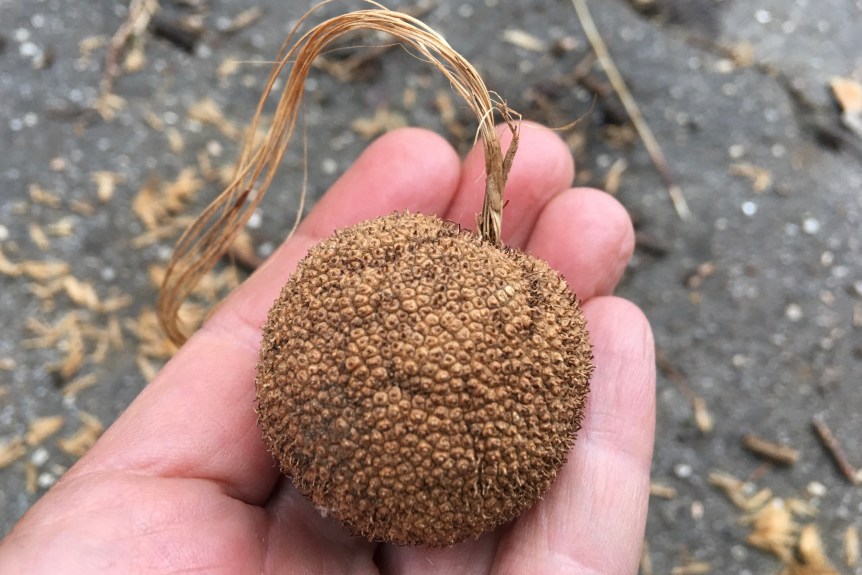
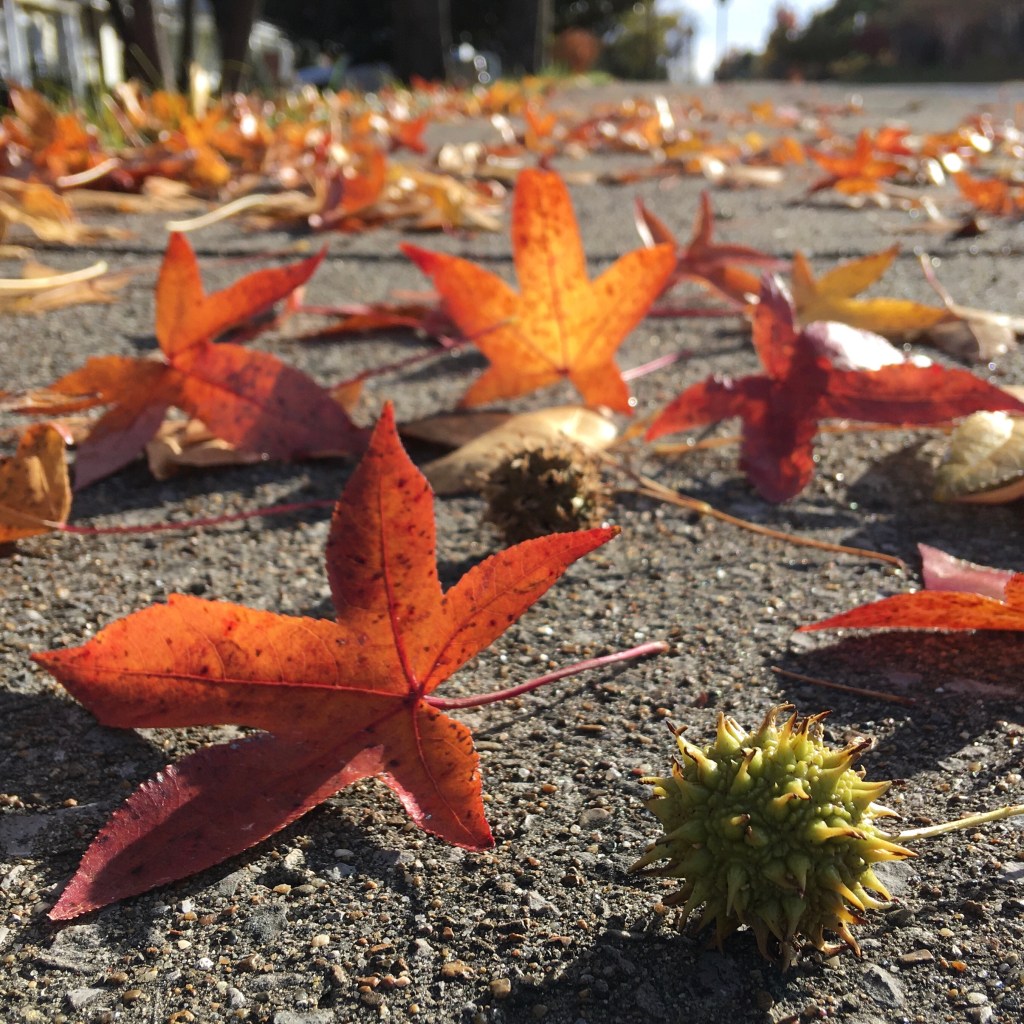
To squeeze a Sycamore ball is a seasonal pleasure, and the season is now.
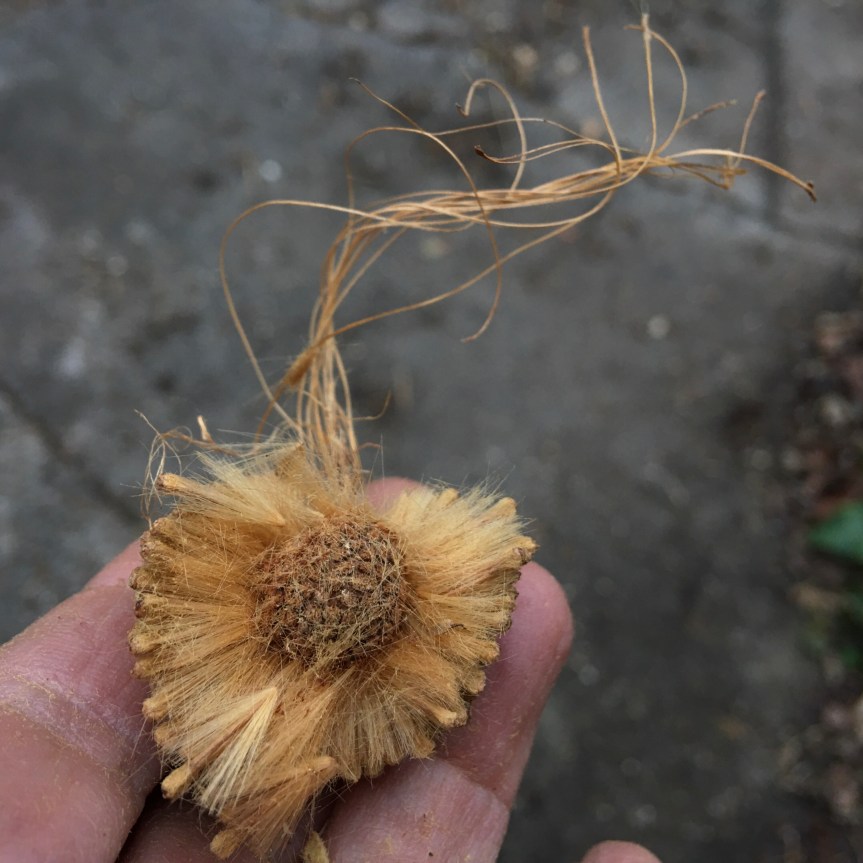
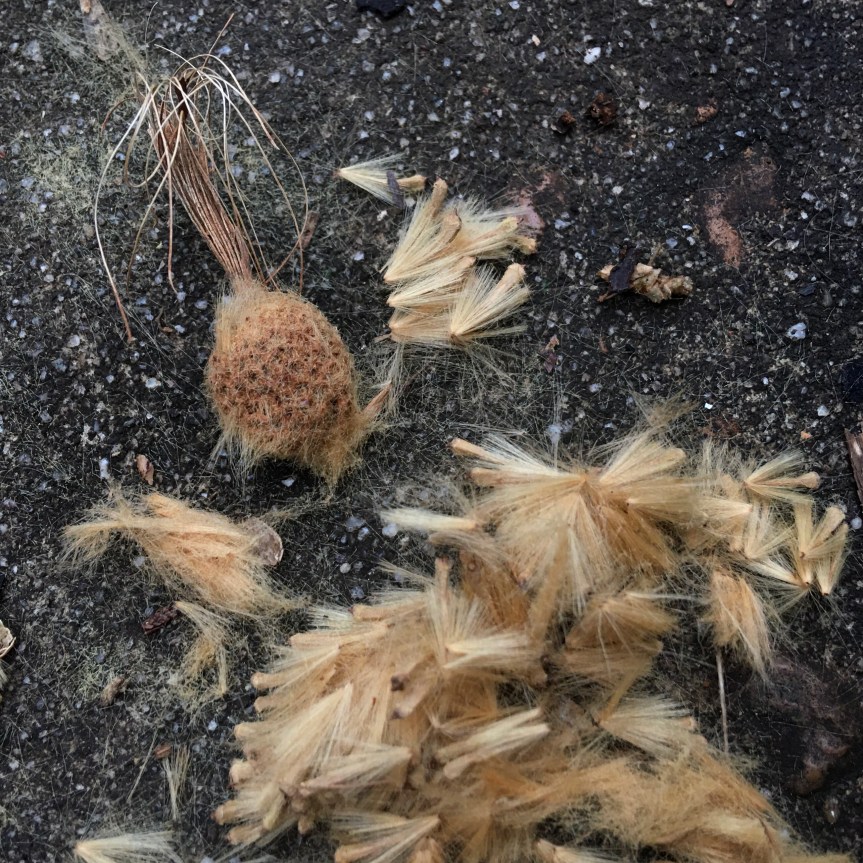
Now is when last year’s clusters of Sycamore seeds start to fall and to fall apart.
For the next few weeks, they’ll disintegrate into drifting piles of loose, fluffy achenes: Sycamore “snow.”

To squeeze a Sycamore seed-ball is oddly satisfying.
Call it a Contemplative Practice.
Call it fun or sick or weird, but try it.

The Sycamore Squeeze is one way to get to know Where—and When—you are.

Continue reading “The Sycamore Squeeze”

Winter Tree I.D. by Fruit

Here’s one way to I.D. a tree in winter.
Let’s call it “Ye shall know them by their fruits.”1

I made this dry-erase Key to help a couple of friends in the neighborhood who want to learn nearby trees.

It won’t work for all trees, but it’s decent for local, deciduous street trees that still have fruit on branches or on the sidewalk. 

Continue reading “Winter Tree I.D. by Fruit”

Yard Nature: Free Chives

[Bagel from Bruegger’s, china from Spode, “wild chives” from the Mayflower]

I grew up eating what Mom called wild onion. It showed up in the yard as free food. The long, hollow leaves were good to chew, as were the bulbs, but those were too intense to eat raw unless cheese and crackers were involved.

Continue reading “Yard Nature: Free Chives”

How Your Tree Helps Wildlife in Winter

Sugar Maple leaves with pupa; Persimmon; Oak leaf with gall; Red oak acorns

“Wondering how trees help birds and wildlife survive a Nashville winter?”

That’s the first sentence in my short piece at The Nashville Tree Conservation Corps, called “How Your Tree Helps Wildlife in Winter.” My goal was to highlight “essential services” that only native trees can give to our birds, butterflies, and other animal neighbors.

Even if you already know the answers, take a look? Are there other stories I should have included in the allotted word count? We all want readers to fall in love with what native trees can do.

Continue reading “How Your Tree Helps Wildlife in Winter”

Forbidden Fruit (the Sidewalk Fig story)

“Pick me!” says the fig hanging over the street.

Every morning, I resist the temptation to pluck a fig from a sidewalk tree. I walk before dawn, but the plump silhouette is clear against the brightening sky. 

“Pick meee!”

I’ve watched this fig grow from the size of a chocolate chip to the size of a . . . fig. There are dozens on offer: stem-down, bottoms-up candy for strangers. But I keep walking. Someone might be looking out a window.

Continue reading “Forbidden Fruit (the Sidewalk Fig story)”

June Bug Day, Upside-Down

Today was a different kind of June Bug Day: an upside-down kind.
Instead of glossy, green grownups flying over grass, these June beetles are weird, white grubs crawling over streets.
But the weirdest thing is how they crawl. Despite having six serviceable little legs, these larvae travel on their backs, upside down.

“Crawl” is too weak a word. Squoonch is better. The grubs squoonch, undulate, and wriggle forward while their feet point at the sky.
The sky, meanwhile, is raining, which is why these teenagers leave their underground homes to squoonch somewhere less wet. 

How do they do it?
With “ambulatory bristles.”
Isn’t that a wonderful phrase?
Stiff hairs on the outside, plus strong muscles on the inside get the grubs where they wish to go. 

But why do they do it?
Why not walk on . . . ambulatory legs?
No other grubs choose bristles over feet. 

Please click the Play symbol to watch 5 seconds of Squoonching:

Continue reading “June Bug Day, Upside-Down”

Fishing for Skink

I found the first skink hanging by his tail, twisting and paddling an inch above the floor. He was caught in a spiderweb underneath a chair, and he was just a baby.

Two days later, I found another baby skink under another chair. This one was still ambulatory but slow, with legs and tail wrapped in fluffs of webbing.
Both chairs sit inside my screened porch: where spiders are expected, but where skinks are not.

Skink #1, I thought, was a fluke.
But after skink #2, I started looking in earnest for ways to prevent a skink #3.
Because—and let me paraphrase a line from The Importance of Being Earnest:

To lose one skink to a spiderweb is unfortunate: to lose two looks like carelessness.

So, I took care.

Continue reading “Fishing for Skink”