Below, I’m listing local events where I plant to speak or share or both. The first one is this Saturday (Sept 27) at the Hendersonville Public Library.
But first, an update from this month’s Native Nature Share:

Below, I’m listing local events where I plant to speak or share or both. The first one is this Saturday (Sept 27) at the Hendersonville Public Library.
But first, an update from this month’s Native Nature Share:
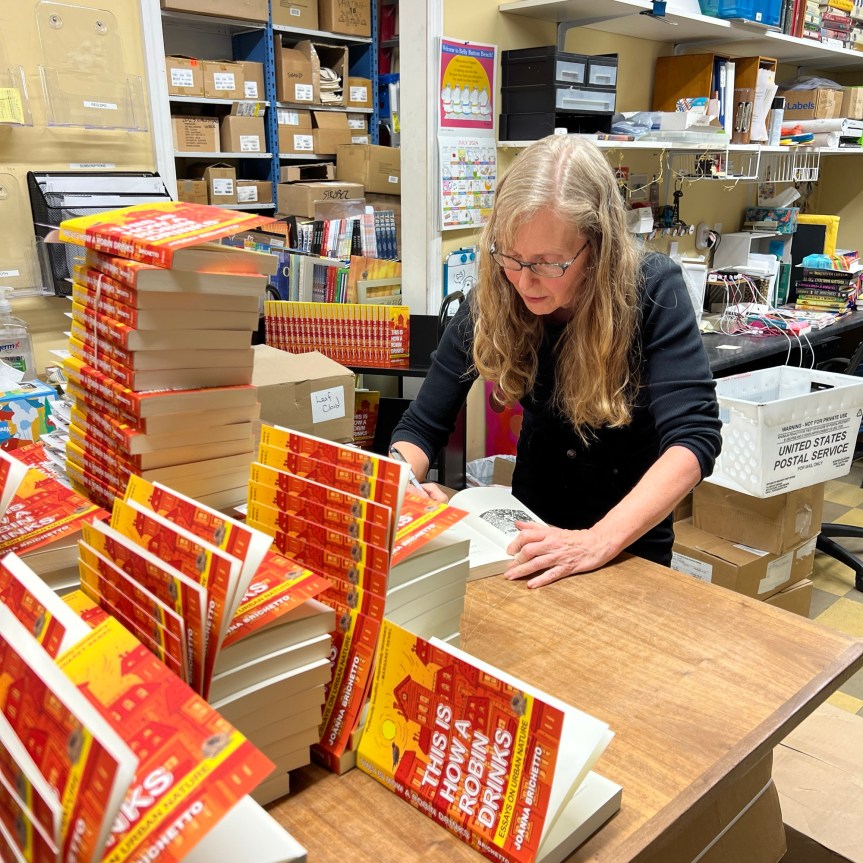
I wrote my first book in Kindergarten. It was about an ant:

This is How a Robin Drinks: Essays on Urban Nature is my second book, and it is finally real.
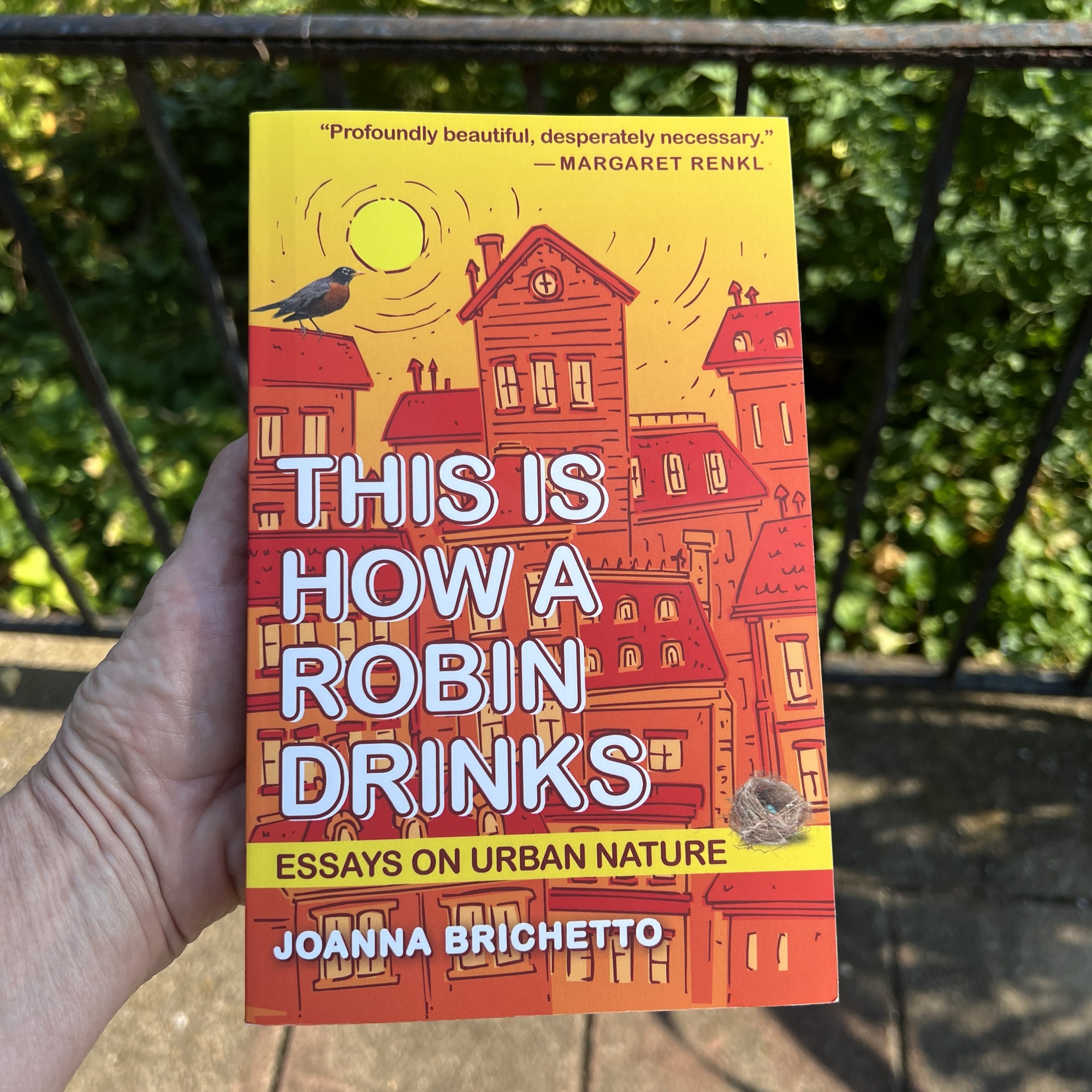
The advance praise is gobsmackingly wonderful, so I’ve made a page for what Margaret Renkl, Doug Tallamy, David George Haskell, Georgeann Eubanks, Erika Howsare, Michael Sims, and The Humane Gardener, Nancy Lawson took the trouble to say, along with some reviews so far. Here’s that page: link.
One review made me glad I read it alone in the kitchen, so I could clutch the countertop and have a proper, joyful, and very ugly cry.
Photos of the *Book Launch* at Parnassus Books with Margaret Renkl are below, but first, a request:
Continue reading “Book: This is How a Robin Drinks (an invitation, and recap of Launch)”A roundup of quick Sidewalk Nature updates: one warning and three wonders.

Kwanzan cherry trees don’t feed pollinators or birds. They look great two weeks of the year but they don’t support our foodweb. Prunus serrulata ‘Kwanzan’ / ‘Kanzan.’
My concern is that when people have room to plant one tree, this is the one they’ll want. It is cultivated for pretty, and pretty it is, but it doesn’t have nectar, doesn’t make fruit, and as a nonnative congener, its leaves support only a fraction of the Lepidoptera species a native Prunus / cherry can.
But at the Cherry Blossom Festival this month, festival-goers can walk away with a free Kwanzan cherry tree from the Nashville Tree Foundation.
Continue reading “First Week of April: Trees”As fall drifts toward winter, nature doesn’t slow down, not really. Amazing things happen all around us, all the time. This site’s tagline: “Everyday wonders in everyday habitat loss” includes not just “natural” areas, but our own yards, trash alleys, parking lots, roadsides. For example, our Secret Sidewalk …

The Secret Sidewalk is a shortcut through 3 neighborhood blocks, but rather than running along a street, it runs between homes. It’s a 5-foot-wide Metro right-of-way flanked by property lines, and it feels intimate, despite crossing four roads, and despite tall privacy fences. It takes walkers past a mix of cultivated and wild. Exotics, natives, volunteers, invasives: all here. Signs of the season change daily.
Continue reading “Secret Sidewalk: eight late-November wonders”
Dead Southern Magnolia leaves are as much a sign of spring as are the big, white bowls in bloom above them right now. Continue reading “Southern Magnolia (shed cycle)”
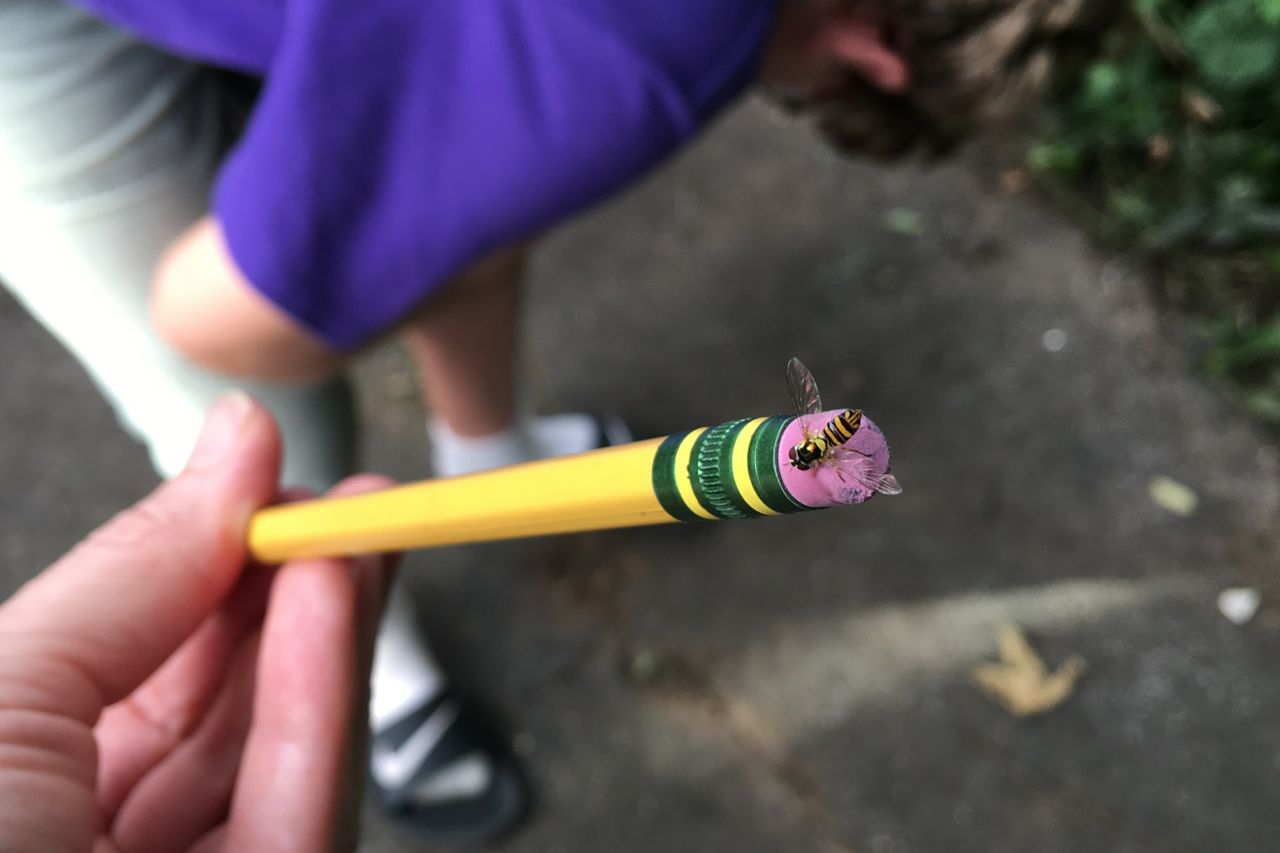
Here’s a “driveway moment,” but not the National Public Radio kind:*
After hovering around our faces for a comically long time, this little hoverfly decided the most attractive thing in the driveway was the eraser of a new Ticonderoga pencil. It hugged the pink tip while we examined it (such big eyes you have!), while we took photos, while we passed it between us, and even after we had to set the pencil on a rock because our hands had gotten tired.
Continue reading “Driveway Hoverfly”
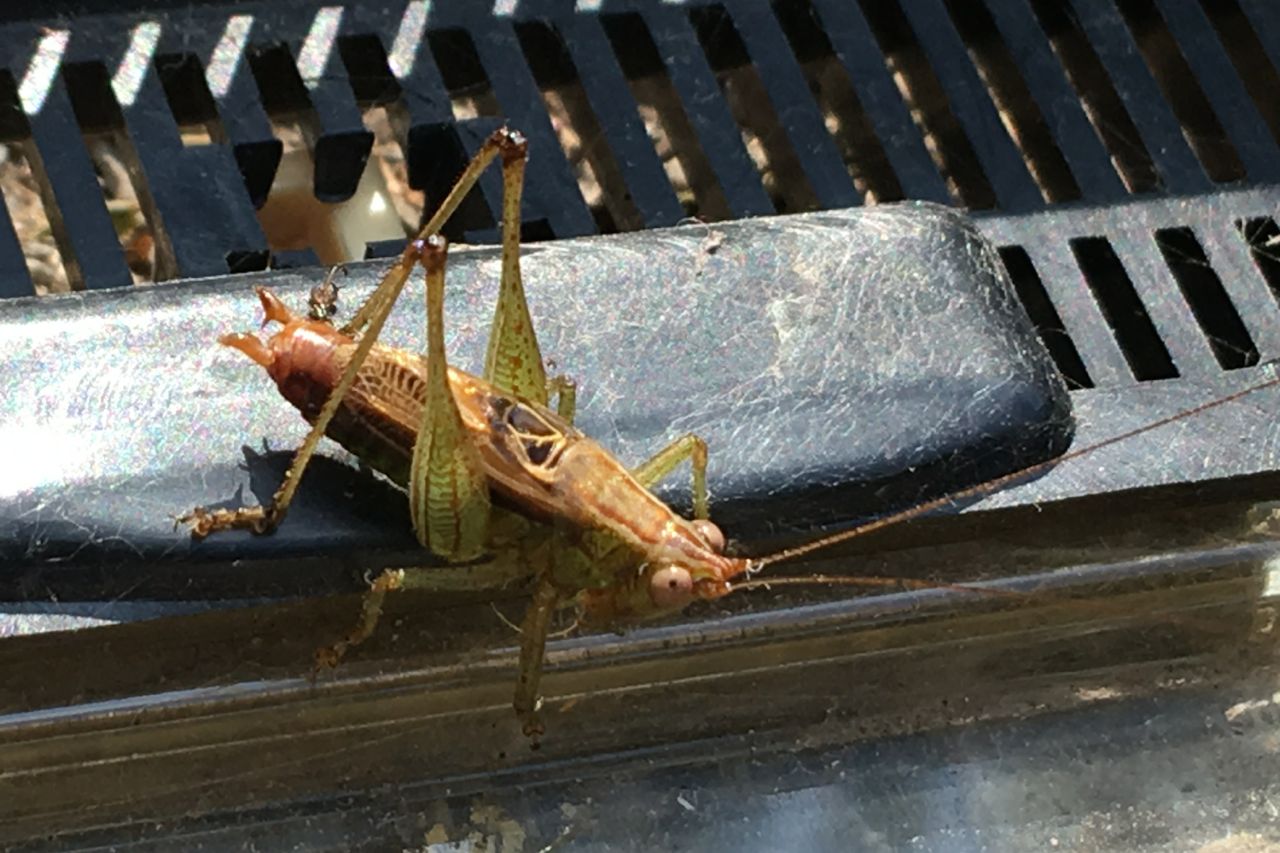
I grew up thinking there was one kind of katydid: the big green jobs that sang their name at night. But apparently, there are oodles. We found this one, a Meadow Katydid (Conocephalis nemoralis?), lounging under the passionvine in the driveway. It didn’t seem to mind being borrowed for observation. It groomed itself nonstop in the cage, flicked its crazy-long antennae like an fly-fisher casting for trout, and sort of murmured. Continue reading “Meadow Katydid (in the driveway)”

“It’ll take over,” our neighbor warned, followed by: “I cannot believe you planted Perilla.” But, I didn’t plant Perilla. Perilla just happens. This was years ago, and the first time I’d heard the name. Until then, I only knew it as the maroon thing that fluffed in every flower bed (and pot and driveway crack) if allowed, and that the leaves looked like basil but smelled like licorice.
Continue reading “Driveway-Crack Flowers: Perilla”
Found this lone lacewing egg on a passionvine leaf I picked for our Gulf Fritillary caterpillars. The eggs are exquisite: teeny TicTacs on hair-like stalks, usually laid in a row with spaces between (to prevent cannibalism amongst siblings). Continue reading “Lacewing egg”
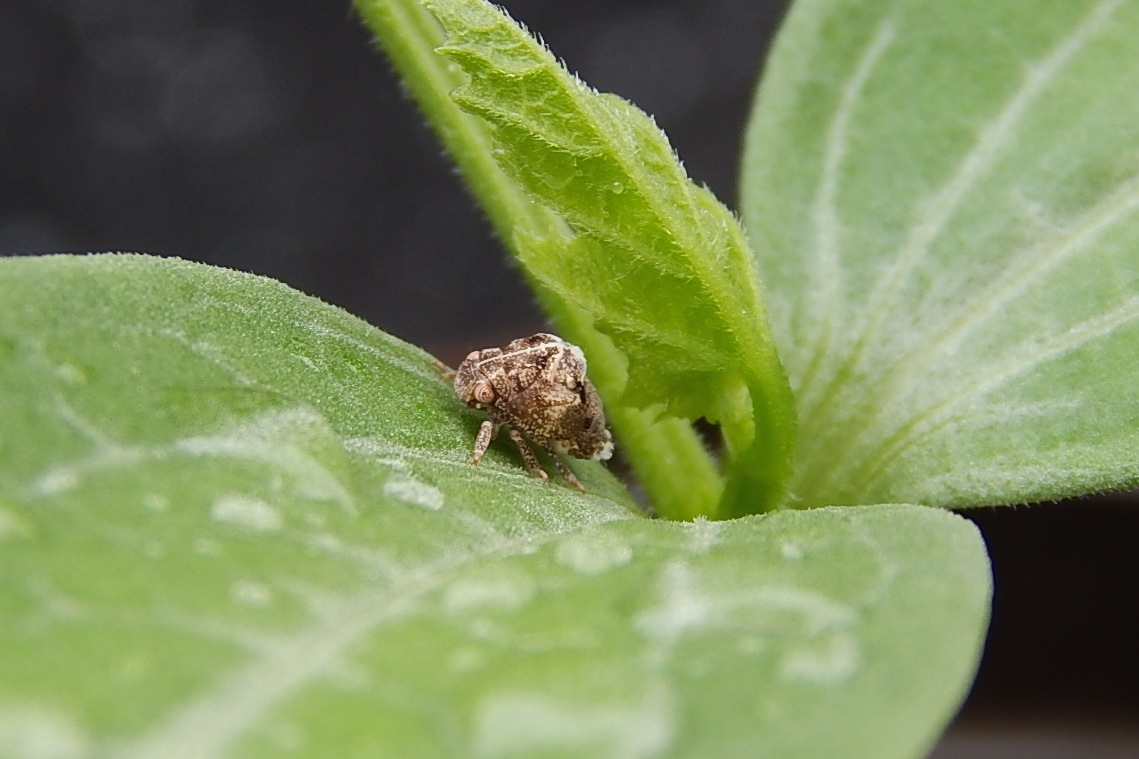 It looked like a tiny pebble, there on a leaf of my loofa gourd seedling. But it had the conical eyes of a gecko, and a smidge of white fluff coming out its rear. How could I not stop everything to figure out what it was? Continue reading “Planthopper nymph”
 SIDEWALK NATURE