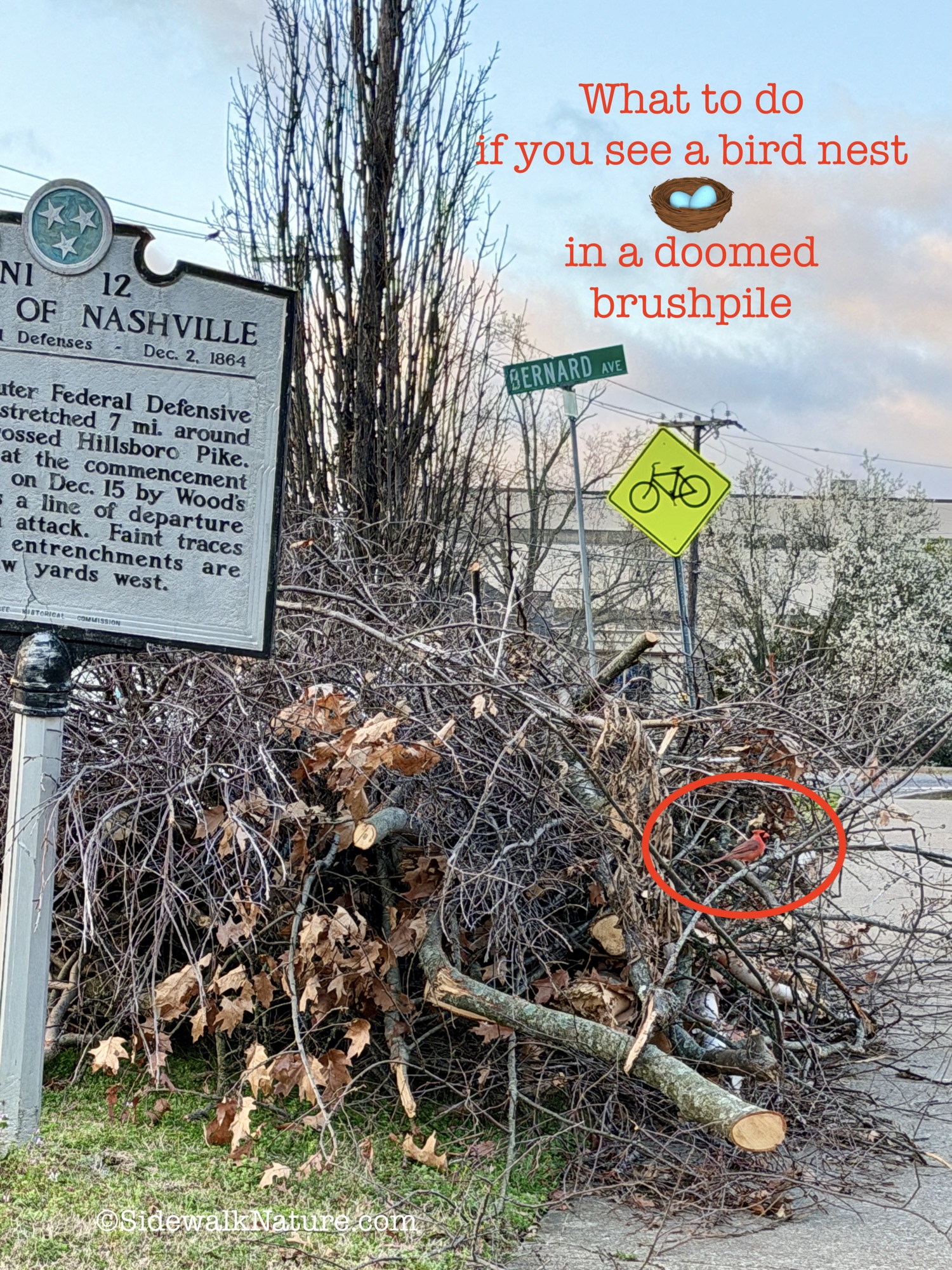
Today’s Sidewalk Nature: tree debris at curb + breeding season = bad news for birds.
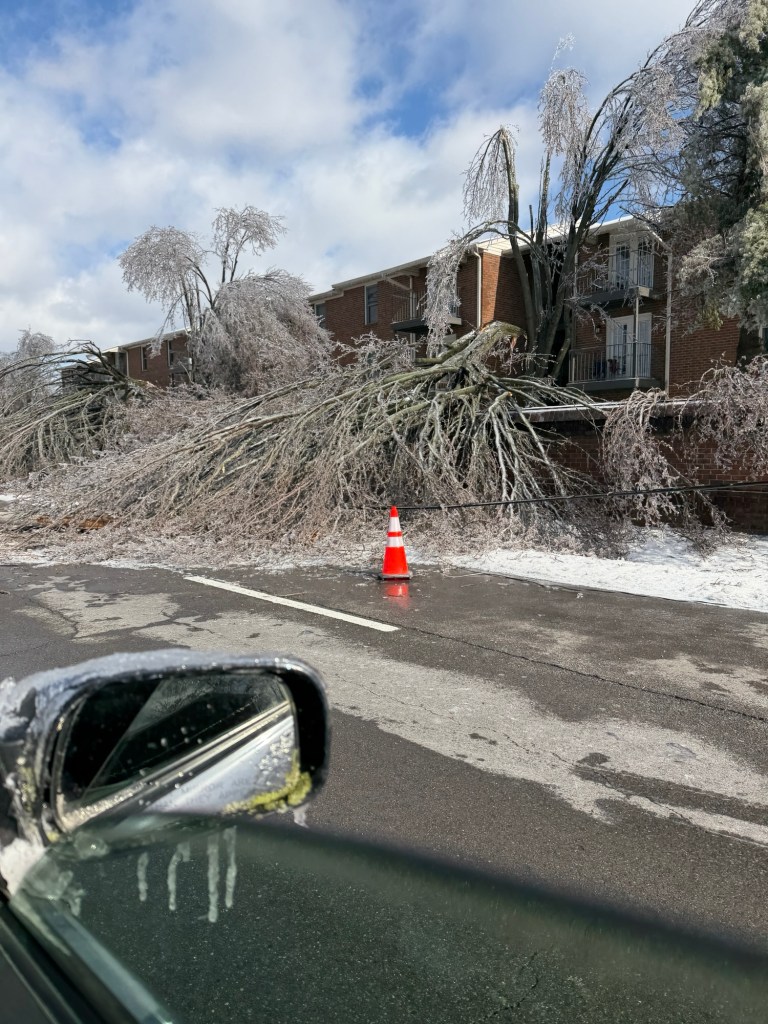
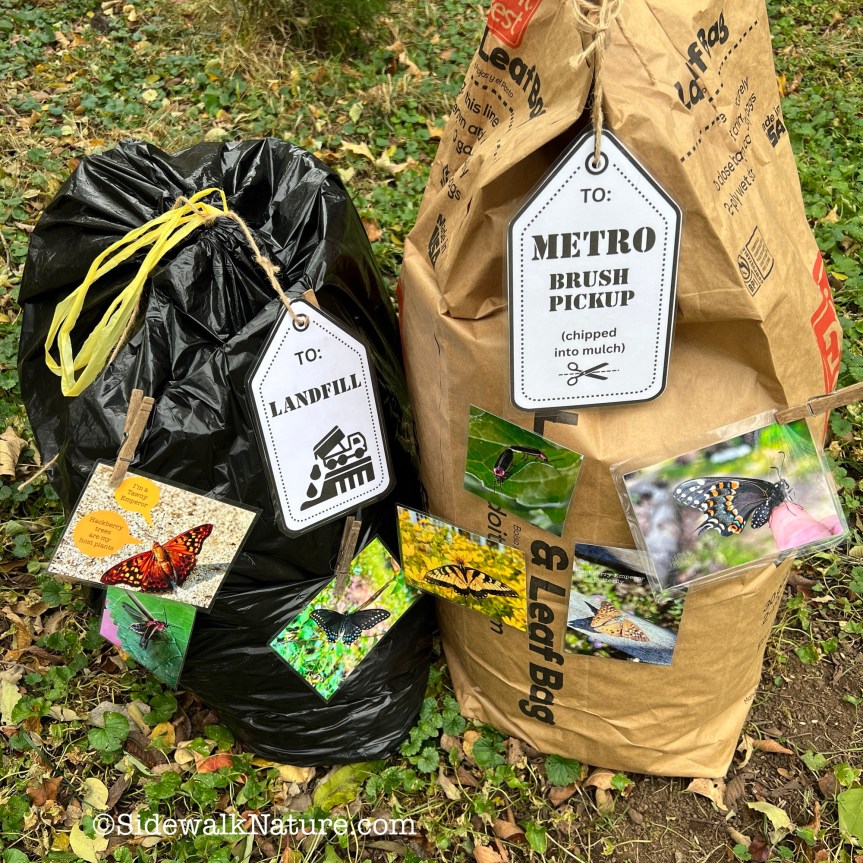
At first, I worried that the post-storm piles of tree trash would vanish before I could steal what I needed for backyard habitat. But this was a big storm – too big to tidy in a hurry – and many, many piles still await pick-up weeks later. From day one, each stack was a bird magnet, but now that we’re hot and heavy into nesting season, birds think these streetside heaps are a safe place to raise a family. They don’t know that the piles are doomed. Cleanup crews are collecting storm debris every day, along with nests, eggs or baby birds that may be hidden inside.
Trees are down all over town, while tree trash is piling up. A mountain of brush is already on a curb near you, and there’s more to come. So now’s the time to steal it, keep it, use it.
Do not let 100% of that lovely biomass go straight to the chipper. Trees are life, but dead trees are life, too.
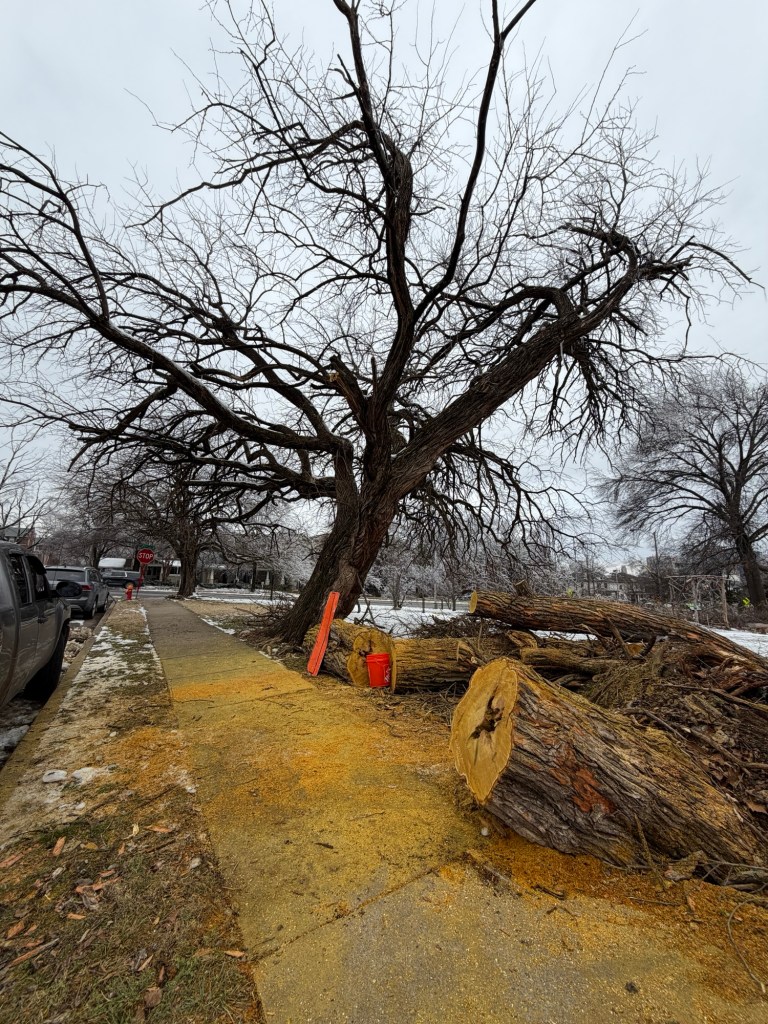
[An arborist estimated that this Osage orange was about 125-140 years old]
We can repurpose the carnage in so many ways, and each one can make a difference in habitat quality and soil health and climate resistance and all the other Good Things that keep us alive. And it’s all for freeeeeee! The National Wildlife Federation says “…the removal of dead material from forests can mean a loss of habitat for up to one-fifth of the animals in the ecosystem.” Our yards are ecosystems too, and all of them need help. We need trees, alive *and* dead.
[This post is two things: a report on Nashville’s first “Leave the Leaves Day,” and a list of suggestions for anyone to make their own local Leave the Leaves event. ]
Nashville’s first “Leave the Leaves Day” is in the bag, so to speak, where nearly 250 visitors at Warner Park Nature Center learned why leaves are best left out of the bag. Simply put, when we bag or mow leaves we are bagging and mowing next year’s butterflies, fireflies, and bird food.
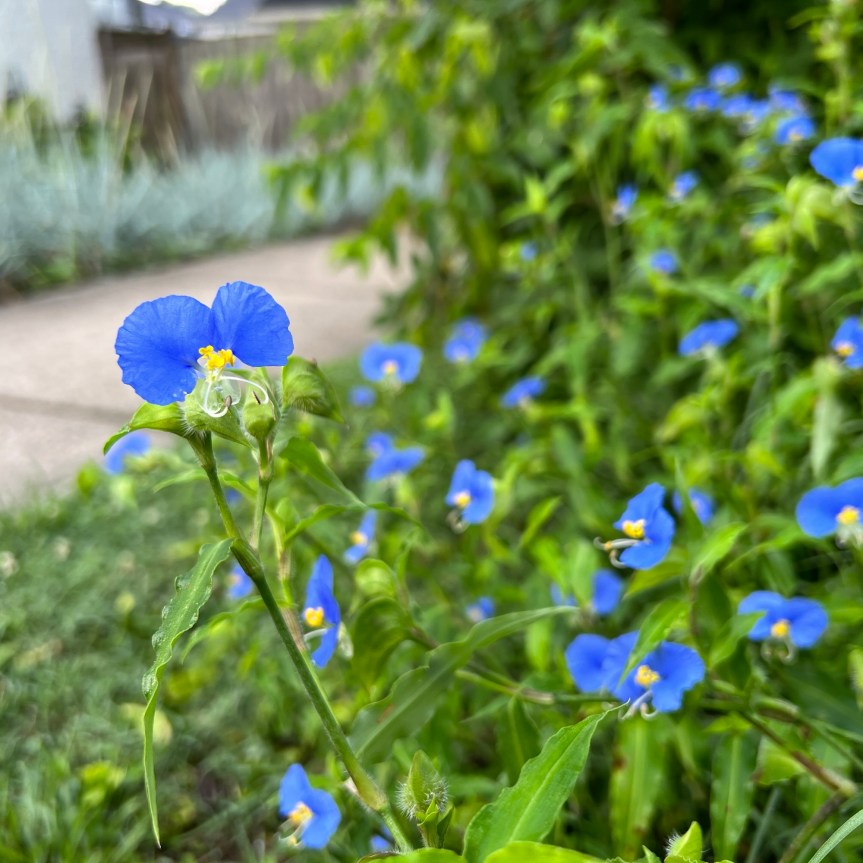
When the North American Native Plant Society asked me to write about a plant for the cover of their newsletter, I picked “the Blueys,” one of my favorite urban wildflowers, and one of the toughest. It blooms all summer in trash alleys, ditches, cracks in the asphalt, and this morning, at a telephone pole.
Thanks to recent rains, the Blueys are having their fall revival, so it’s time to share the article here at SidewalkNature. Irene Fedun, editor of the Blazing Star kindly gave permission to reprint a version below.
First, here’s a screenshot to show the artwork by Beatrice Paterson:
And here’s an audio clip in case you’d rather listen to the whole thing:
Who can resist a true blue flower? As blue as a bluebird wing, as blue as a summer sky, bluer than any local butterfly?
In Nashville, we’ve got several species of native, blue flowers, but most lean toward violet or lavender. Even a smidge of pink can nudge blue to not-truly-blue. True blue is rare.
[July]
Whitemouth dayflower is true blue. In books, it’s also known as Slender dayflower and Widow’s tears, but none of these names reference what’s so striking about the plant – the clear, bright, beautiful blue – so at our house, it is known as the Blueys: as in “Hey, the Blueys are blooming, come and see.”
Below, I’m listing local events where I plant to speak or share or both. The first one is this Saturday (Sept 27) at the Hendersonville Public Library. But first, an update from this month’s Native Nature Share:
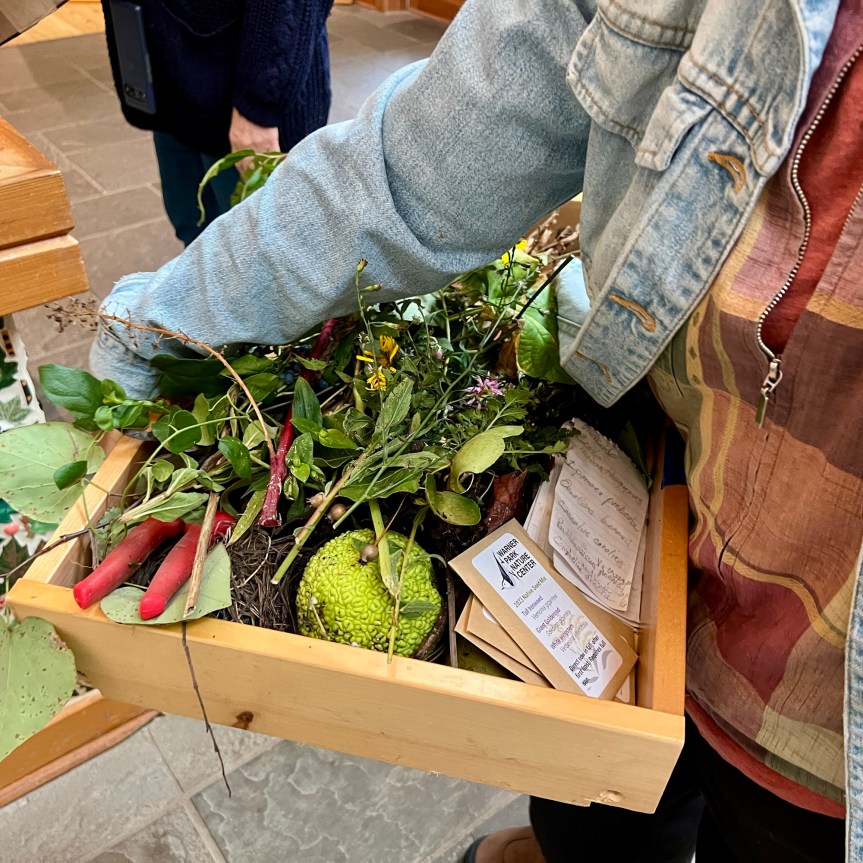
Here are some highlights from the past few Native Nature Shares. What is Native Nature Share? It’s a monthly get-together at Warner Park Nature Center: “an opportunity to learn from each other about our local habitats, and to build community in an informal, supportive gathering.”
Basically, It’s show ‘n’ tell for grownups. Everyone is welcome. All you have to do is bring one seasonal, right-now wonder that you think is urgently interesting and probably native: a plant, leaf, fossil, rock, stick, feather, fungus, bug, whatever.
You can ask the group to identify your treasure or you can tell us what it is, but either way, we’ll talk about it, and we’ll learn from each other. The collective enthusiasm and experience and curiosity around that table is itself a wonder.
It’s like a Book Group, but without the guilt of not reading the book.
I wrote my first book in Kindergarten. It was about an ant:
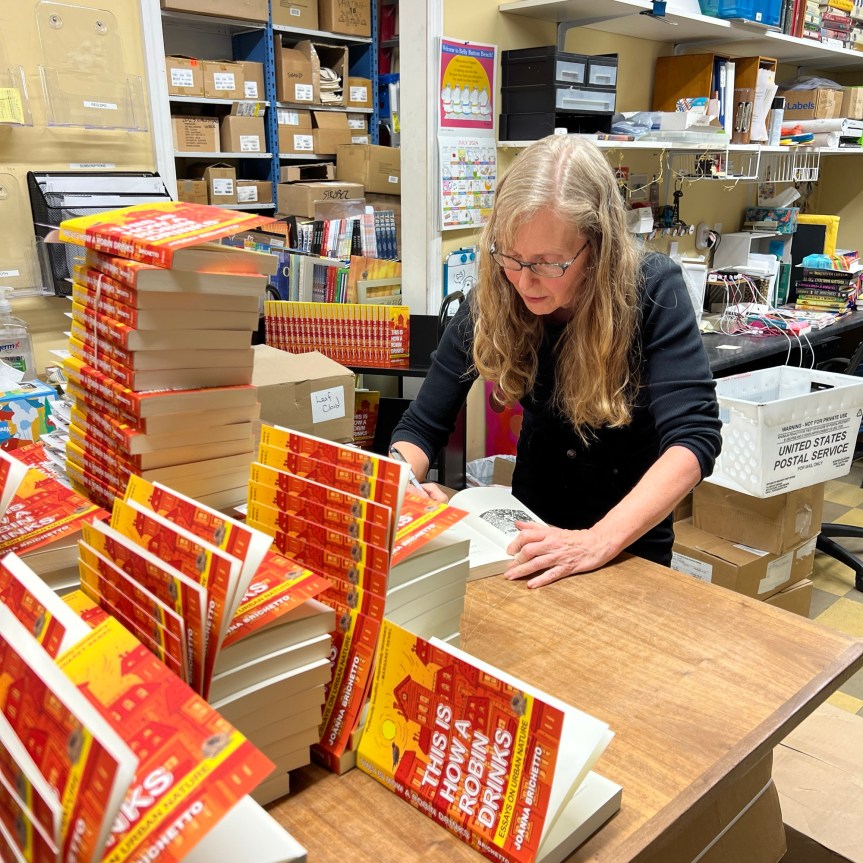
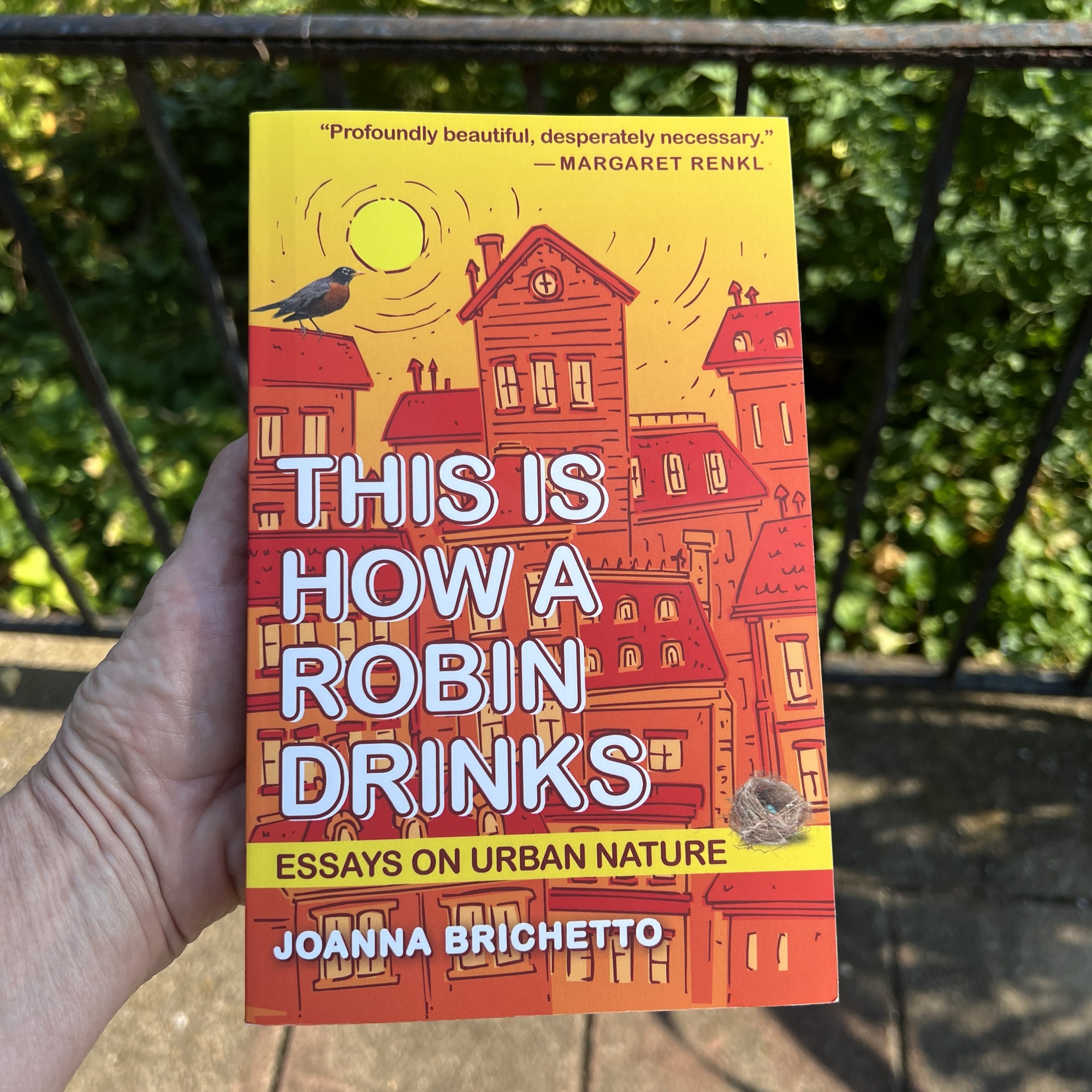
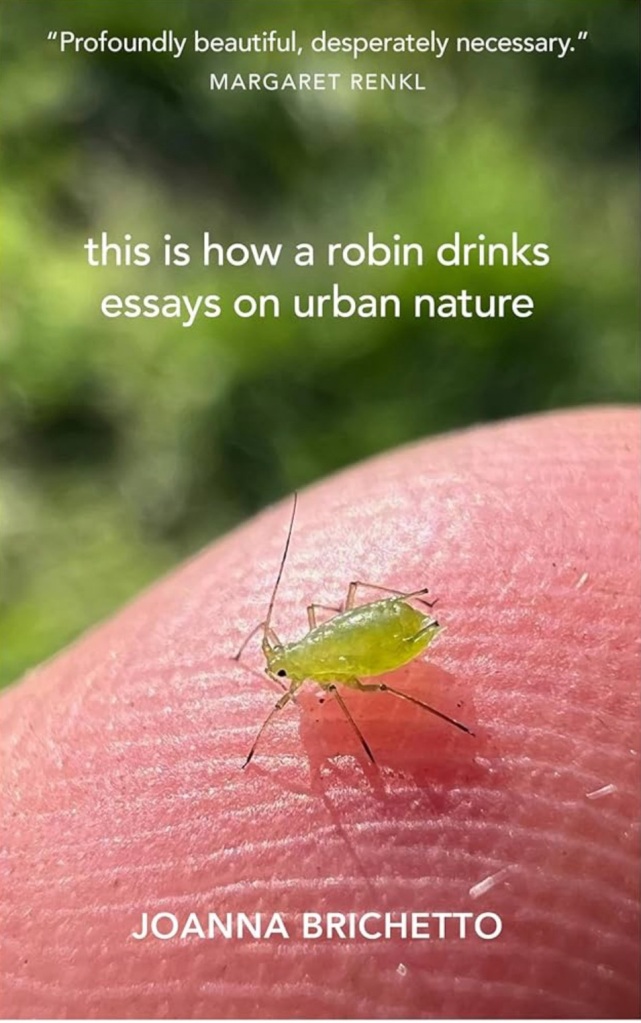
This is How a Robin Drinks: Essays on Urban Nature is my second book, and it is finally real.
The advance praise is gobsmackingly wonderful, so I’ve made a page for what Margaret Renkl, Doug Tallamy, David George Haskell, Georgeann Eubanks, Erika Howsare, Michael Sims, and The Humane Gardener, Nancy Lawson took the trouble to say, along with some reviews so far. Here’s that page: link. One review made me glad I read it alone in the kitchen, so I could clutch the countertop and have a proper, joyful, and very ugly cry.
Photos of the *Book Launch* at Parnassus Books with Margaret Renkl are below, but first, a request:
Look who hatched today! The first baby of Brood XIX periodical cicadas! With lots of luck, this new nymph will survive the next 13 years underground, then emerge and molt into adulthood in May 2037. Right now, it is barely bigger than the egg it came from, but you can see six legs, two antennae, and cute little eyes.
Part of that luck starts with the egg itself. If eggs are deposited in a twig that snaps, browns, and hangs (“flagging”) or in a twig that breaks onto sunny lawn, the eggs are not likely to survive. They dry out if not protected by living plant tissue. And then, at hatch time, if a nymph drops to any other surface but soil, it is doomed. And if the merest breeze wafts it to the roof, driveway, bird bath, street: doomed. And if it gets mown, trimmed, blown, sprayed w/ any pesticide: doomed. And if it gets spotted by even one of a zillion predators above-ground or below: doomed. Good luck, little cicada!
New nymphs will be hatching for several weeks now, so watch for falling, tiny, white creatures. I’m pinning black t-shirts to the clothesline, the better to spot the contrast. I’m also watching our dog’s black-furred back as we walk her, in case neighborhood nymphs drop on for a ride.
After a festival or a hike, my husband will ask, “Did you tell anyone about your book?” or “Did you mention you have a blog?” and I will answer “No.” Honestly, I forget. And I’d rather talk about Mosquito Buckets of Doom or Caterpillar Host Plants or Native Habitats than talk about myself, even when “myself” is 100% relevant to the topic at hand.
So, I am extra grateful that Margaret Renkl let slip that my forthcoming book is finally coming forth. She put two surprise shout-outs in her essay in The New York Times, “The Cicadas are Here, Singing a Song for the Future” (link). While quoting from one of my cicada Instagram posts, she mentioned my book, “This is How a Robin Drink: Essays on Urban Nature.”
A roundup of quick Sidewalk Nature updates: one warning and three wonders.
Trouble with Double
Kwanzan cherry trees don’t feed pollinators or birds. They look great two weeks of the year but they don’t support our foodweb. Prunus serrulata ‘Kwanzan’ / ‘Kanzan.’
My concern is that when people have room to plant one tree, this is the one they’ll want. It is cultivated for pretty, and pretty it is, but it doesn’t have nectar, doesn’t make fruit, and as a nonnative congener, its leaves support only a fraction of the Lepidoptera species a native Prunus / cherry can.
But at the Cherry Blossom Festival this month, festival-goers can walk away with a free Kwanzan cherry tree from the Nashville Tree Foundation.






 SIDEWALK NATURE