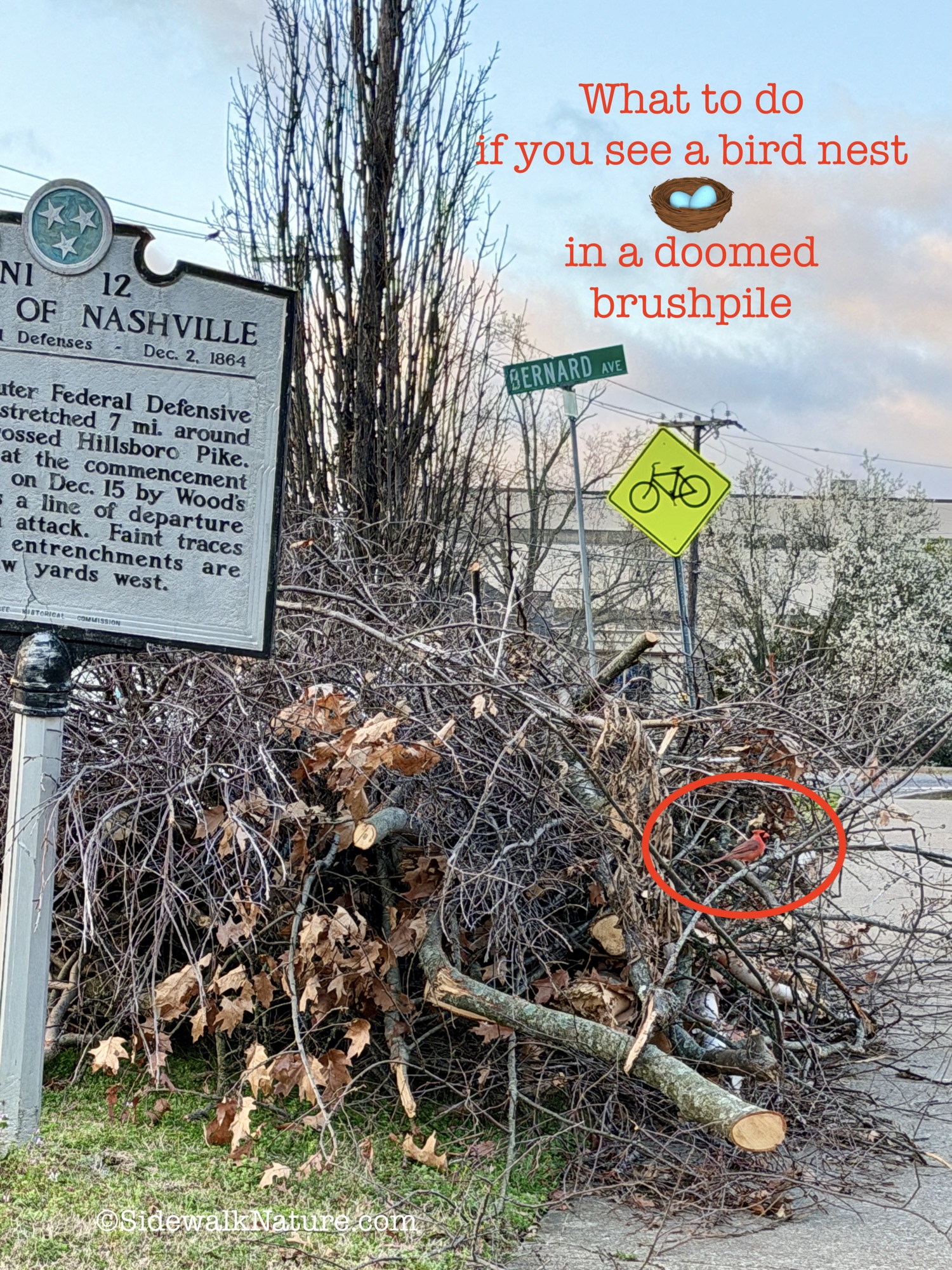
Today’s Sidewalk Nature: tree debris at curb + breeding season = bad news for birds.
At first, I worried that the post-storm piles of tree trash would vanish before I could steal what I needed for backyard habitat. But this was a big storm – too big to tidy in a hurry – and many, many piles still await pick-up weeks later. From day one, each stack was a bird magnet, but now that we’re hot and heavy into nesting season, birds think these streetside heaps are a safe place to raise a family. They don’t know that the piles are doomed. Cleanup crews are collecting storm debris every day, along with nests, eggs or baby birds that may be hidden inside.
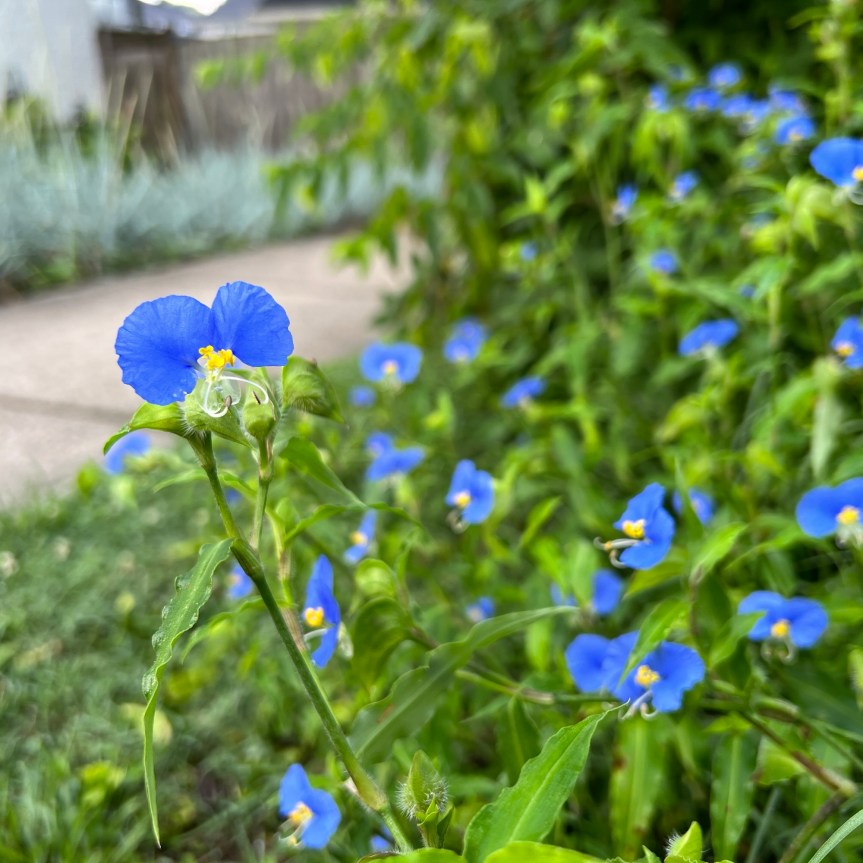
When the North American Native Plant Society asked me to write about a plant for the cover of their newsletter, I picked “the Blueys,” one of my favorite urban wildflowers, and one of the toughest. It blooms all summer in trash alleys, ditches, cracks in the asphalt, and this morning, at a telephone pole.
Thanks to recent rains, the Blueys are having their fall revival, so it’s time to share the article here at SidewalkNature. Irene Fedun, editor of the Blazing Star kindly gave permission to reprint a version below.
First, here’s a screenshot to show the artwork by Beatrice Paterson:
And here’s an audio clip in case you’d rather listen to the whole thing:
Who can resist a true blue flower? As blue as a bluebird wing, as blue as a summer sky, bluer than any local butterfly?
In Nashville, we’ve got several species of native, blue flowers, but most lean toward violet or lavender. Even a smidge of pink can nudge blue to not-truly-blue. True blue is rare.
[July]
Whitemouth dayflower is true blue. In books, it’s also known as Slender dayflower and Widow’s tears, but none of these names reference what’s so striking about the plant – the clear, bright, beautiful blue – so at our house, it is known as the Blueys: as in “Hey, the Blueys are blooming, come and see.”
Below, I’m listing local events where I plant to speak or share or both. The first one is this Saturday (Sept 27) at the Hendersonville Public Library. But first, an update from this month’s Native Nature Share:
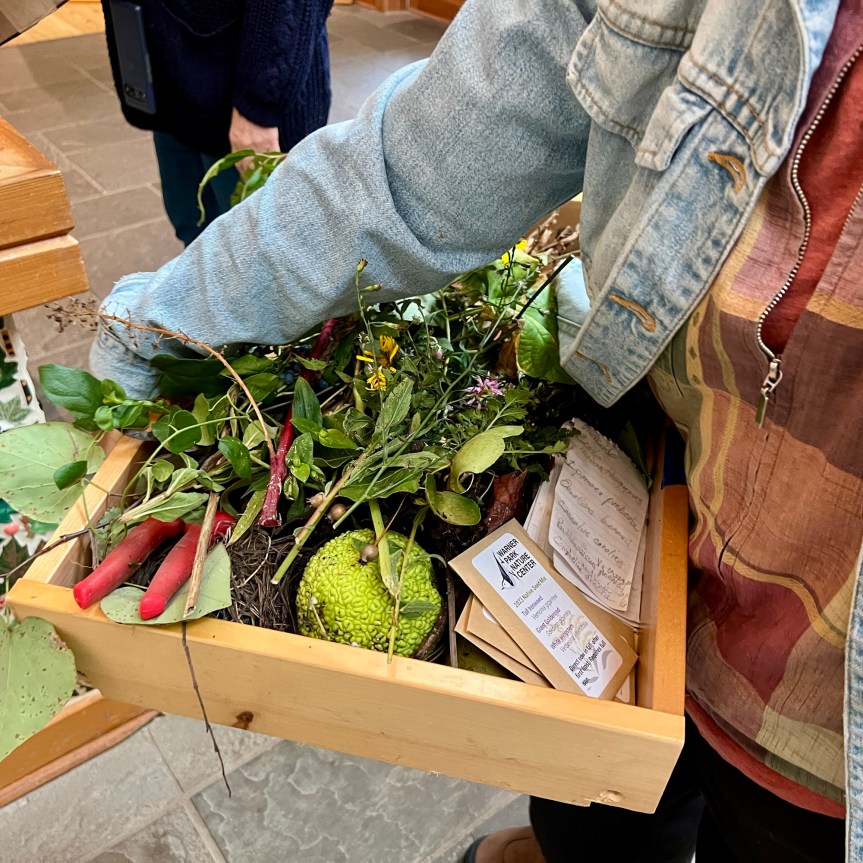
Here are some highlights from the past few Native Nature Shares. What is Native Nature Share? It’s a monthly get-together at Warner Park Nature Center: “an opportunity to learn from each other about our local habitats, and to build community in an informal, supportive gathering.”
Basically, It’s show ‘n’ tell for grownups. Everyone is welcome. All you have to do is bring one seasonal, right-now wonder that you think is urgently interesting and probably native: a plant, leaf, fossil, rock, stick, feather, fungus, bug, whatever.
You can ask the group to identify your treasure or you can tell us what it is, but either way, we’ll talk about it, and we’ll learn from each other. The collective enthusiasm and experience and curiosity around that table is itself a wonder.
It’s like a Book Group, but without the guilt of not reading the book.
Keen to see Nashville Mustard while it lasts? It only blooms a few weeks each spring, and now’s the time. Why go see it? It’s yellow and gorgeous, it’s a mini superbloom, it’s a good photo op, and a true native. Think of it as a remnant of our historic grasslands, or as I like to imagine: a trace of the Trace. Trace, as in buffalo roads, when bison travelled to the salt lick that “made” Nashville (near what is now Bicentennial Mall.)
This post is to show where the Mustard is, so you can visit your nearest site, or go see them all. And, it’s a happy update to last year’s post about Cutting the Mustard…
I usually use the ol’ Monarch butterfly example to talk to beginners about “host” plants and “specialization,” which can illustrate “Why Native Matters.”
But right now, in lucky lawns all over town, there buzzes another great example: the Spring Beauty bee.
Monarchs can’t raise babies on anything but Milkweed, right? Well, Spring Beauty bees can’t raise babies without Spring Beauty pollen.
Spring Beauty is Claytonia virginica, a not-common-enough “common” wildflower in Nashville. And Spring Beauty bees are Andrena erigeniae, a native mining bee.
Skip the Skip Laurel, Say No to Nandina: Choose NATIVE
If your exotic evergreens are “ever-brown” from the recent freeze, now is an ideal time to upgrade to natives.
It doesn’t make sense to simply plant more of the same: the same non-native foundation shrubs that are anything but foundational to our ecosystem. Schip laurel, boxwood, nandina, Chinese holly, euonymus, false cypress, red-tips, cryptomeria, and so forth: all are plants that evolved with creatures and conditions on different continents.
[Mockingbird on Black Chokeberry, Photo by Richard Hitt]
What we need in Tennessee are more shrubs that evolved nearby. Native shrubs can be more likely to survive extreme weather, year-round. And most importantly, natives are the only sustainable choice: they contribute to local foodwebs in countless, critical ways that non-native plants cannot.
But, which native shrubs give us the color, texture, and size we want, while giving birds, bees, and butterflies what they need?
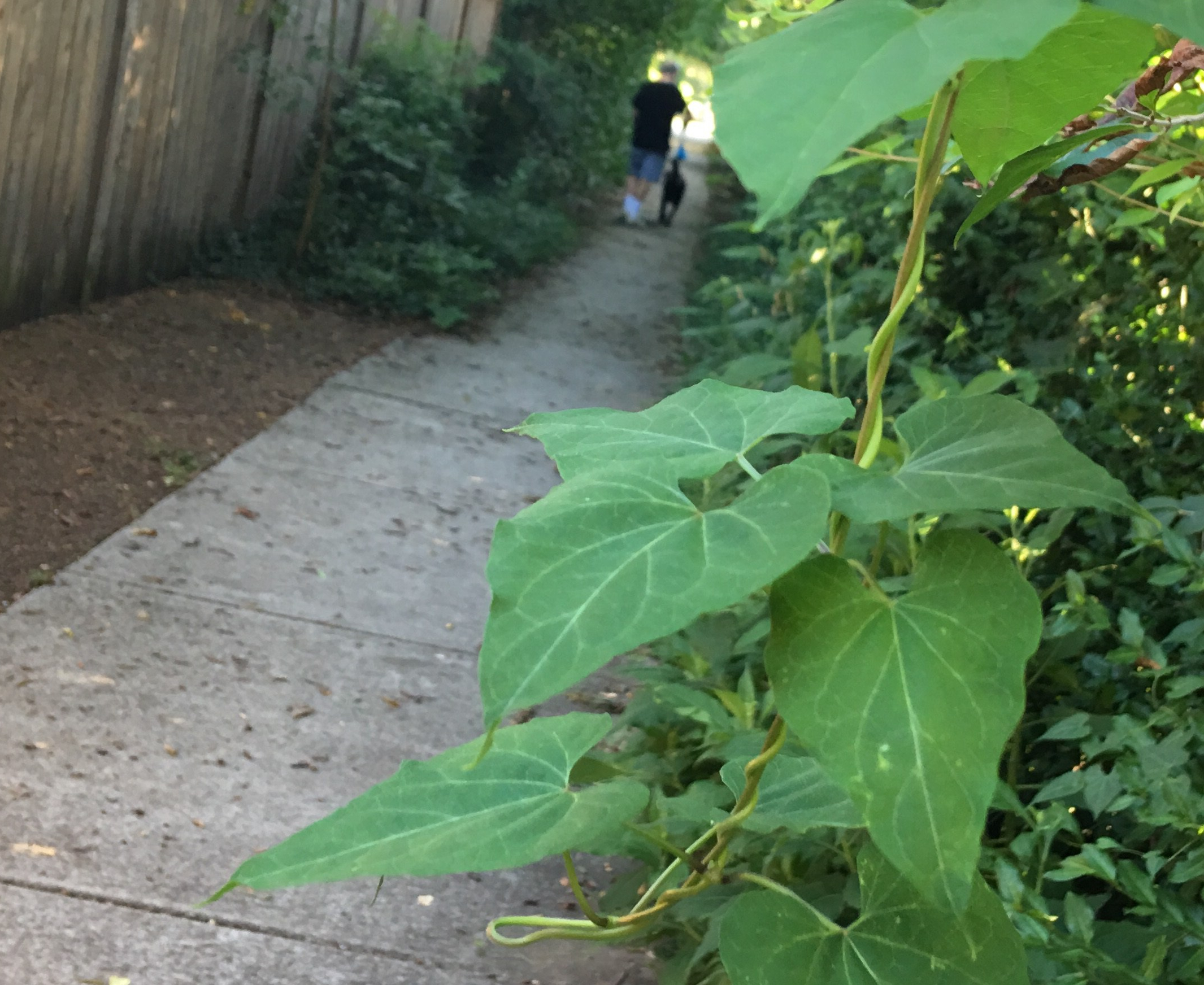
When a climbing vine casts its tip out and out but finds nothing to grab, it will curve round and grab itself.
That’s what’s happened here. You can see the loop at the bottom of the photo, and how it continues as a younger, greener “switchback” still counter-clockwising up its earlier self.
The vine’s goal is to aim for sunlight by the most expedient means, which in this case is its own body. Continue reading “Sidewalk Nature: milkweed vine”→





 SIDEWALK NATURE