The Blueys are Blooming…again.

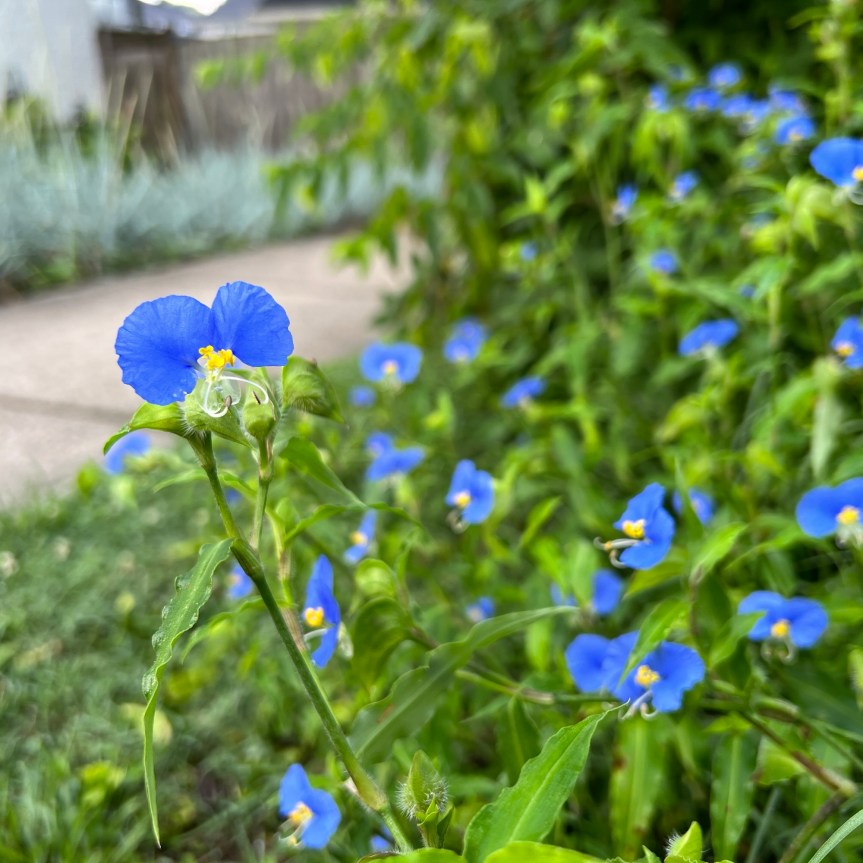
When the North American Native Plant Society asked me to write about a plant for the cover of their newsletter, I picked “the Blueys,” one of my favorite urban wildflowers, and one of the toughest. It blooms all summer in trash alleys, ditches, cracks in the asphalt, and this morning, at a telephone pole.

Thanks to recent rains, the Blueys are having their fall revival, so it’s time to share the article here at SidewalkNature. Irene Fedun, editor of the Blazing Star kindly gave permission to reprint a version below.

First, here’s a screenshot to show the artwork by Beatrice Paterson:

And here’s an audio clip in case you’d rather listen to the whole thing:

Who can resist a true blue flower? As blue as a bluebird wing, as blue as a summer sky, bluer than any local butterfly? 

In Nashville, we’ve got several species of native, blue flowers, but most lean toward violet or lavender. Even a smidge of pink can nudge blue to not-truly-blue. True blue is rare.

[July]

Whitemouth dayflower is true blue. In books, it’s also known as Slender dayflower and Widow’s tears, but none of these names reference what’s so striking about the plant – the clear, bright, beautiful blue – so at our house, it is known as the Blueys: as in “Hey, the Blueys are blooming, come and see.” 

Continue reading “The Blueys are Blooming…again.”

Nature Show ‘n’ Tell for Grown-ups

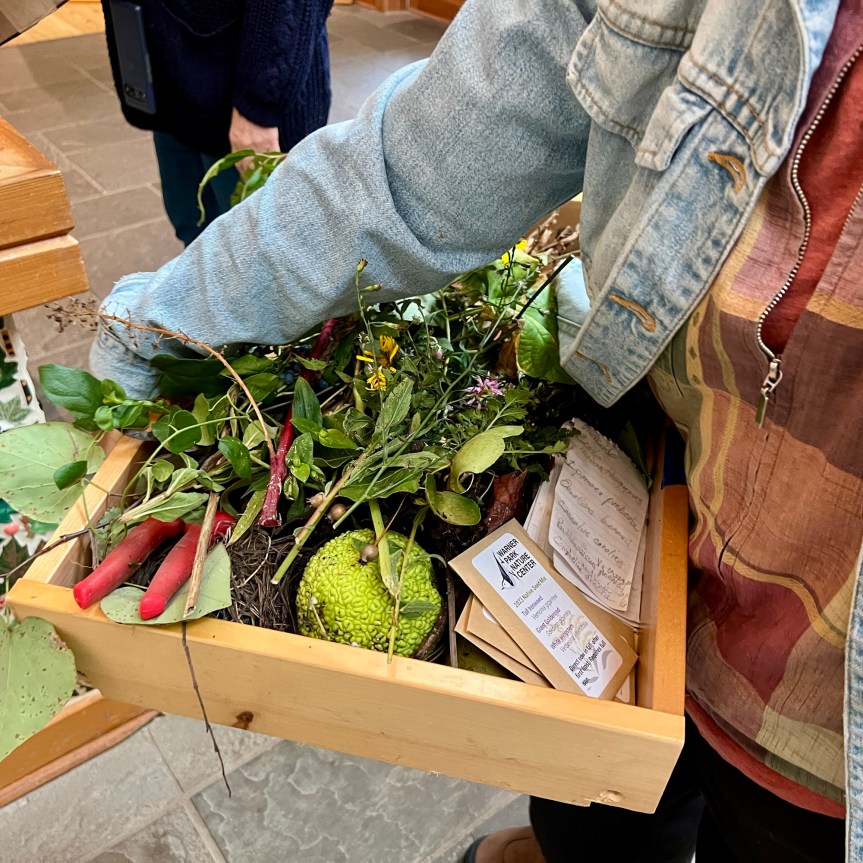
Here are some highlights from the past few Native Nature Shares. What is Native Nature Share? It’s a monthly get-together at Warner Park Nature Center: “an opportunity to learn from each other about our local habitats, and to build community in an informal, supportive gathering.”

Basically, It’s show ‘n’ tell for grownups. Everyone is welcome. All you have to do is bring one seasonal, right-now wonder that you think is urgently interesting and probably native: a plant, leaf, fossil, rock, stick, feather, fungus, bug, whatever. 

You can ask the group to identify your treasure or you can tell us what it is, but either way, we’ll talk about it, and we’ll learn from each other. 
The collective enthusiasm and experience and curiosity around that table is itself a wonder.

It’s like a Book Group, but without the guilt of not reading the book.

Continue reading “Nature Show ‘n’ Tell for Grown-ups”

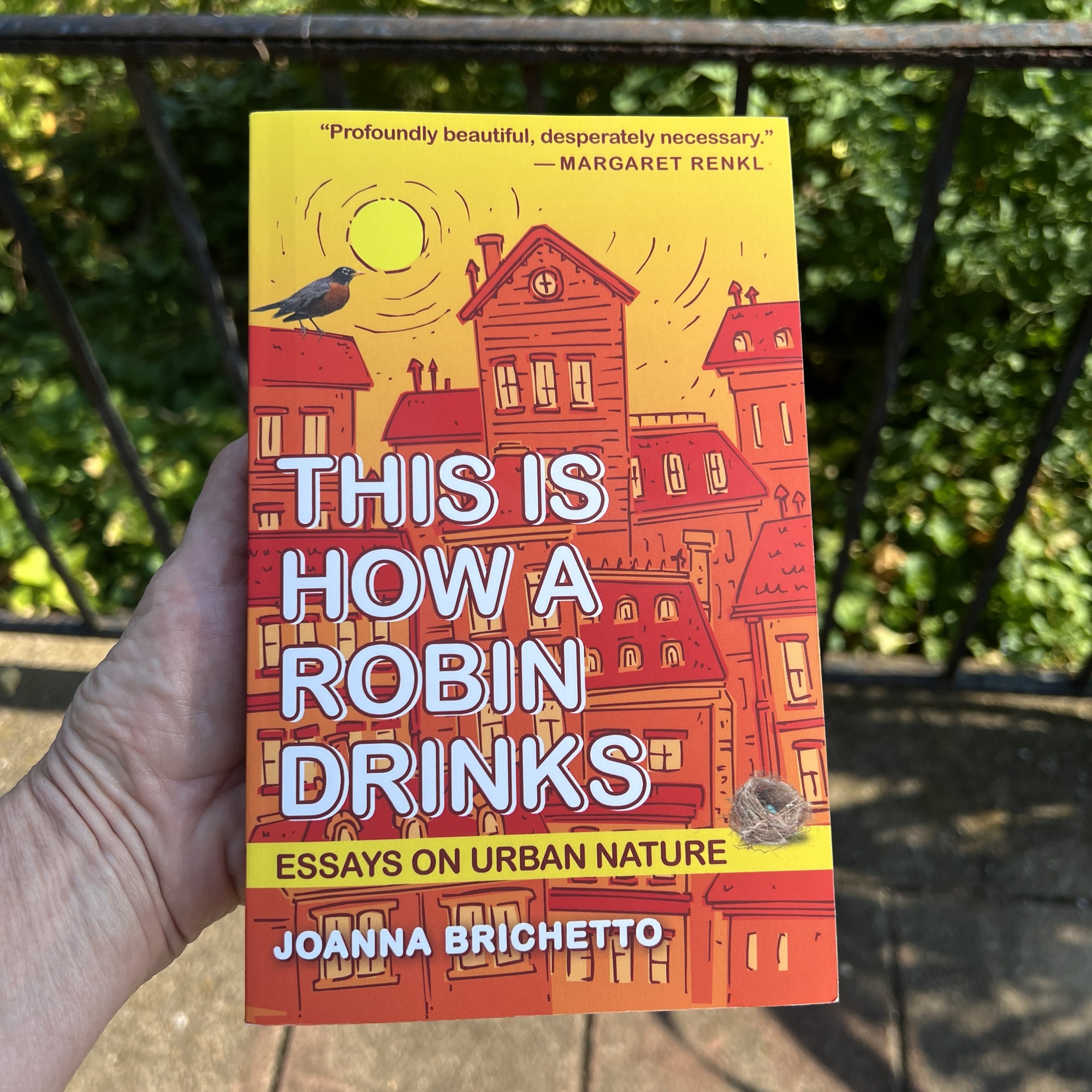
Book: This is How a Robin Drinks (an invitation, and recap of Launch)

(photo courtesy of Parnassus Books)

I wrote my first book in Kindergarten. It was about an ant:

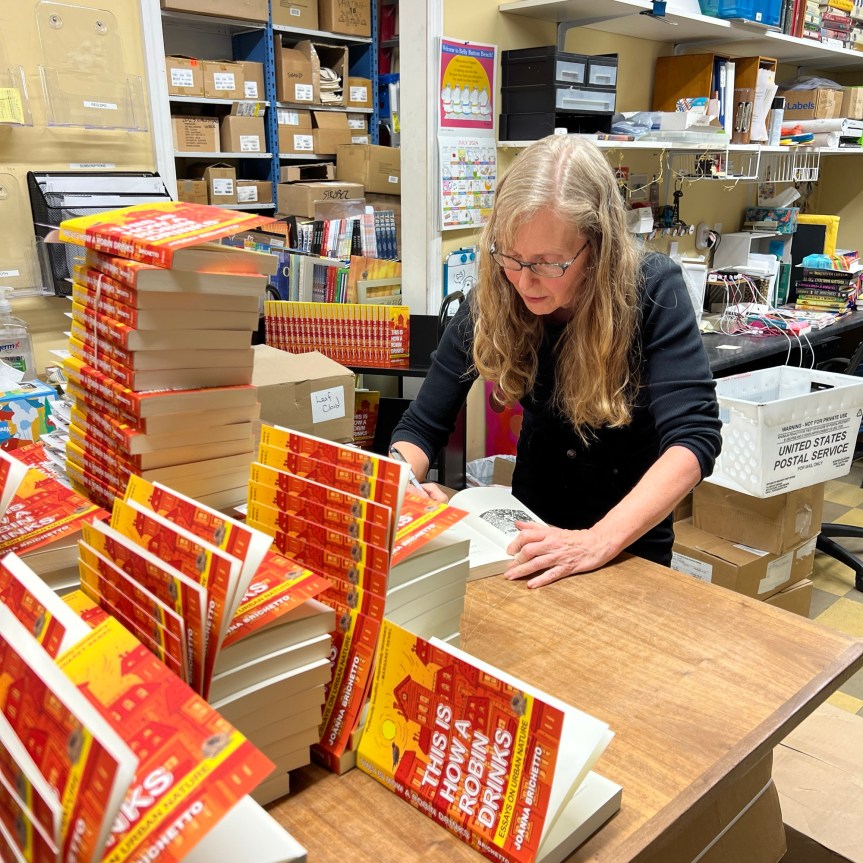
This is How a Robin Drinks: Essays on Urban Nature is my second book, and it is finally real.

The advance praise is gobsmackingly wonderful, so I’ve made a page for what Margaret Renkl, Doug Tallamy, David George Haskell, Georgeann Eubanks, Erika Howsare, Michael Sims, and The Humane Gardener, Nancy Lawson took the trouble to say, along with some reviews so far. Here’s that page: link.
One review made me glad I read it alone in the kitchen, so I could clutch the countertop and have a proper, joyful, and very ugly cry.

Photos of the *Book Launch* at Parnassus Books with Margaret Renkl are below, but first, a request:

Continue reading “Book: This is How a Robin Drinks (an invitation, and recap of Launch)”

First Week of April: Trees

A roundup of quick Sidewalk Nature updates: one warning and three wonders.

Trouble with Double

Kwanzan cherry trees don’t feed pollinators or birds. They look great two weeks of the year but they don’t support our foodweb. Prunus serrulata ‘Kwanzan’ / ‘Kanzan.’

My concern is that when people have room to plant one tree, this is the one they’ll want. It is cultivated for pretty, and pretty it is, but it doesn’t have nectar, doesn’t make fruit, and as a nonnative congener, its leaves support only a fraction of the Lepidoptera species a native Prunus / cherry can.

But at the Cherry Blossom Festival this month, festival-goers can walk away with a free Kwanzan cherry tree from the Nashville Tree Foundation.

Continue reading “First Week of April: Trees”

Nashville Mustard Tour: a Trace of the Trace

Keen to see Nashville Mustard while it lasts? It only blooms a few weeks each spring, and now’s the time. Why go see it? It’s yellow and gorgeous, it’s a mini superbloom, it’s a good photo op, and a true native. Think of it as a remnant of our historic grasslands, or as I like to imagine: a trace of the Trace. Trace, as in buffalo roads, when bison travelled to the salt lick that “made” Nashville (near what is now Bicentennial Mall.)

This post is to show where the Mustard is, so you can visit your nearest site, or go see them all.
And, it’s a happy update to last year’s post about Cutting the Mustard

Continue reading “Nashville Mustard Tour: a Trace of the Trace”

Secret Sidewalk: eight late-November wonders

As fall drifts toward winter, nature doesn’t slow down, not really. Amazing things happen all around us, all the time. This site’s tagline: “Everyday wonders in everyday habitat loss” includes not just “natural” areas, but our own yards, trash alleys, parking lots, roadsides. For example, our Secret Sidewalk …

The Secret Sidewalk is a shortcut through 3 neighborhood blocks, but rather than running along a street, it runs between homes. It’s a 5-foot-wide Metro right-of-way flanked by property lines, and it feels intimate, despite crossing four roads, and despite tall privacy fences. It takes walkers past a mix of cultivated and wild. Exotics, natives, volunteers, invasives: all here. Signs of the season change daily.

Continue reading “Secret Sidewalk: eight late-November wonders”

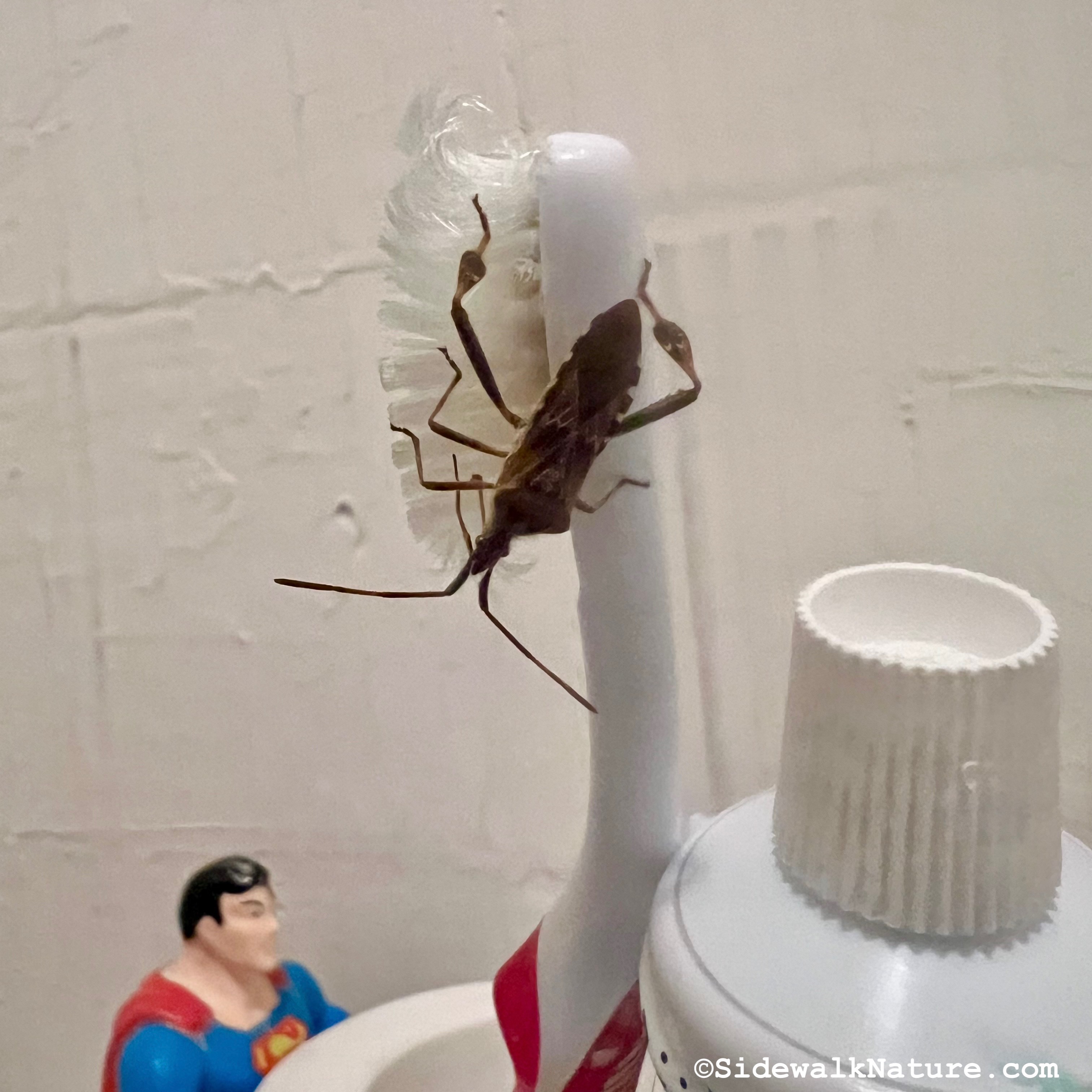
Toothbrush Bug

Superman and I were the only witnesses to this nighttime scene. After which, I released the bug and retired the toothbrush.

I have not told the owner of the toothbrush.

“MOM,” he yelled to me next morning, “Is the new green toothbrush mine?”

“YES,” I yelled back, “The white one was worn out.” 

But what I didn’t add was, “and it’s in the trash because a giant Western Conifer Seed Bug was sucking on it.”

The Western Conifer Seed Bug’s genus name is Leptoglossus.
Lepto is “fine, thin, delicate,” and glossus is tongue.
You’d need a “fine, thin, delicate” tongue in order to suck sap from immature pine cones.

Continue reading “Toothbrush Bug”

(Doom-it-Yourself) Mosquito Bucket Styles

After I posted the Do-It-Yourself Mosquito Bucket of Doom (link), I realized two things:
1) I should have called the project a “Doom-It-Yourself,” and
2) Not everyone is excited about displaying an ugly bucket in their yard.

But, now I know that a Mosquito Bucket of Doom need not be ugly. Or even be a bucket.
Nearly any water-tight, wide-mouthed container will do.

Personally, I’m fine sharing my yard with an ugly bucket that still advertises the 30 pounds of kitty litter it once contained:

Continue reading “(Doom-it-Yourself) Mosquito Bucket Styles”

Mosquito Bucket of Doom

Mosquito season is here! Instead of spraying pesticides onto our entire yards—and onto fireflies, ladybugs, bumblebees, and butterflies—why not kill *only* mosquitoes?

But first: let’s PREVENT mosquitoes from breeding in our yards. Get rid of all standing water at least once a week: in plant saucers, trash cans, toys, and gutters.

(image from Florida Health)

Then, let’s CREATE standing water, but only in a Mosquito Bucket of Doom. 
It’s a safe, cheap, easy way to control mosquitoes, and more effective than sprays and foggers.

Continue reading “Mosquito Bucket of Doom”