Here’s another Wonderful Thing.
First, I’ll show you, then I’ll tell you.
But what you see here is NOT rain,
is NOT dew.
Look:

Here’s another Wonderful Thing.
First, I’ll show you, then I’ll tell you.
But what you see here is NOT rain,
is NOT dew.
Look:
Look, a mosquito!

Should I:
1) Spray my entire property with synthetic pyrethroids that “target” mosquitoes and are “safe,” but which actually kill bees, butterflies, and all invertebrates, and can “persist in the environment” for months?
Or
Continue reading “Choices”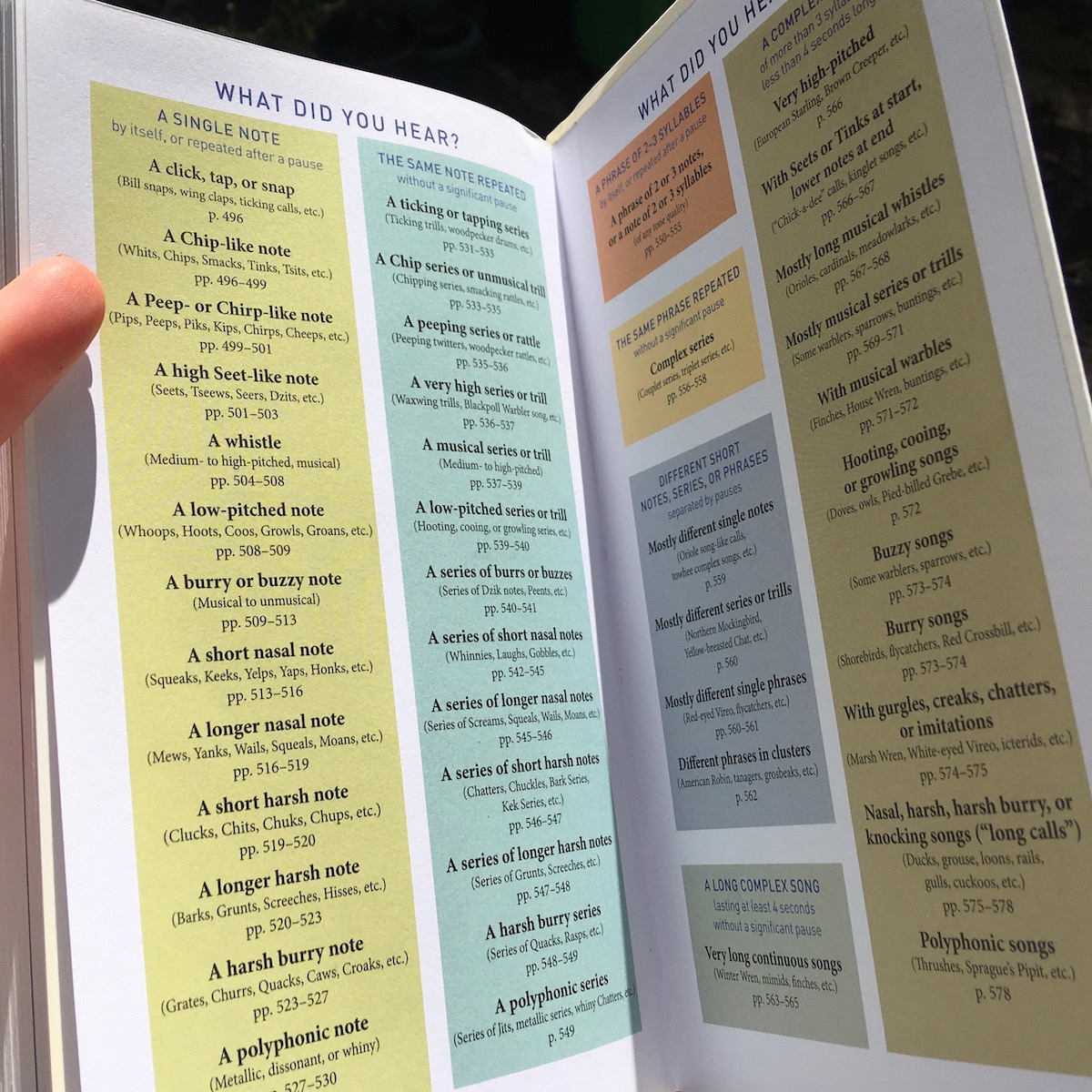
Even just the endpapers are helpful in Peterson Field Guide to Bird Sounds of Eastern North America. But this is the first time these endpapers don’t end a mystery. There’s this mystery bird, see, who I DON’T see, and who I barely hear: high, fast, faraway.
Continue reading “Birding by Star Trek”A Signs of the Season roundup for the second week of October:

Bumblebees go to sleep early now, and our Canada goldenrod is hung with dark, little blobs well before Civil Twilight.
Each blob is a bee or fly.
Few things are cuter than an upside-down bumblebee falling asleep.
Our Sugar Maple is blowing bubbles in the rain.
Not to fret: It’s fine, it’s just one of Nature’s Soaps.

After a long dry spell, rain is washing accumulated salts and acids down rough bark—mixing, agitating as it goes—and crude soap is drooling to the ground.
Like shampoo at your feet as you wash your hair in the shower.
“TREE SOAP” is the kind of news I love to share.
Michael was busy when I ran into the kitchen, so I shared to the back of his head, “Our tree is making SOAP!” and then apologized for the distraction.
Continue reading “Tree Soap”Let me explain.
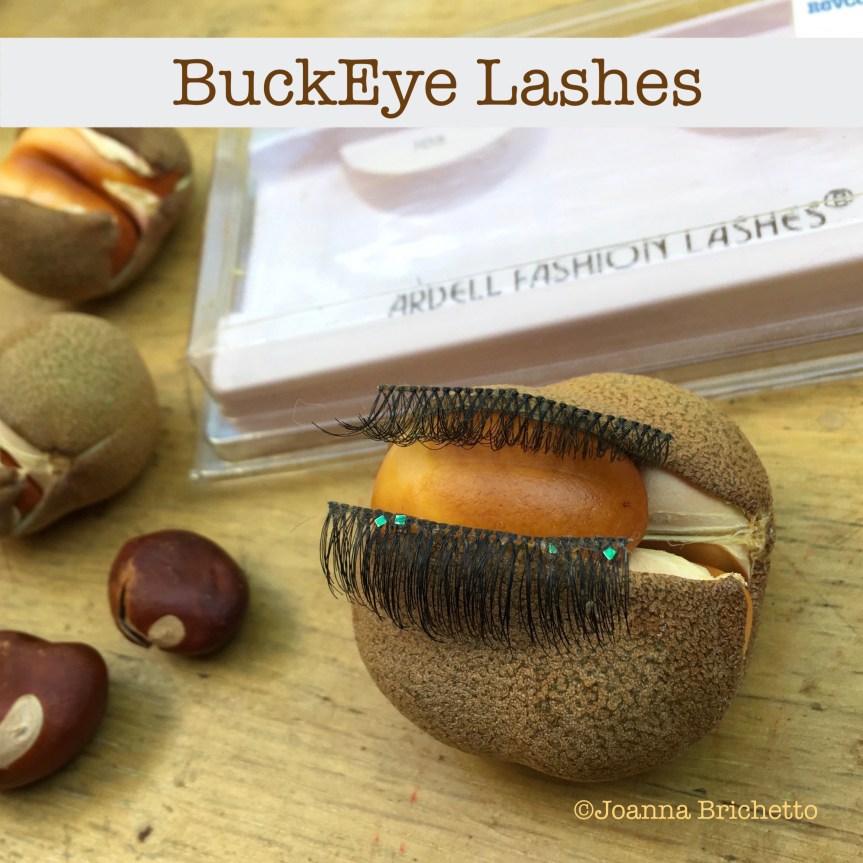
When I posted a photo of buckeye capsules at Music Row, I mentioned that they would dry and split, and that the outer hull would look like a buck’s upper and lower eyelid. The seed inside would be the eye: the Buck-Eye.
Nancy, who has known me since 6th grade, wrote, “I want to see the eyelids when they open!”
Today I learned not to start a sidewalk conversation with “Is this your tree?”
Because the nice lady who was walking towards her tree, and who I’ve seen in the neighborhood for over 25 years, but who I’ve never spoken to until now, answered my question with an alarmed, “WHY? WHAT’S WRONG WITH IT?”
From which the conversation could not recover. My lack of social skills and her lack of hearing proved to be unbeatable obstacles.
“Nothing is wrong with it,” I said, and then said again, louder.
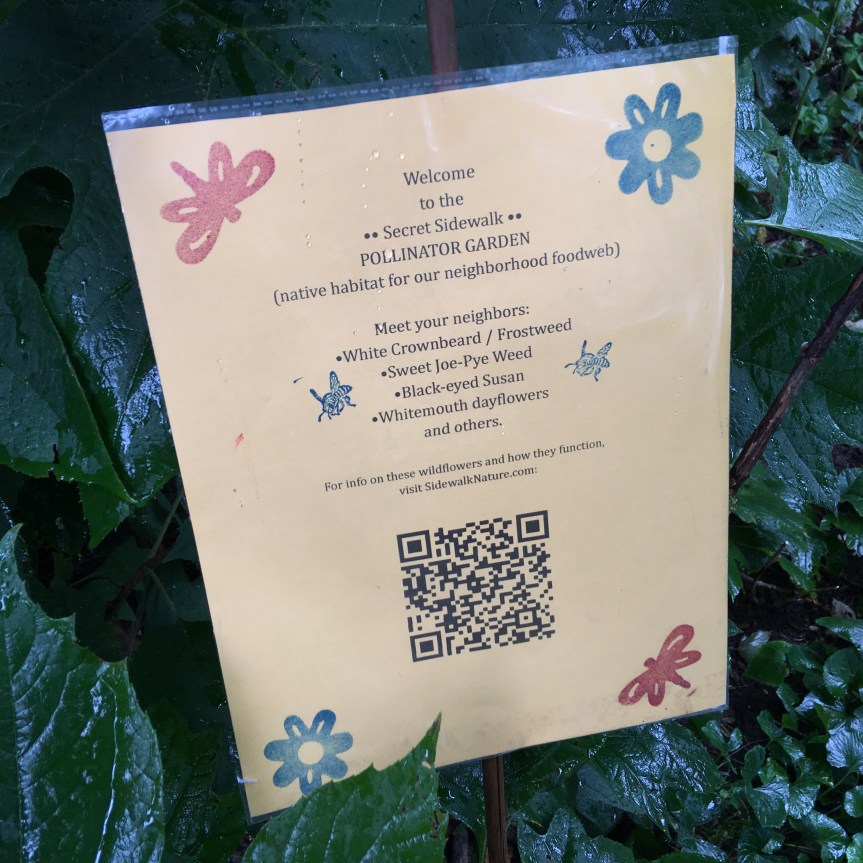
Continue reading “September + elm”After someone destroyed wildflowers on the Secret Sidewalk, I didn’t know what to do. The flowers are wild, the property is Metro’s, and I have no idea if the destruction is a neighbor’s idea of “weeding,” or if a kid blithely snapped stalks for fun, or WHAT.
Continue reading “Secret Sidewalk Sign”The Secret Sidewalk in our neighborhood is no secret, but its pollinator garden might be.
Tucked along half of a single block is an “Accidental Pollinator Garden:” a glorious border of native wildflowers. It’s a pleasure to walk past. But though beautiful for humans, it is a lifesaver for animals. It is habitat. Nectar and pollen feed countless bees, butterflies, and other invertebrates, while birds and small mammals eat the seeds.
Compare this bounty to one of the manicured, mown, blown, “treated”, mosquito-Joe-d, 100% turfgrass lawns nearby.
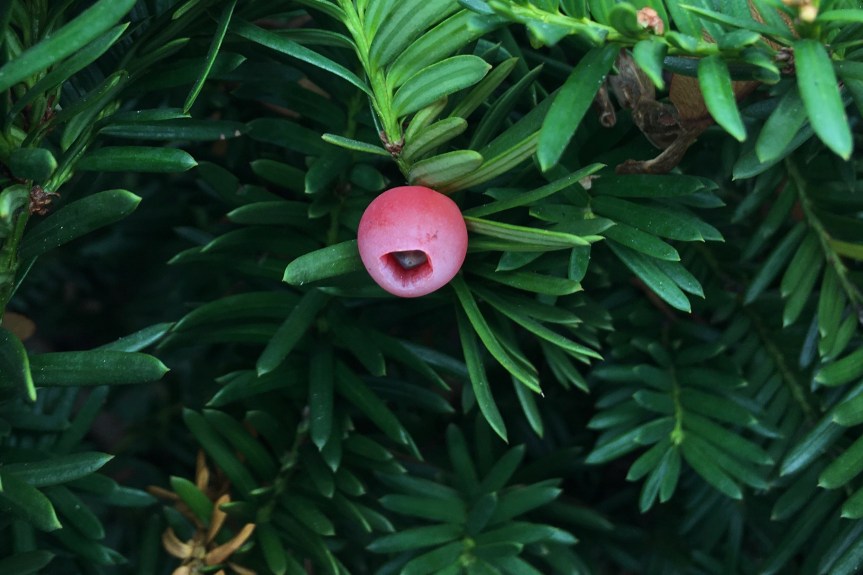
Yew is the “Tree of Death” for a couple of reasons: 1) it’s a traditional graveyard tree and 2) it kills you.
Almost every part of it is toxic to humans.


 SIDEWALK NATURE