Below, I’m listing local events where I plant to speak or share or both. The first one is this Saturday (Sept 27) at the Hendersonville Public Library.
But first, an update from this month’s Native Nature Share:

Below, I’m listing local events where I plant to speak or share or both. The first one is this Saturday (Sept 27) at the Hendersonville Public Library.
But first, an update from this month’s Native Nature Share:
I wrote my first book in Kindergarten. It was about an ant:

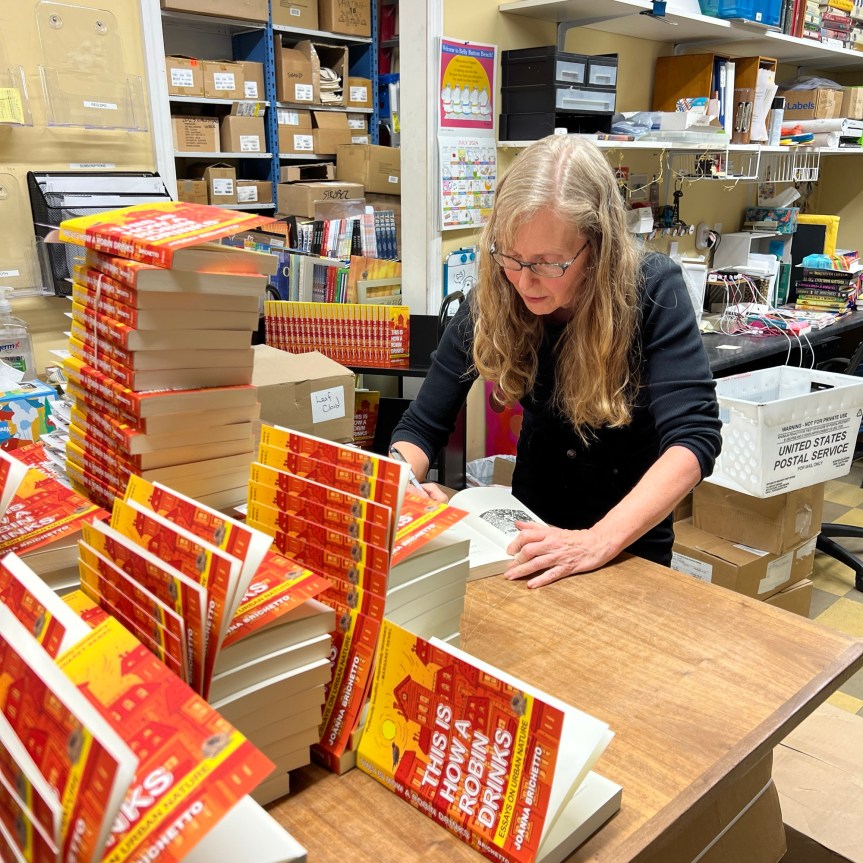
This is How a Robin Drinks: Essays on Urban Nature is my second book, and it is finally real.
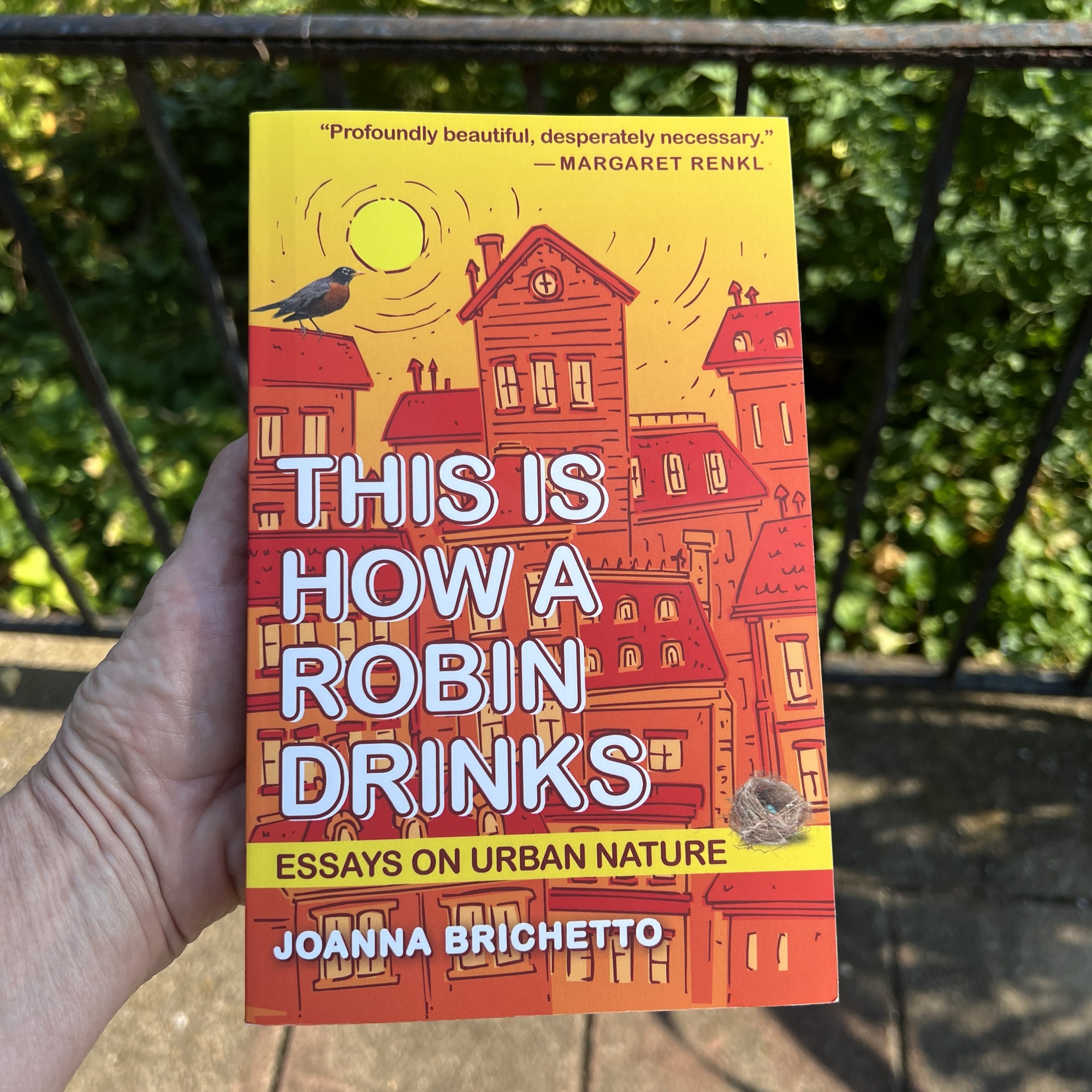
The advance praise is gobsmackingly wonderful, so I’ve made a page for what Margaret Renkl, Doug Tallamy, David George Haskell, Georgeann Eubanks, Erika Howsare, Michael Sims, and The Humane Gardener, Nancy Lawson took the trouble to say, along with some reviews so far. Here’s that page: link.
One review made me glad I read it alone in the kitchen, so I could clutch the countertop and have a proper, joyful, and very ugly cry.
Photos of the *Book Launch* at Parnassus Books with Margaret Renkl are below, but first, a request:
Continue reading “Book: This is How a Robin Drinks (an invitation, and recap of Launch)”A roundup of quick Sidewalk Nature updates: one warning and three wonders.

Kwanzan cherry trees don’t feed pollinators or birds. They look great two weeks of the year but they don’t support our foodweb. Prunus serrulata ‘Kwanzan’ / ‘Kanzan.’
My concern is that when people have room to plant one tree, this is the one they’ll want. It is cultivated for pretty, and pretty it is, but it doesn’t have nectar, doesn’t make fruit, and as a nonnative congener, its leaves support only a fraction of the Lepidoptera species a native Prunus / cherry can.
But at the Cherry Blossom Festival this month, festival-goers can walk away with a free Kwanzan cherry tree from the Nashville Tree Foundation.
Continue reading “First Week of April: Trees”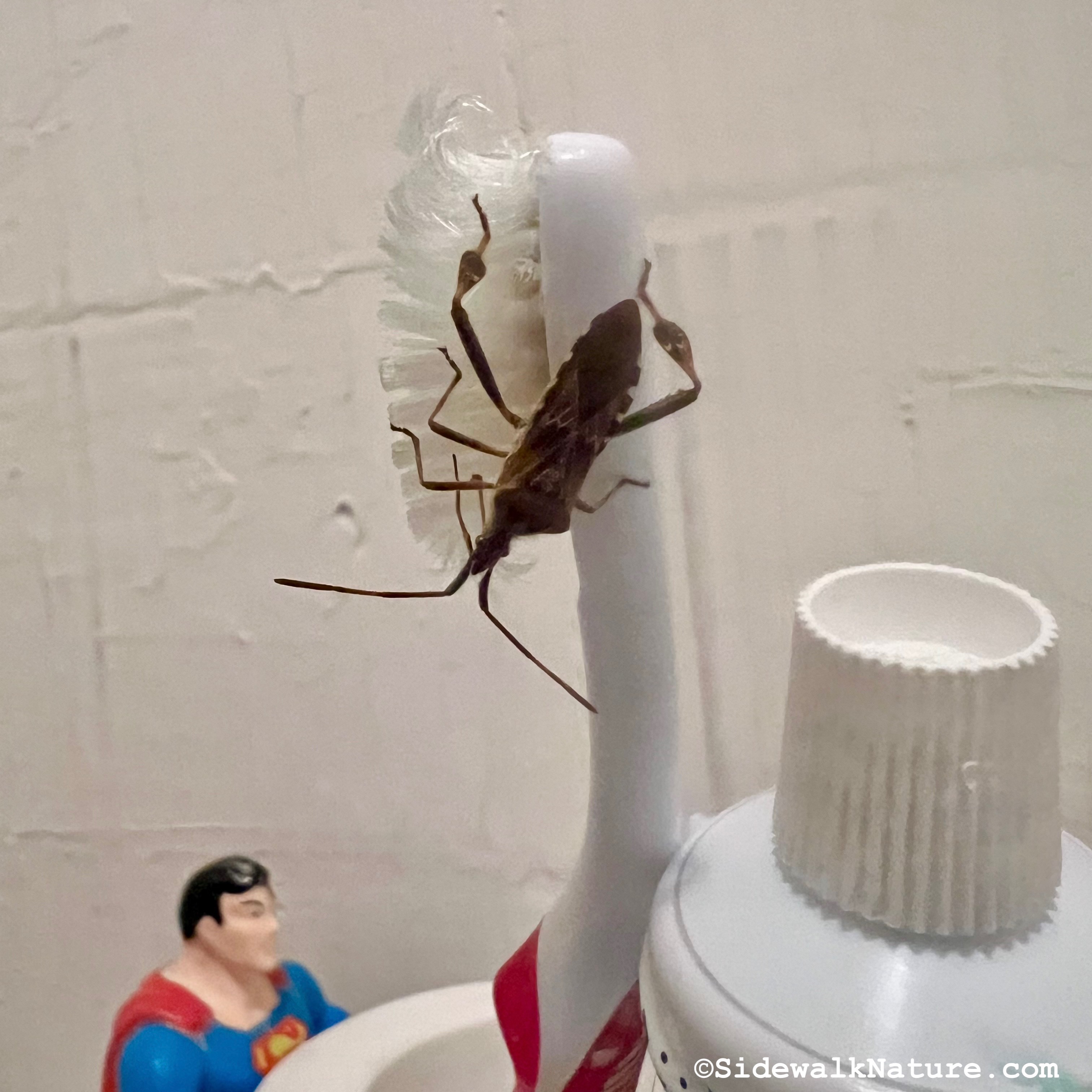
Superman and I were the only witnesses to this nighttime scene. After which, I released the bug and retired the toothbrush.
I have not told the owner of the toothbrush.
“MOM,” he yelled to me next morning, “Is the new green toothbrush mine?”
“YES,” I yelled back, “The white one was worn out.”
But what I didn’t add was, “and it’s in the trash because a giant Western Conifer Seed Bug was sucking on it.”
The Western Conifer Seed Bug’s genus name is Leptoglossus.
Lepto is “fine, thin, delicate,” and glossus is tongue.
You’d need a “fine, thin, delicate” tongue in order to suck sap from immature pine cones.

February is the best month. Why?
You can watch spring start.
You can catch it in your hand.
How? With a Red maple.
Continue reading “Catch Spring Red-handed”
Folklore says the inside of native persimmon seeds can predict winter weather.
Alas, Folklore doesn’t say *how* to slice the seeds, which can be tricky.
Look for the shape of the embryo (and future “seed leaves”):
The method is as accurate as Woolly-bear caterpillar predictions, which is to say, not at all.
Both are fun, but with persimmons, you get to lick your fingers.

“Pick me!” says the fig hanging over the street.
Every morning, I resist the temptation to pluck a fig from a sidewalk tree. I walk before dawn, but the plump silhouette is clear against the brightening sky.
“Pick meee!”
I’ve watched this fig grow from the size of a chocolate chip to the size of a . . . fig. There are dozens on offer: stem-down, bottoms-up candy for strangers. But I keep walking. Someone might be looking out a window.
Continue reading “Forbidden Fruit (the Sidewalk Fig story)” SIDEWALK NATURE