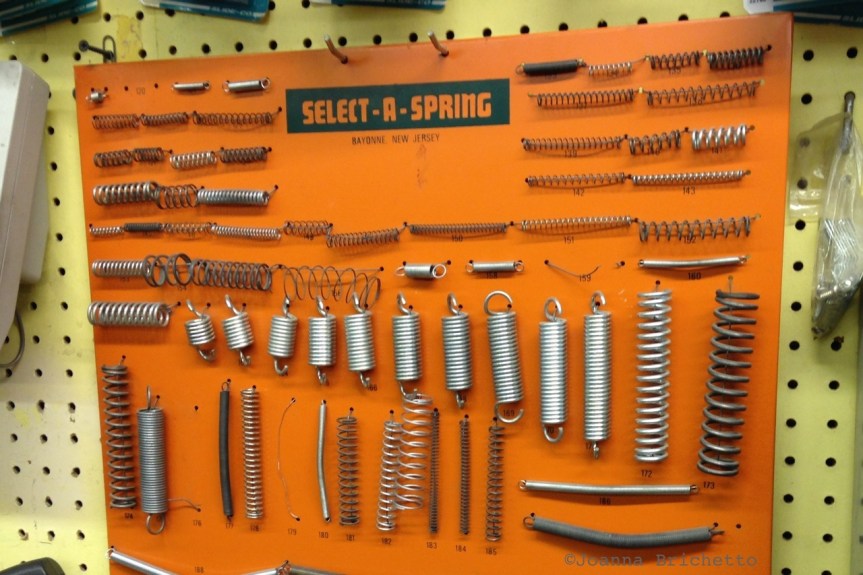
“SELECT-A-SPRING”
We have a wide range of choices. Here are a few:
Astronomical
Solar
Calendar-based
Meteorological Continue reading “Select a Spring”
“SELECT-A-SPRING”
We have a wide range of choices. Here are a few:
Astronomical
Solar
Calendar-based
Meteorological Continue reading “Select a Spring”
Red maples are on my radar this year. Not Japanese red maples, which, believe it or not, seed themselves into invasive status in some areas of the U.S., but the native kind, the kind with leaves that don’t go fully red till fall color kicks in. Acer rubrum. Our red maples have red buds, red flowers, and reddish seeds, too.
They’ve given me a lovely example of From Flower to Fruit.
On March 4, I posted a picture of a cluster of female flowers:

Red maples can have all male flowers on a tree, all female, or a mix. Nature is never dull. Continue reading “Red maple from flower to fruit”

My Facebook feed is full of bloodroot right now. Sanguinaria canadensis. Bloodroot is the first big, splashy native ephemeral, and thus popular among macro-lensed flower nerds compelled to document signs of spring.
Ephemeral means it isn’t splashy for long, so I dashed to Warner Park Nature Center today to get my bloodroot fix. Continue reading “Bloodroots (are doin’ it for themselves)”
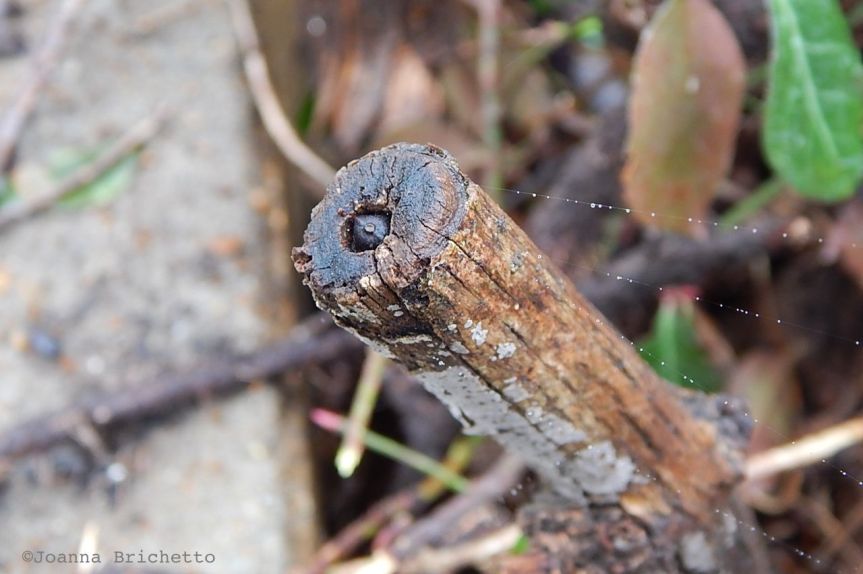
A tree-height Amur honeysuckle bush fell over in the last big snow, and while hacking at the trunk yesterday, I remembered two things: Continue reading “Cache Machine (seed stash)”

Quick, I have to talk about old leaves before new ones happen. Saw a tulip poplar headed toward budburst this morning, so I need to hurry.
Have you noticed how some deciduous trees drop every leaf in fall, but others hang on to leaves all winter? Oaks, for example? I’d wondered about oaks for years, and was never satisfied with the “they used to be evergreen” explanation, despite seeing always-green Live Oaks just one state over. Didn’t all trees evolve from conifers way back before the Cretaceous debut of flowering plants? So, are oaks somehow “less deciduous” than maples or hackberries, which consistently drop every leaf directly onto my lawn each fall?
Marcescence. That’s the word that describes the phenomenon of winter leaves that linger. It doesn’t explain it, but at least it names it. From the Latin marcere / wither. The leaf’s food supply is cut off, but the leaf isn’t. Apparently, the word is used with fungi too, to describe types that dry utterly but revive with a bit of moisture.
After I started Naturalist training, I noticed beech trees kept winter leaves, too: pale, peachy-tan leaves warm against silver trunks. Wherever the gray hills of Warner woods are splashed with that peculiar color—peach/brown/yellow/gold—that’s where young beeches march to the ridge.
They also make music. On a quiet walk, the only leaves that aren’t under my feet are beech rattling overhead at the slightest wind.
Research with the word marcescent led me to one more local species to join oak and beech: hop hornbeam (Ostrya virginana). I hadn’t noticed these because they weren’t on my usual beat. But they were. At the Couchville Cedar Glade bioblitz our team stumbled streamside among young, fluttering trees I assumed were baby beeches. But when I stopped to admire the buds, expecting long, pointy paintbrushes, I found short and pudgy: hop hornbeam. What a thrill. The textbook marcescent trio is now personal. I’ve seen all three Species Most Likely to Linger, and in all their withered glory: oak, beech, hop hornbeam.*
None of this explains why, though. Or explains what advantages leaf retention may offer.
I gathered a few opinions:
The Beech family occupies a “middle ground between evergreen and deciduous.”
Marcescence is an evolutionary “delay.”
Marcescence is a “juvenile trait,” for younger trees and lower branches.
Lower branches cloaked in dead leaves can protect buds from browsing deer.
Lower branches cloaked in dead leaves can provide insulation during snowfall.
Marcescence can reduce moisture loss: Oak and Beech tend to grow on dry, sometimes infertile sites.
Leaves that fall in spring act as timed fertilizer for the soil, just when awakening trees are better able to use it.
All these sound plausible, but there is one confirmed benefit: winter leaves help me identify trees.
We don’t have to remember marcescence or how to spell it, but the idea comes in handy as another clue to what’s around.
*Oak, beech and hop hornbeam aren’t the only species. See this article for more info: Winter Leaves That Hang On.

Even a short, neighborhood dog-walk turns up fistfuls of late winter treasure: acorns to ID, a flap of birch bark, and—thanks to recent chainsaw work—as much fresh hackberry shavings as can fit in a dog poop bag. But even I know the magic of these seasonal accessories has an expiration date. Once spring really kicks in, will acorns and bark be as irresistible?
Which means I need to quickly share another limited-time-only gem: a Catalpa pod. Continue reading “Dog-walk treasures (Catalpa pod)”
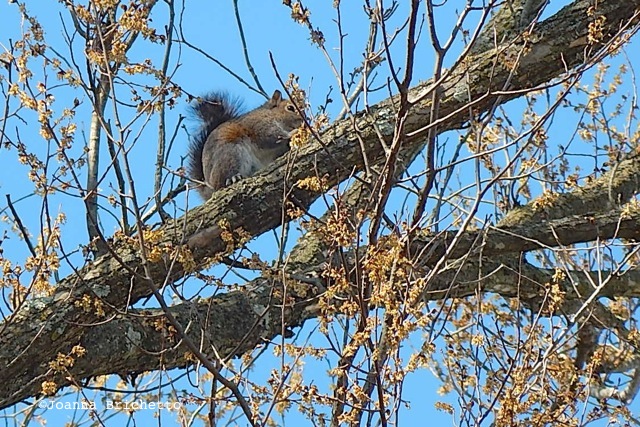
The elms buds have been swelling all week, and today they burst. Elm flowers mean spring. The squirrels could not be more thrilled. Continue reading “Elm Buds, Sign of Spring”
Before I began to Look Around (see what I did there?), the only clue winter was waning was this:

Daffodils are still pure cheer, but they aren’t the only yard flower to signal spring. Continue reading “First Flowers”
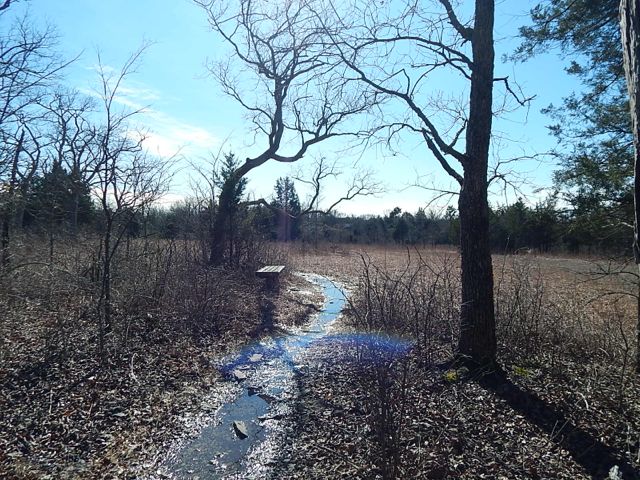
Couchville Cedar Glade is a family favorite because it’s easy to get to and the loop trail is only one mile. Sometimes, we walk with people for whom one mile of Nature is enough. Proximity to a Sonic drive-in is another plus. Our Pavlovian response to a walk at Couchville involves Tater Tots and vanilla shakes. Continue reading “Couchville Cedar Glade after winter rain”
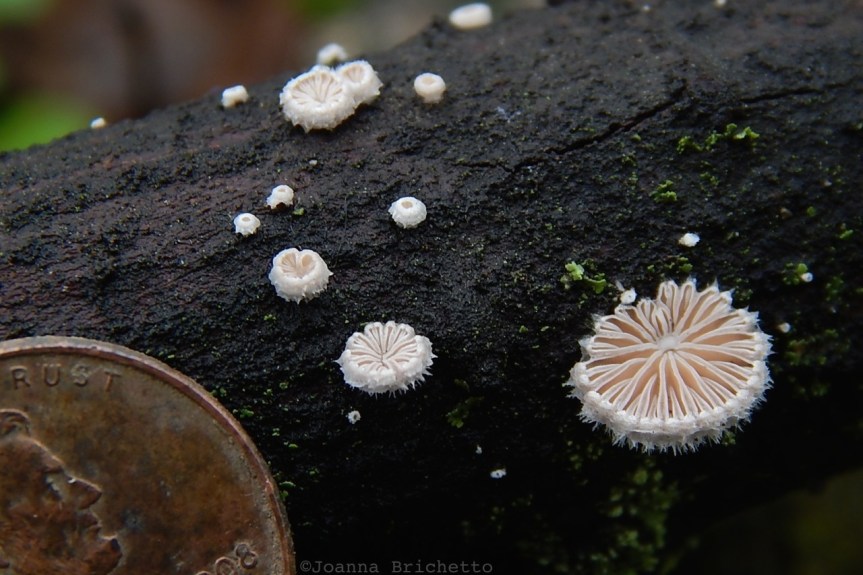
I was curled on the sofa with a migraine, a bowl of pintos, and Buffy the Vampire Slayer when Michael texted me to come out in the rain and see the hickory branch. It was worth it. Continue reading “Hickory branch host”
 SIDEWALK NATURE