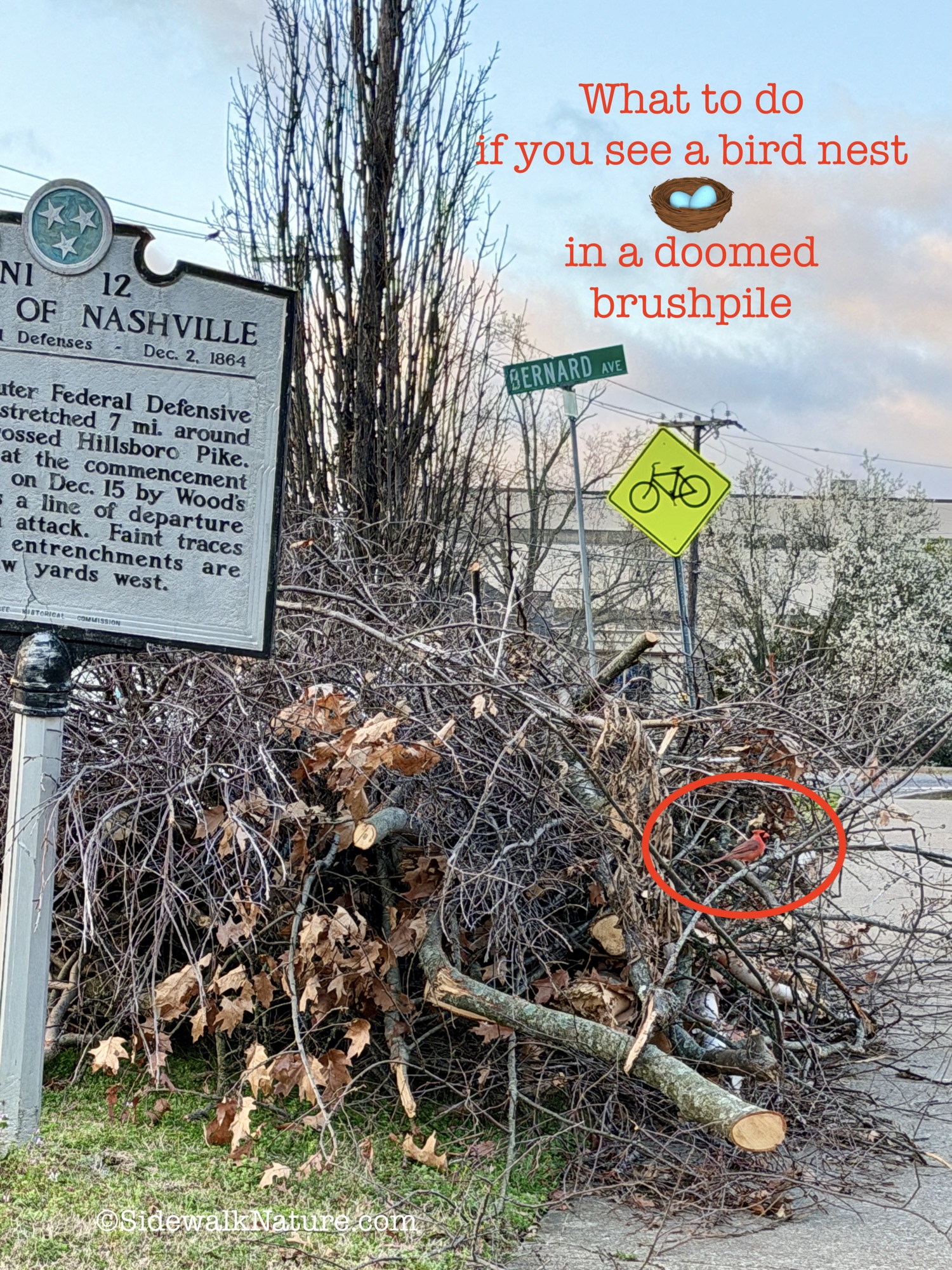
Today’s Sidewalk Nature: tree debris at curb + breeding season = bad news for birds.
At first, I worried that the post-storm piles of tree trash would vanish before I could steal what I needed for backyard habitat. But this was a big storm – too big to tidy in a hurry – and many, many piles still await pick-up weeks later.
From day one, each stack was a bird magnet, but now that we’re hot and heavy into nesting season, birds think these streetside heaps are a safe place to raise a family. They don’t know that the piles are doomed. Cleanup crews are collecting storm debris every day, along with nests, eggs or baby birds that may be hidden inside.
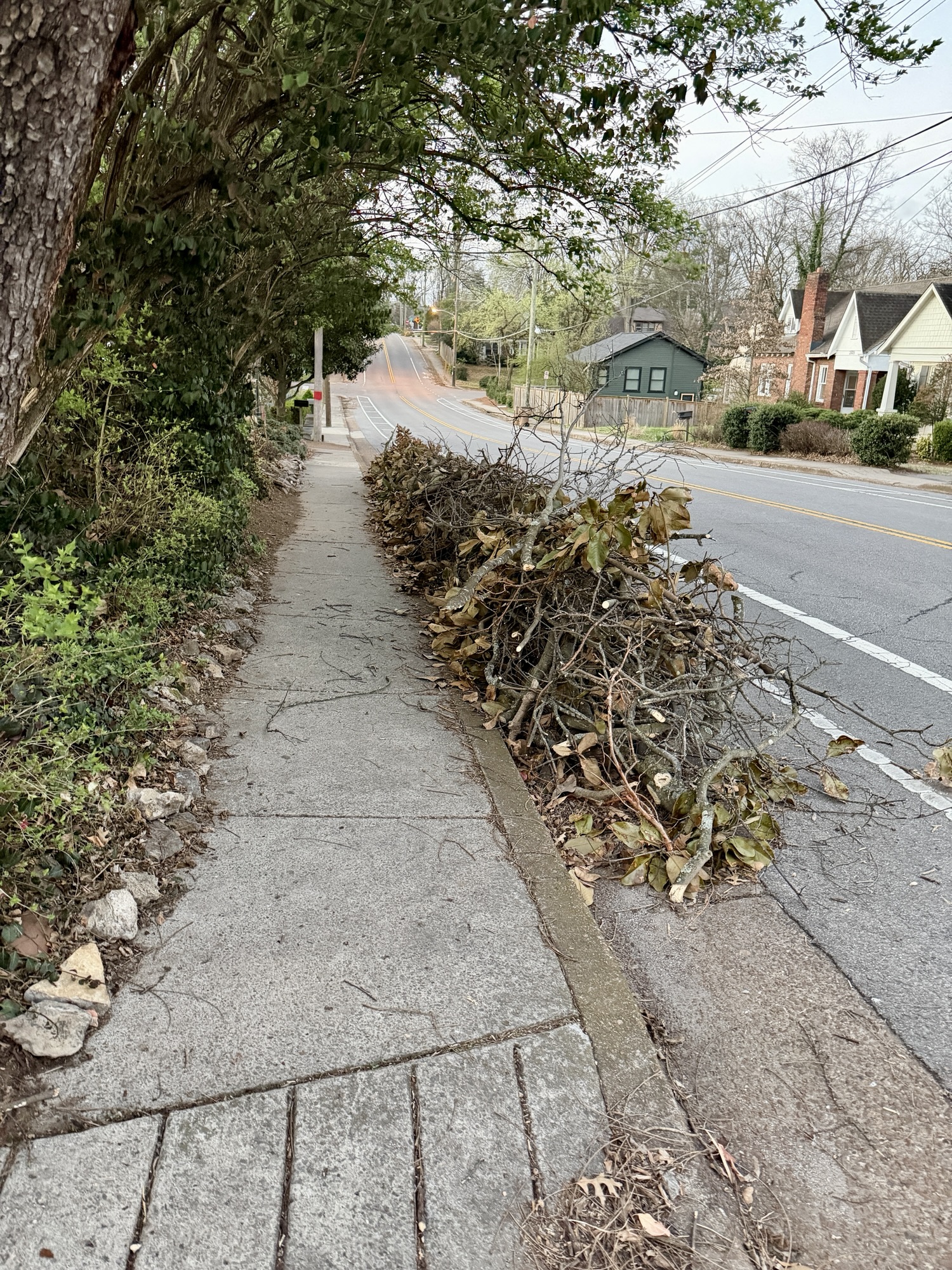
Birds need brush-piles,
but they need brush-piles that aren’t about to get tossed into a chipper.
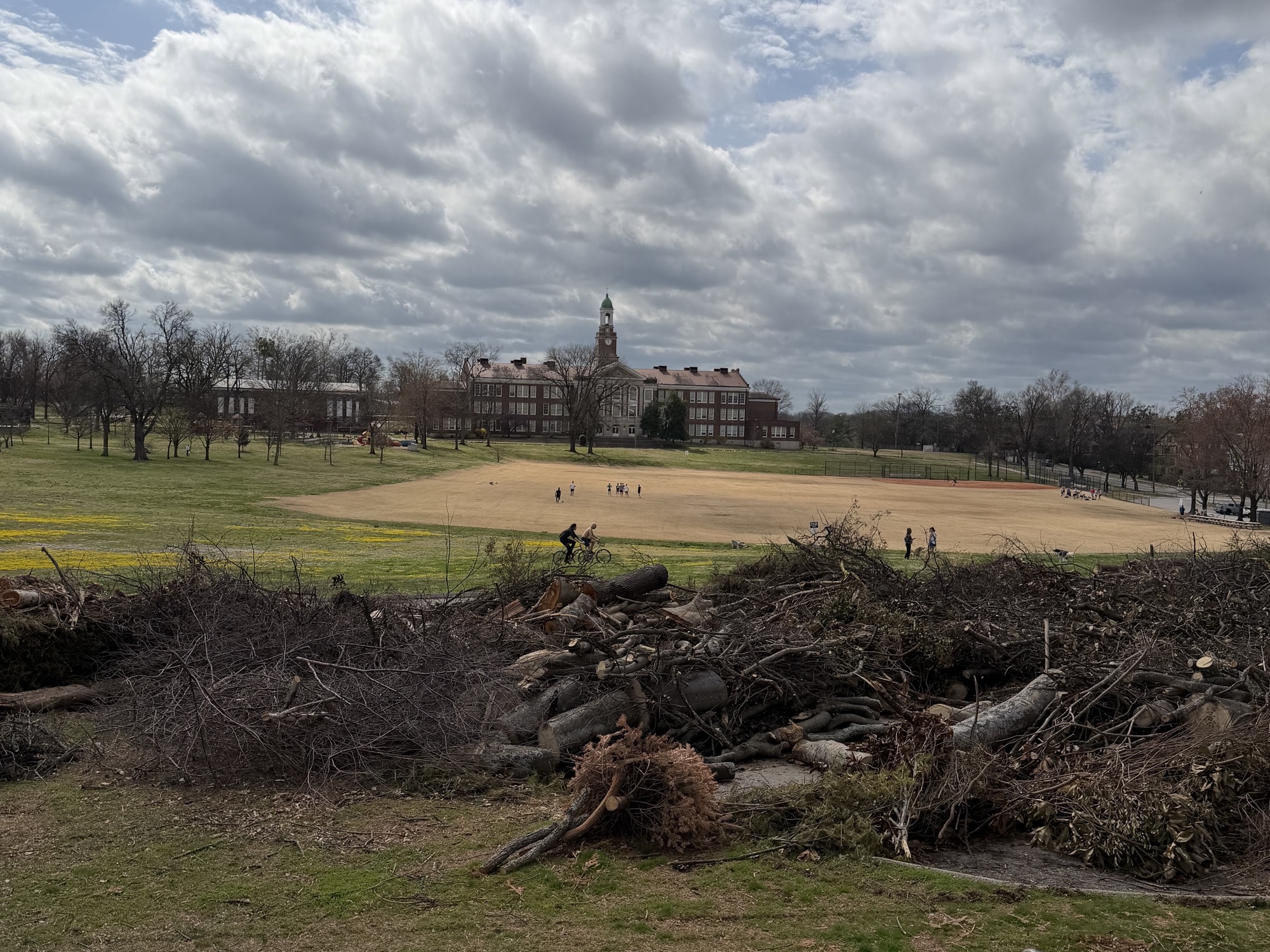
So, what’s a bird-lover to do?
I asked Laura Cook—B.I.R.D. Research Coordinator at Warner Park Nature Center—what to do if we see a nest in a brushpile destined for removal.
Here’s what she says:
—Is the nest empty? Remove it. The bird will re-nest quickly in the same debris pile or somewhere safer.
—Does the nest have eggs or young chicks? Relocate the nest nearby. While it is illegal to move a nest with young under the Migratory Bird Treaty Act, you may move it if it is in imminent danger. Here’s how: relocate the nest a few feet away and at a similar height. If the nest is destroyed, create a surrogate nest by using a small container with drainage holes (a berry basket is ideal) and fill with dry grass or leaves. Gently place the eggs/young in the new nest.
—Does the nest have feathered young? Do not remove. If nestlings have feathers, open eyes, and are moving around, leave the nest alone unless it is in immediate danger.
[For additional details, see “How to help songbirds” at Harmony Wildlife Rehabilitation (link below).]
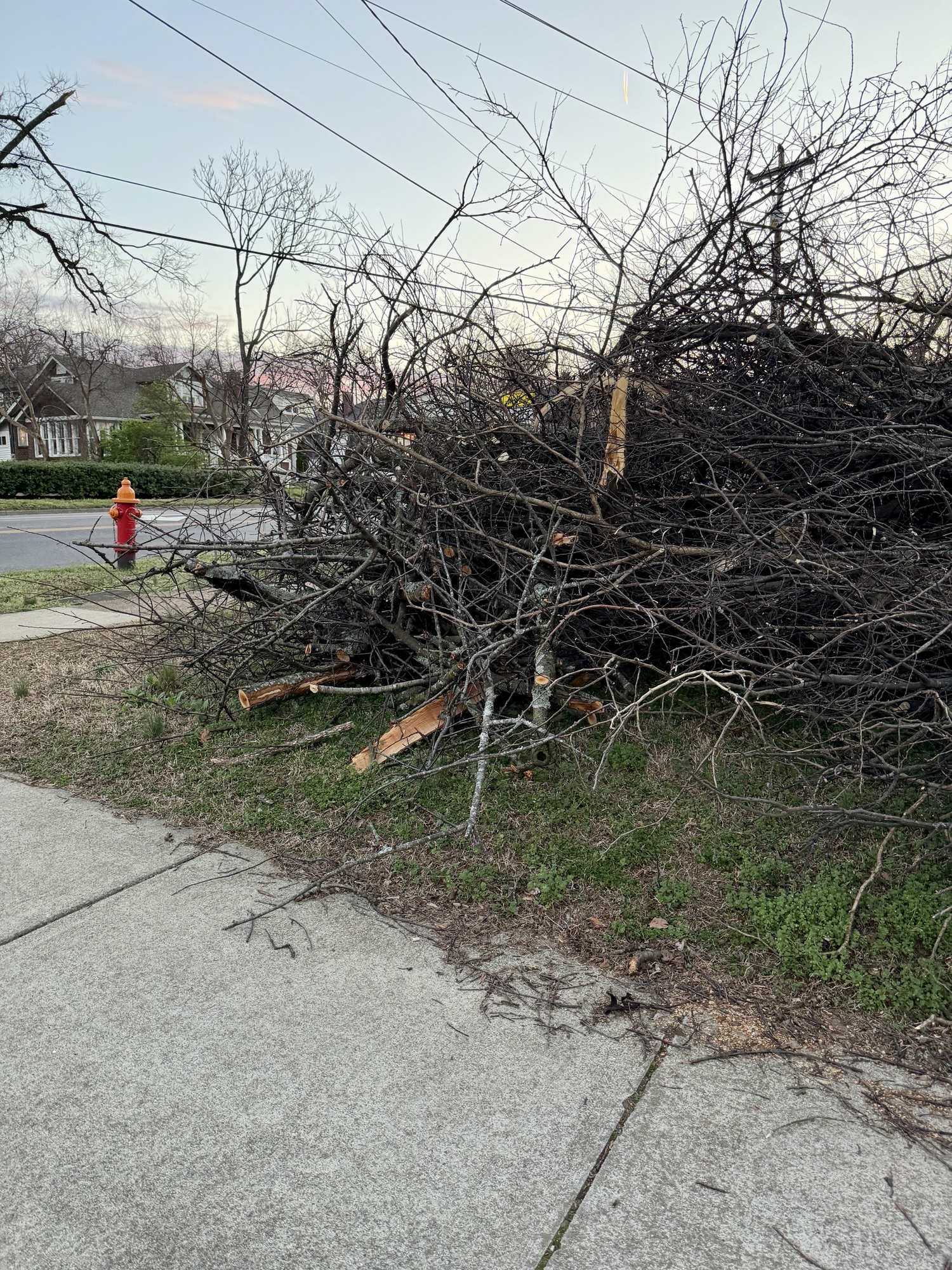
Meanwhile, before the trucks come, let’s nab more of that trash and turn it into treasure.
What if every yard had it’s own tidy brushpile?
What if every yard could make new birds?
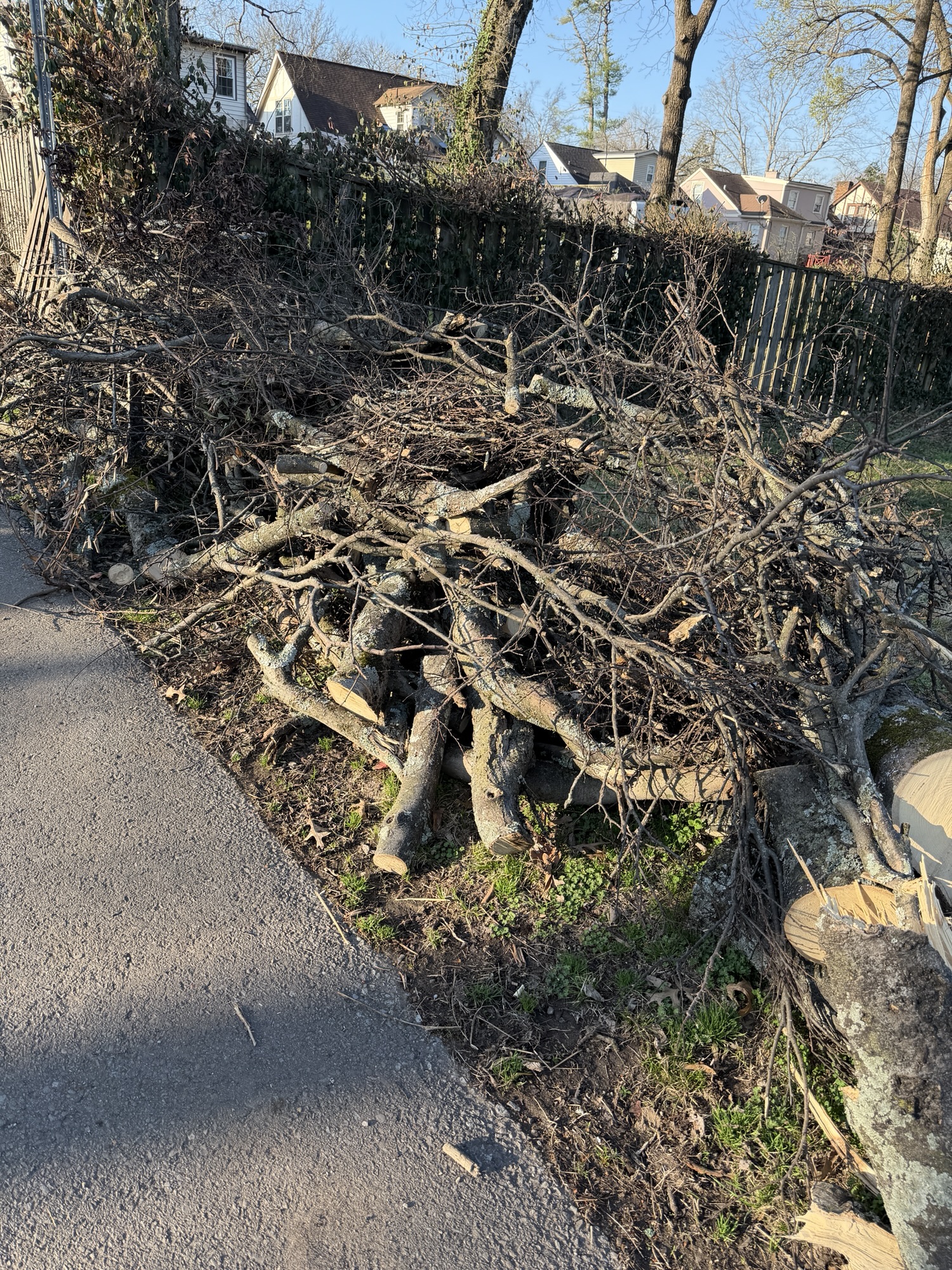
Make your own intentional brushpile
Quick! It only takes a few minutes to start a real brush-pile at home. Run out and steal some bits from the curb and take them to the backyard. Bigger pieces on the bottom, smaller on top, with bonus points for going higher than 3 feet. (Details in previous post, Storm Trash as Treasure). Build it away from the house, but within view to watch birds and other marvelous creatures using the heck out of it.
Other ways to help birds
Laura Cook wants us all to know that our yards can be year-round habitat for resident and migratory birds.
Anything and everything we do to support birds automatically supports our entire local foodweb.
Learn more at BirdSafeNashville.org including:
• Keep your cat indoors
• Plant native plants that provide food (insects and berries) and habitat
• Don’t use herbicide or pesticides
• Install bird-safe decals on windows to prevent collisions
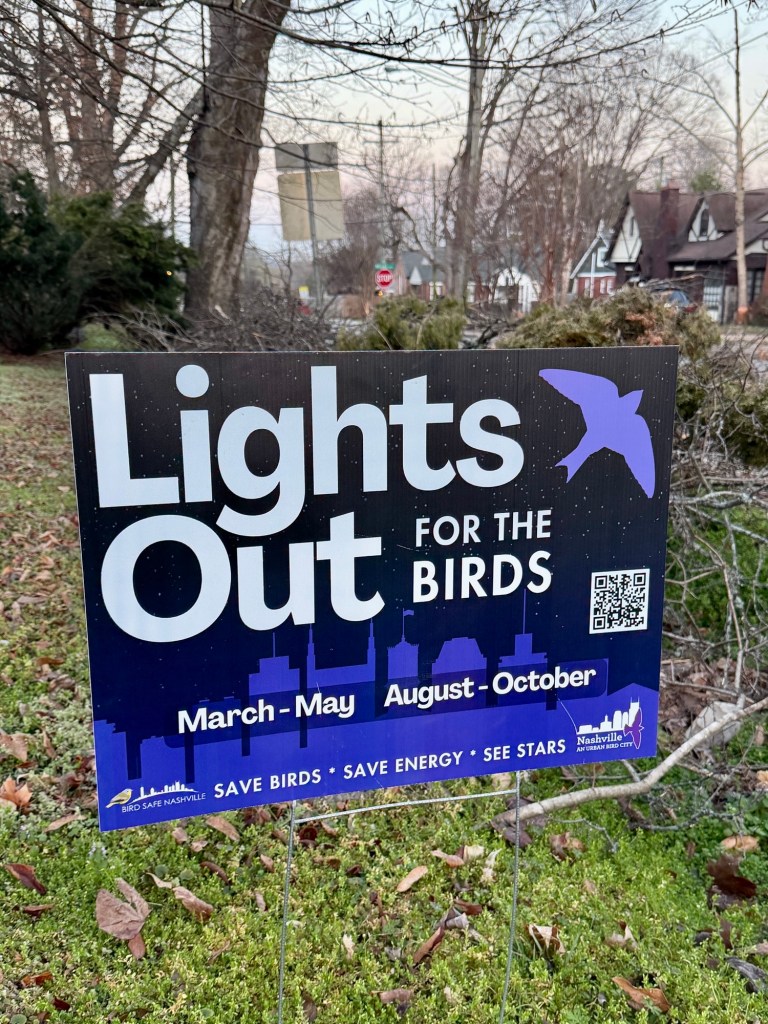
• Turn off outside lights or switch to motion-detectors, especially during migration
And look: locals can order a nifty sign to put in the yard during spring and fall migration:
Remember, birds are losing habitat everywhere—including on our own curbs—but we can add habitat somewhere.
It’s so easy to move a bit of brush to one corner of our yards.
Birds will find it. They desperately need it. And we’ve got literal tons of free material at hand.
So let’s “brush up” our yard for the birds.
Resources
Good brushpile advice and photos from another local blog: Clay and Limestone’s “Taking care of wildlife challenge” (link).
And from Atlanta, see “Reclaim Nature and Add Habitat with a Brushpile” at Nurture Native Nature (link)
-BirdSafe Nashville (link)
-Warner Parks B.I.R.D. program / Bird Information Research Data (link)
-Harmony Wildlife Rehabilitation (Nashville) “How to Help Songbirds” (link)
-The Habitat Connection (certify your yard as a bird sanctuary) (Middle TN ) (link)
-“Storm Trash as Treasure” SidewalkNature (link)
-“Make Birds Feel at Home with a Brushpile” at Audubon Magazine (link)
-“Yards with Non-Native Plants Create “Food Deserts” for Birds” at Audubon Society (link)
-“Gardening for Birds” at Cornell Lab of Ornithology (link)
-“Create a Bird-Friendly Habitat” at National Wildlife Federation (link)
-“Get Started Planting Native” at Homegrown National Park (link)
More
SidewalkNature:
-Subscribe to Sidewalk Nature to get an email when I update. I never share your info.
-Follow on Instagram or Facebook, where posts are 100% nature.
SUBSCRIBE
-General comment or question? Click Contact.
-Corrections, suggestions, new friends always welcome.
Bio:
Joanna Brichetto is a naturalist and writer in Nashville. Her book, This is How a Robin Drinks: Essays on Urban Nature, is an almanac of 52 true stories about the world “under our feet, over our heads, and beside us; the very places we need to know first.” Called “Nashville’s Sidewalk Naturalist,” Jo hopes to meet all her plant and animal neighbors, and to help human neighbors add native habitat where we live, work, and play.
She’s at work on her second book, “Hackberry Appreciation Society,” and you can find her at SidewalkNature.com (“Everyday wonders in everyday habitat loss”) and on Instagram @Jo_Brichetto.
 SIDEWALK NATURE