[This post is two things: a report on Nashville’s first “Leave the Leaves Day,” and a list of suggestions for anyone to make their own local Leave the Leaves event. ]
Nashville’s first “Leave the Leaves Day” is in the bag, so to speak, where nearly 250 visitors at Warner Park Nature Center learned why leaves are best left out of the bag.
Simply put,
when we bag or mow leaves
we are bagging and mowing next year’s butterflies, fireflies, and bird food.
This is something leaf champions have known for years, but a new study (link below) gave us numbers. When we remove OR mow fall leaves, 45% fewer butterflies and moths emerge the next year.
Imagine if we remove or mow leaves every year, fewer and fewer butterflies and moths will emerge until we are left with zero.
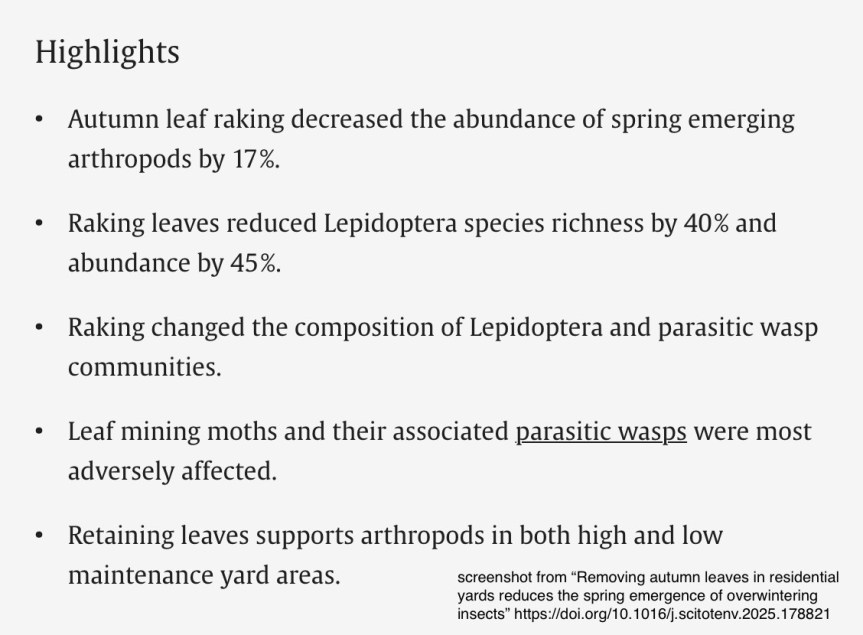
Remember: about 90% of the arthropods in Nashville overwinter in some form—whether egg, larva, pupa, or adult—in, on or under the leaves. Butterflies, lightning bugs, ladybugs, flower-flies, bumble bees, and so on.
Leaves aren’t litter: they are LIFE.
The study gave us numbers for beetles, spiders and parasitoid wasps, too—and all are crucial to keeping our world alive—but when I talk to people new to the idea of leaves as life, I don’t mention these groups. I keep it simple with pics of butterfiles, fireflies and birds. I’m still trying hard to “meet people where they are,” and most people are not “at” spiders and parasitoid wasps. Yet.
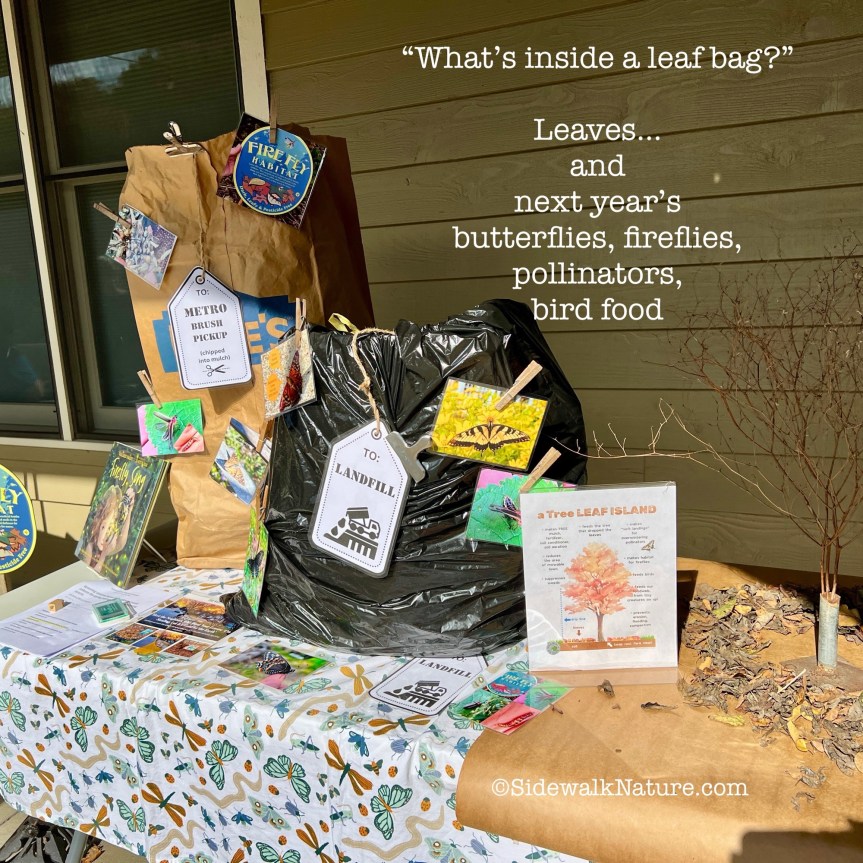
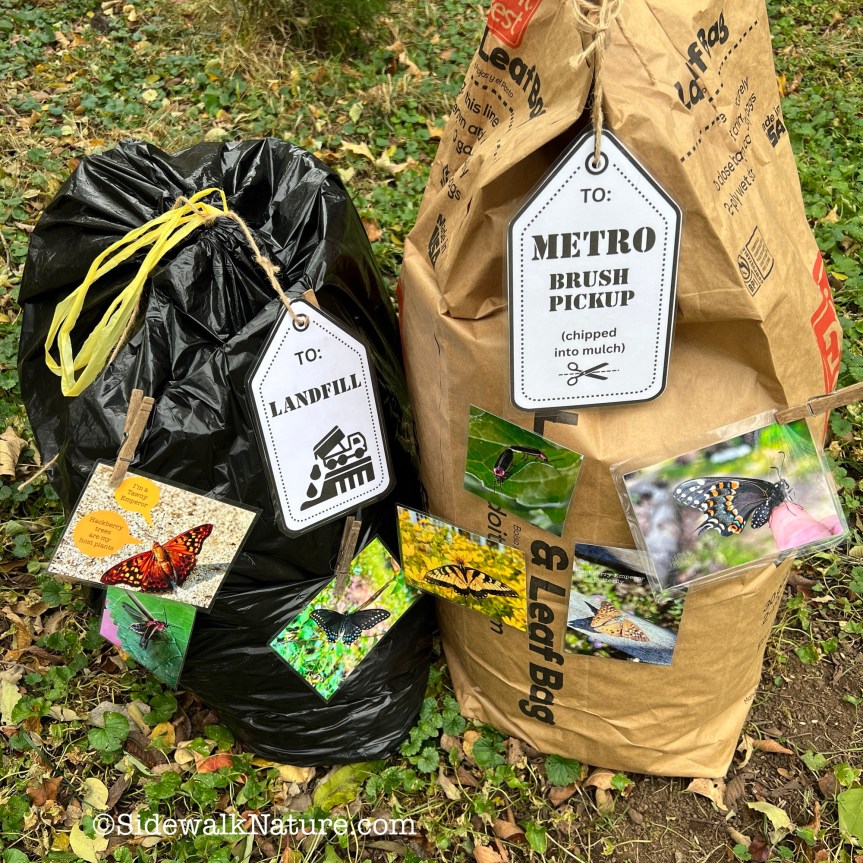
At our “Leave the Leaves Day,” my SidewalkNature display showed what’s inside our plastic and paper leaf bags. Here in Davidson county, plastic bags left at the curb go the landfill, but paper bags left at the curb get mulched. I used to think mulching was a good solution until I learned what else was in those bags.
For example, larvae of our Common Eastern fireflies spend two winters under the leaves before they are old enough to become adults. For two years, they eat slugs and worms and whatnot, hanging out in the moist soil under leaves, alongside rotting logs or stumps.
A mower blade destroys their habitat, and leaf blowers literally blow them out of existence.
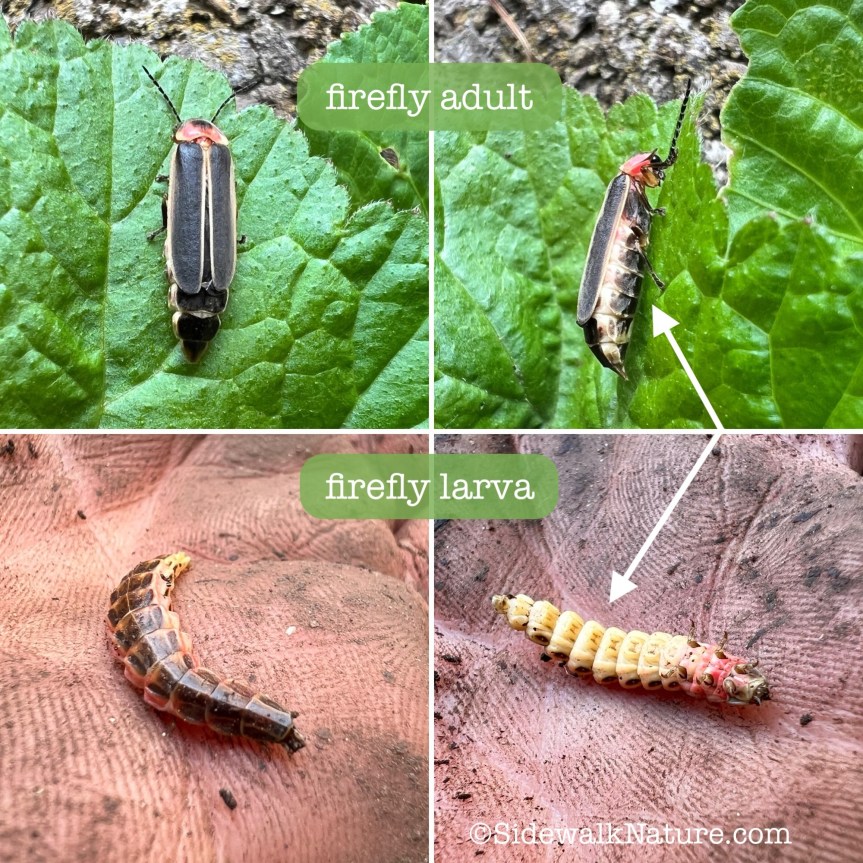
If we want more fireflies and butterflies, we must leave the leaves.
EVENT Activities
At Leave the Leaves Day, all our invited organizations staffed a table with info and an activity.
There were microscopes and magnifying glasses to explore soil and leaves for critters,
glass displays of common insects and other arthropods,
kiddie pools of leaves for toddlers (w/ toy insects they could keep),
a superstar park ranger (Holly Taylor!) with a presentation about local fireflies,
a leaf rubbing station,
a leaf art station,
bird habitat requirements,
a live wildlife demo.
puppets and felt boards for storytelling.
The Nature Center also made a big leaf pile under a huge sycamore, because most kids don’t do rakes or leaf piles at home. When I peeked at it that day, I saw families whooping and playing and jumping in the leaf pile. Grownups, too. It was beautiful.
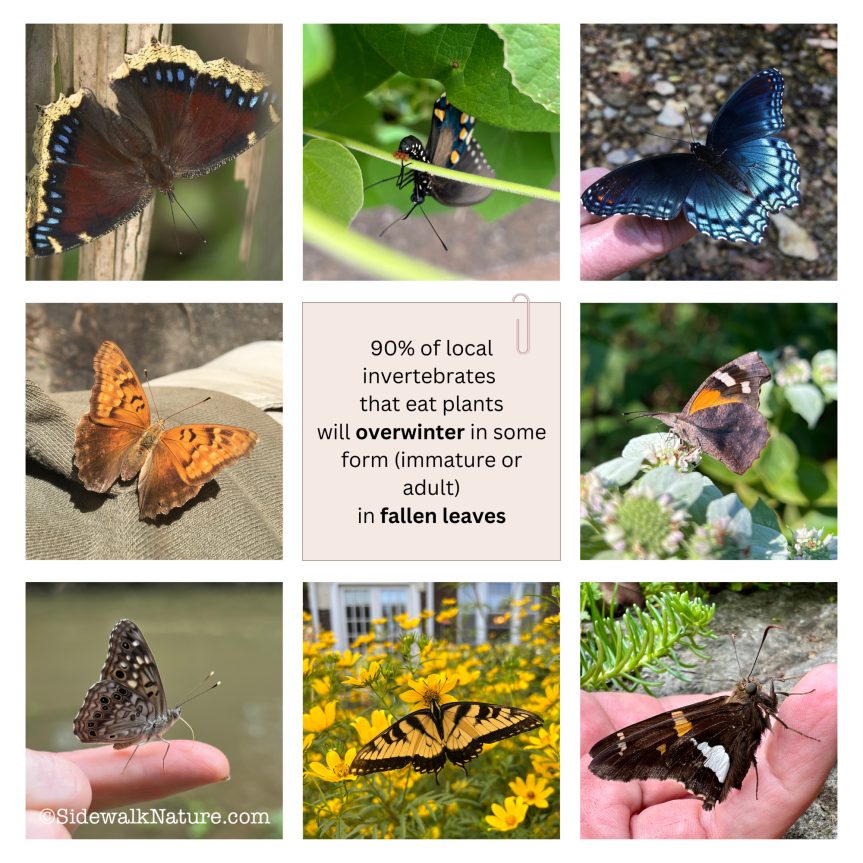
If you are planning a Leave the Leaves Day, additional activities could be:
-Walks: leaves, trees, tree fruit
-Leaf identification of local trees (can combine w/ leaf rubbings)
-Composting demo w/ finished leaf compost to explore
-Entomology stations with labelled specimens and live creatures
-Mosquito Bucket-of-Doom demo (see my DIY page)
-Local authors of relevant books
-Story corner with leafy books for the Littles
-Free native plant plug (with instructions, faunal associations)
The easiest thing is to invite community partners who will each handle their own activity. Each table needs to have more than just info. It needs to have something to do.
Partners such as: university departments like field biology, botany, entomology, etc.; gardening clubs; Master Gardeners (but nothing about “pest control” please, unless it’s about insect predators); Master Naturalists; Invasive Plant councils; native plant landscapers; habitat certification organizations; zoos; wildlife rehabbers; WeedWrangle®, outdoor education experts; city forestry and stormwater ambassadors; and any other organization that works with conservation, rewilding, water, sustainability, native trees, nature.
Make sure they know your goals! Vera, our Director of Warner Park Nature Center, sent out invitations with something like “We are reaching out to see if you / your organization would be interested in participating in this first-time event by setting up an information and activity table about any of the ecological benefits to “leaving the leaves” in the fall.”
She added a link to the main Xerces Society page about “leave the leaves” to make those benefits clear (link below).
And then she listed some of the above activities.
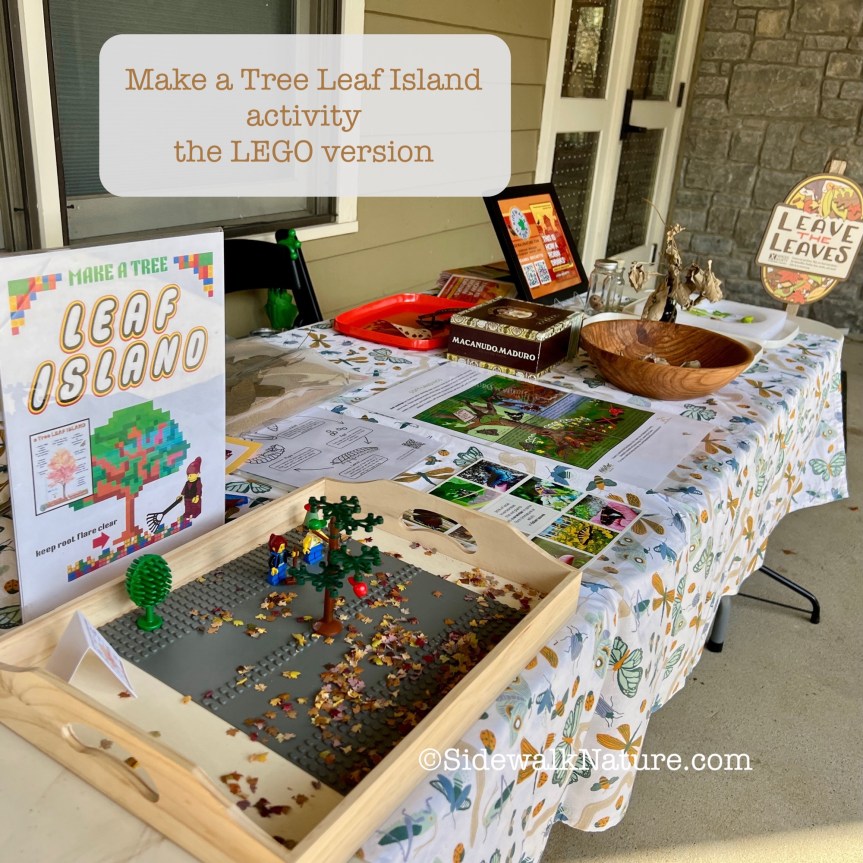
“Make a Tree Island” activity at Leave the Leaves Day
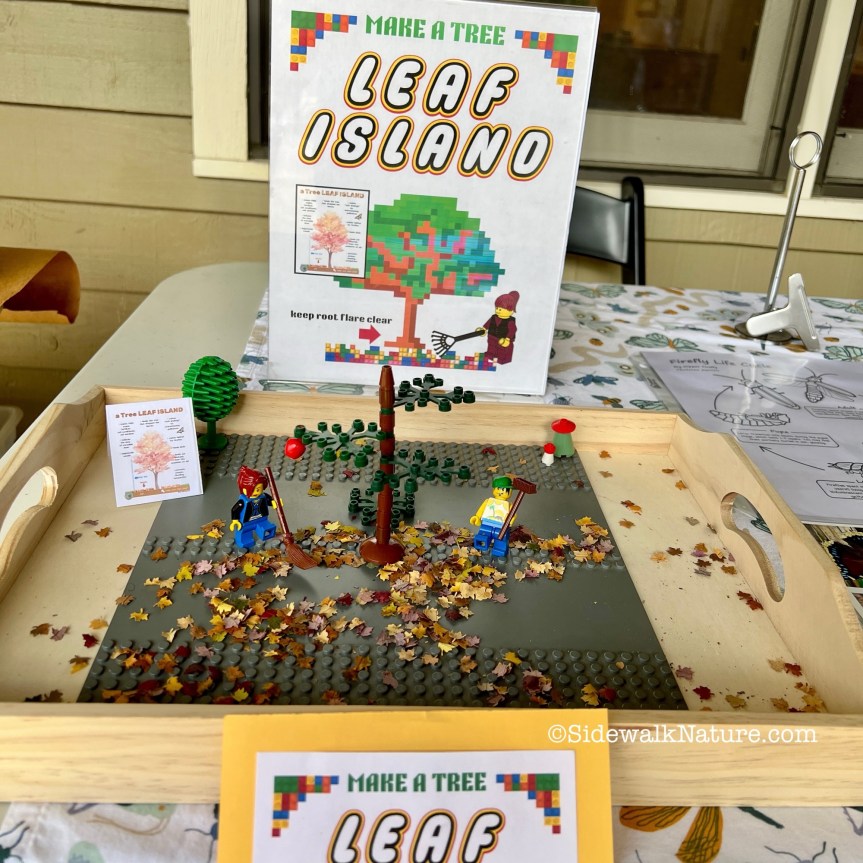
My SidewalkNature display was the plastic and paper bags o’ leaves and critters, but my activity was about WHERE to leave the leaves. So I came up with “Make a Tree Leaf Island.”
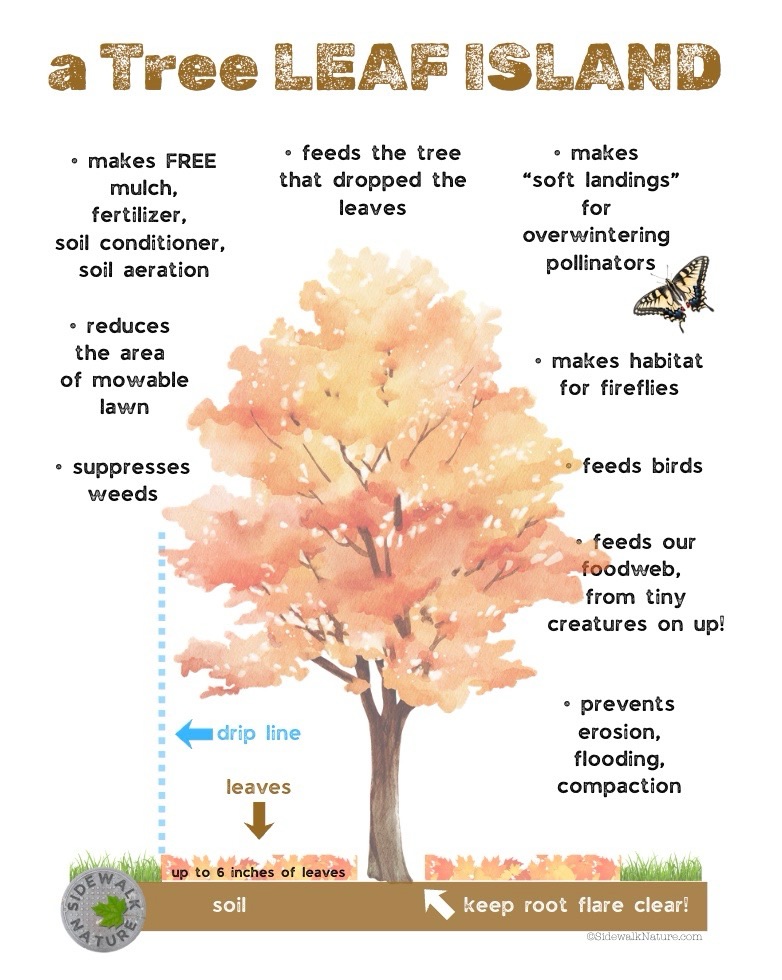
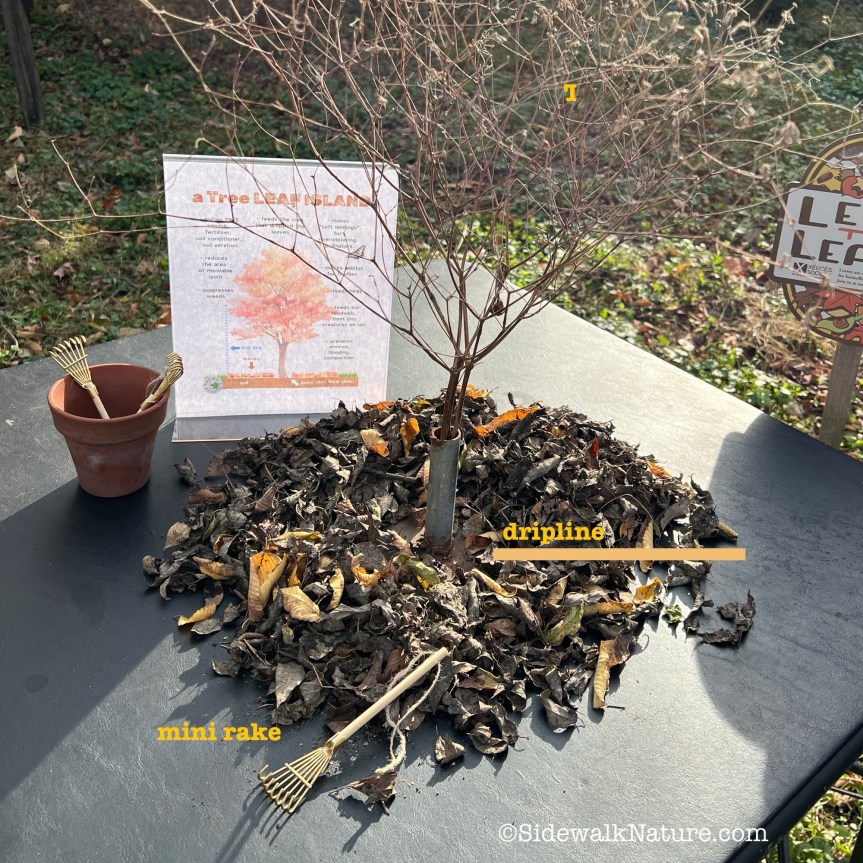
It shows an easy way to leave lots of leaves where they can do the most good: under the tree that grew them.
A layer of leaves up to 6 inches thick all the way to the drip-line will give the tree and the soil and the creatures what they all need. If the wind blows the leaves away, add a ring of stones or logs or branches or sticks, all of which add habitat to the yard.
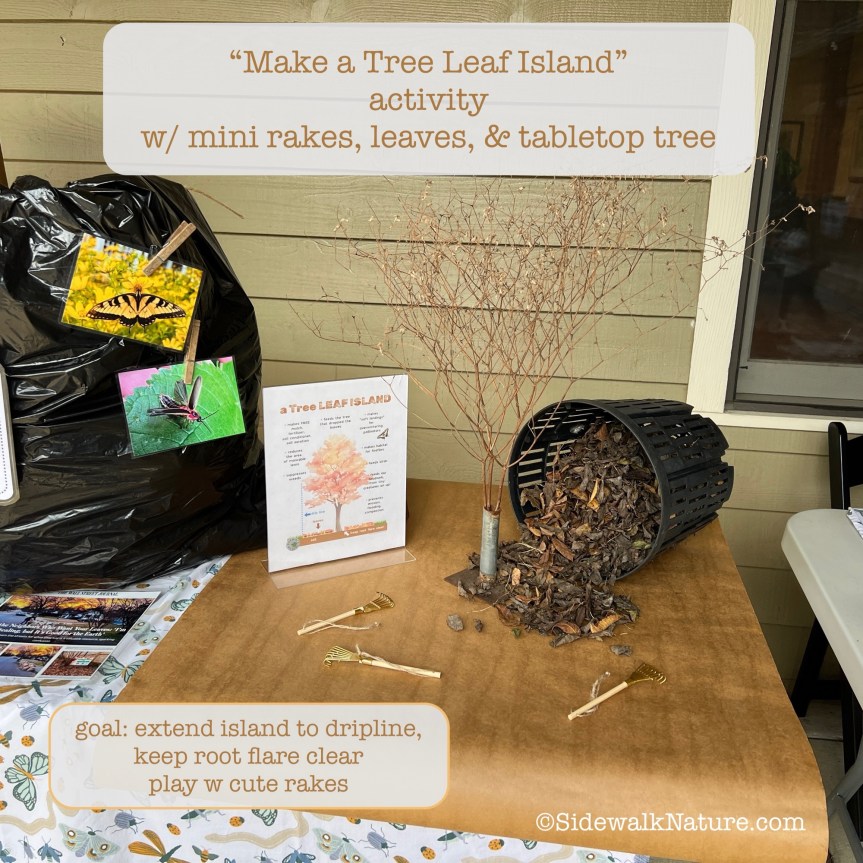
Here’s my (printable) flyer to show the why and how:
And here are my two activities. One is a tabletop version with mini-rakes:
And the other is a LEGO minifig version, because LEGO is irresistible.
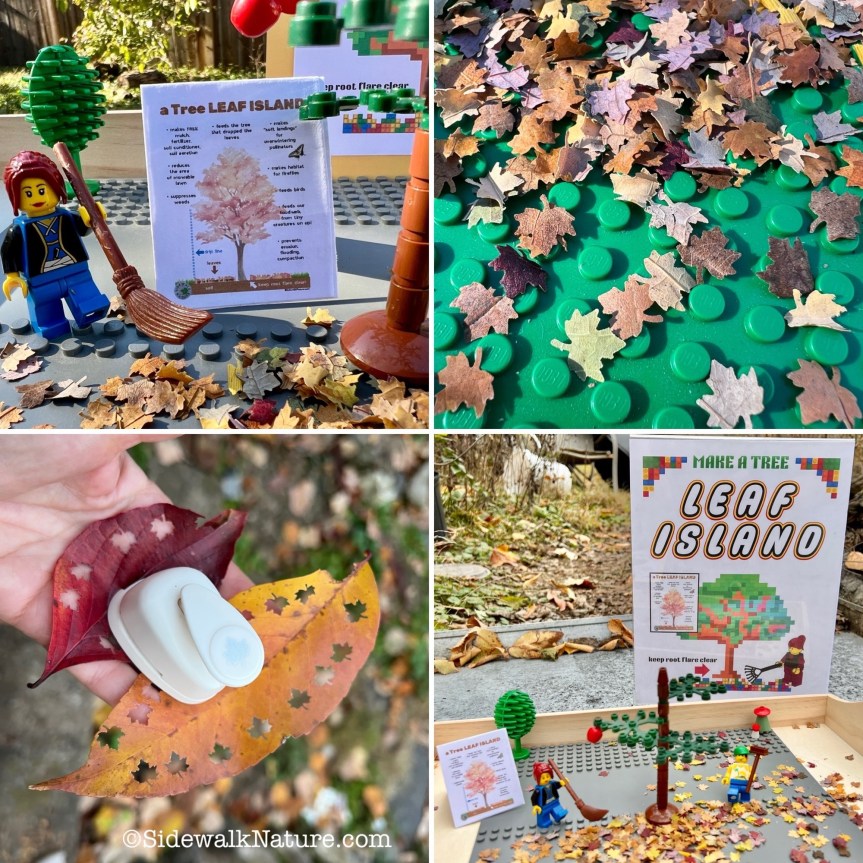
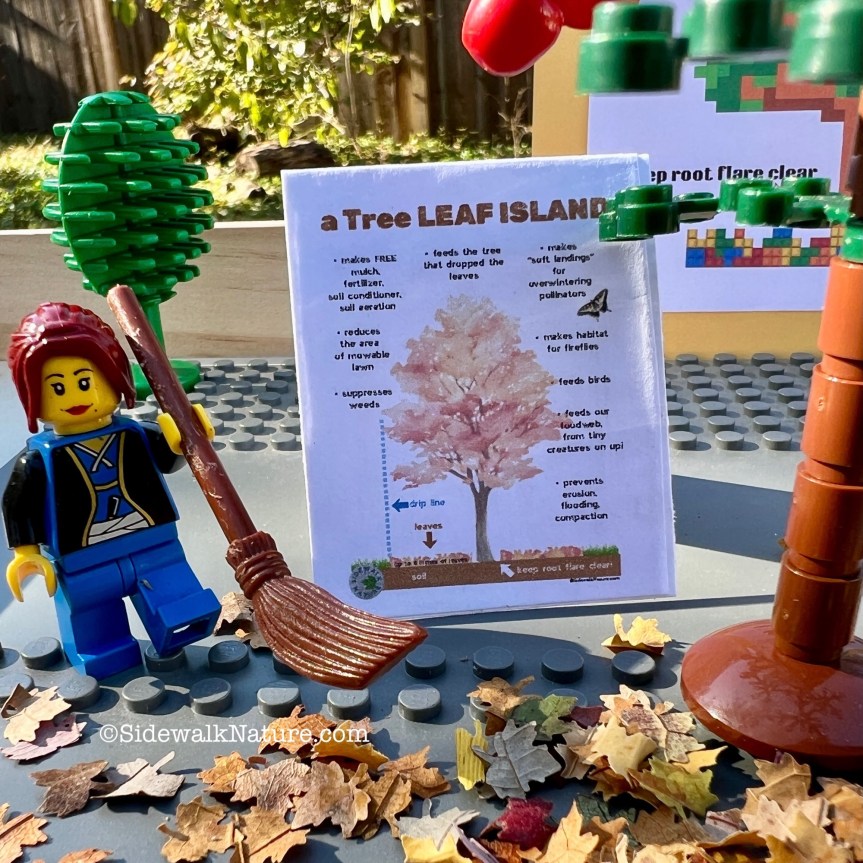
I used a punch to make LEGO leaves from real tree leaves so the minifigs could rake and sweep the real thing.
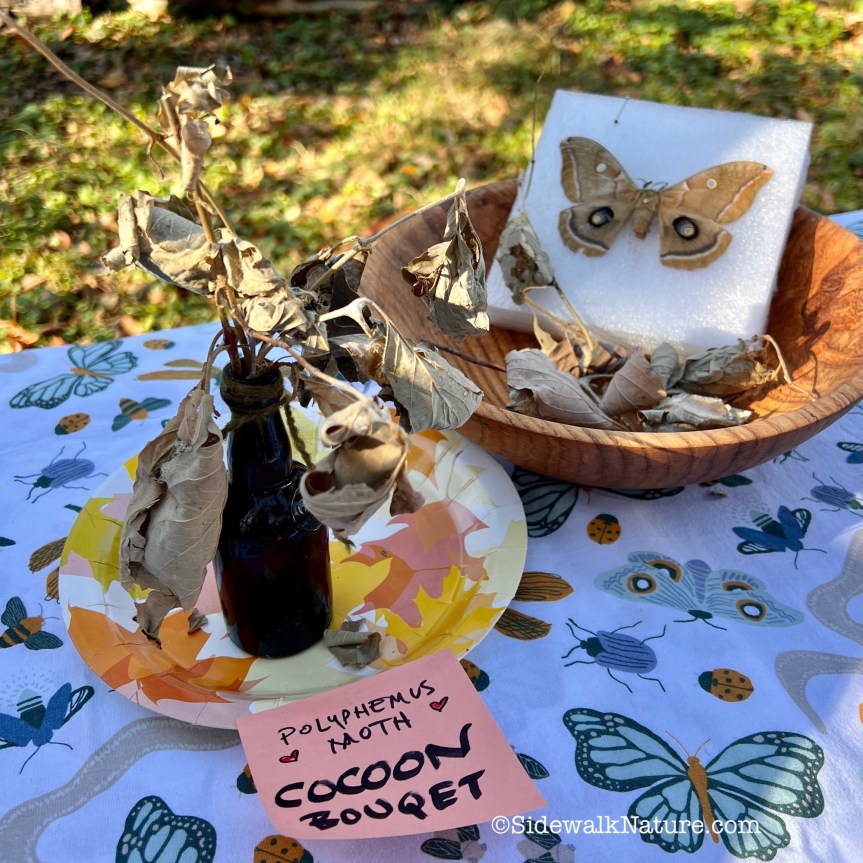
I also brought Polyphemus cocoons that each caterpillar made inside a leaf shelter. Good camouflage from birds, but also apt to get mown, shredded or burned by people who think they’re just leaves:
People kept asking “How long should the leaves stay?” The answer is FOREVER. A zillion organisms will break them down. Add more leaves next year.
“Do we clean them up in spring?” NOPE. That’s when all the critters start emerging at different times, different months. Those leaves are habitat year-round.
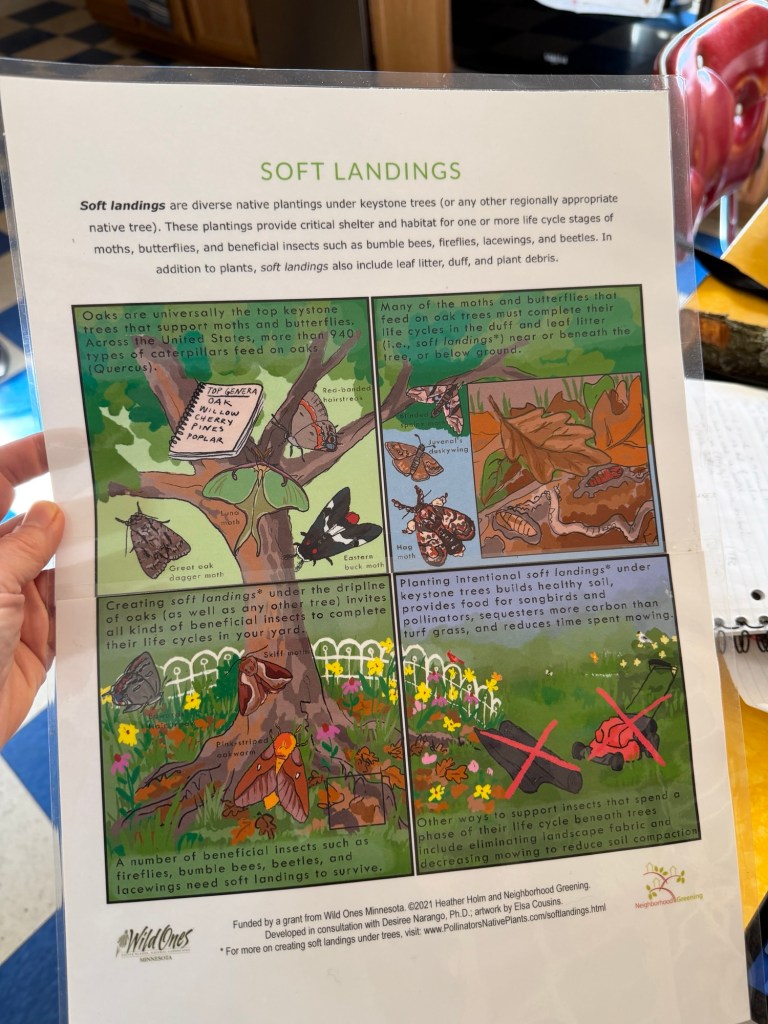
After the under-the-tree piles kills the turfgrass, you can make the area more beneficial by turning it into proper “Soft Landings” a la Heather Holm. At my table, I had her infographic (link below) to show what this means:
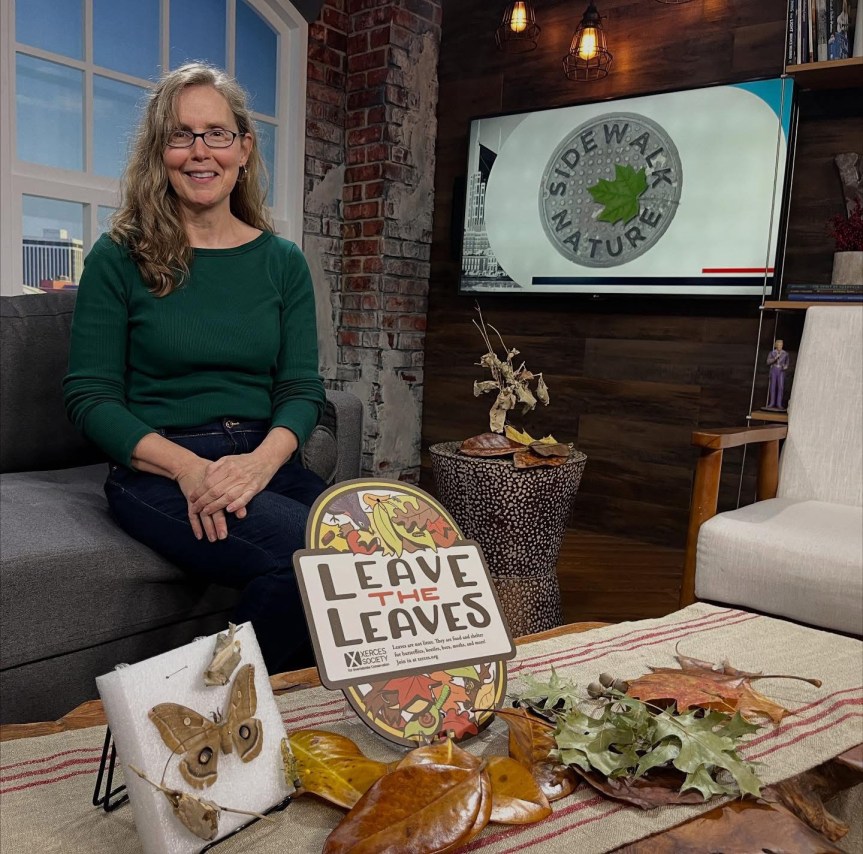
And here’s a clip from the TV spot I did to advertise “Leave the Leaves Day” on WSMV’s Today in Nashville, with Carole Sullivan. Because we are put on this earth to make fools of ourselves for the things we love:
Resources for a Leave the Leaves Day:
–Partner with a Nature Center! They are busy, so be their #1 volunteer and help recruit participants, organize, publicize, set up, clean up. Make sure a welcome table is the first thing visitors see. Add the printable signs from Our Habitat Garden, below.
–(the study)”Removing autumn leaves in residential yards reduces the spring emergence of overwintering insects” Max Ferlauto, Karin T. Burghart, Department of Entomology, University of Maryland, College Park, MD 20742, USA https://doi.org/10.1016/j.scitotenv.2025.178821
–my printable “Tree Leaf Island”:
—“Leave the Leaves” (why and how) at the Xerces Society for invertebrate conservation. Must-read for all volunteers and exhibitors.
–“Soft Landings” and “Keytone plants” downloadable graphics to print as signage for educational events (link).
–BeeCity USA has an online promo kit for affiliates planning a Leave the Leaves event: link.
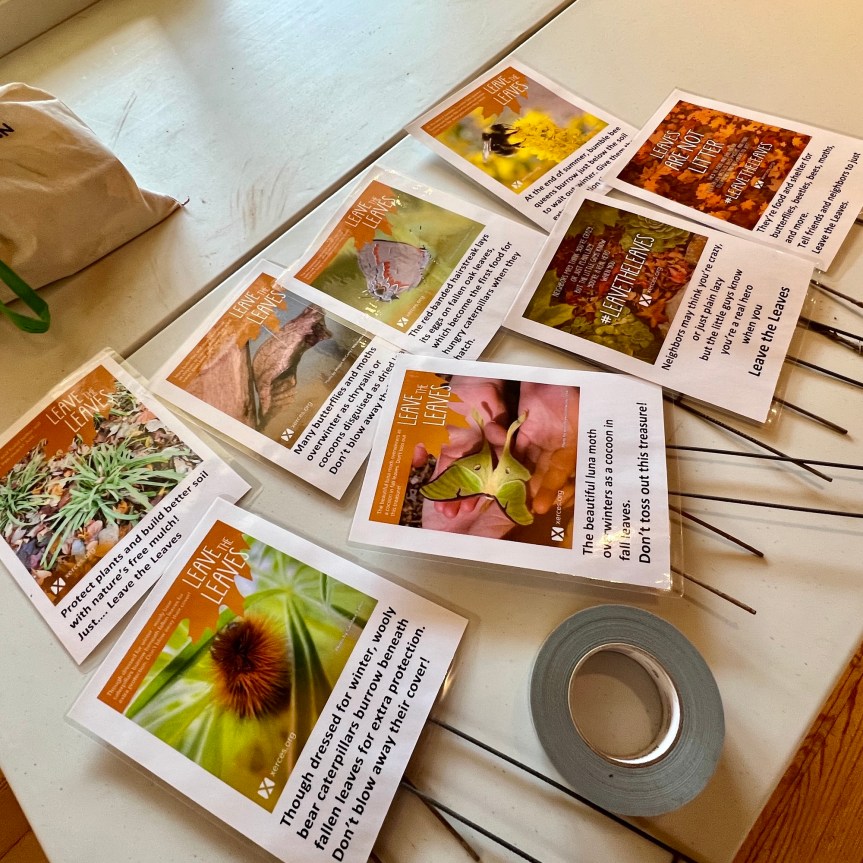
–“Our Habitat Garden” took Xerces graphics and added text to make printable signs for leaf events (link) Our Nature Center laminated them, and I taped them to metal “H” stands to poke in the ground. They can guide people from the welcome table to the action, or they can surround the active space. Reusable every year:
And here’s the whole 3:30 segment from the TV interview: https://www.wsmv.com/video/2025/10/31/permission-leave-leaves-this-fall-by-naturalist-joanna-brichetto/ With the polyphemus cocoon bouquet, of course:
More
SidewalkNature:
-Subscribe to Sidewalk Nature to get an email when I update. I never share your info.
-Follow on Instagram or Facebook, where posts are 100% nature.
SUBSCRIBE
-General comment or question? Click Contact.
-Corrections, suggestions, new friends always welcome.
Bio:
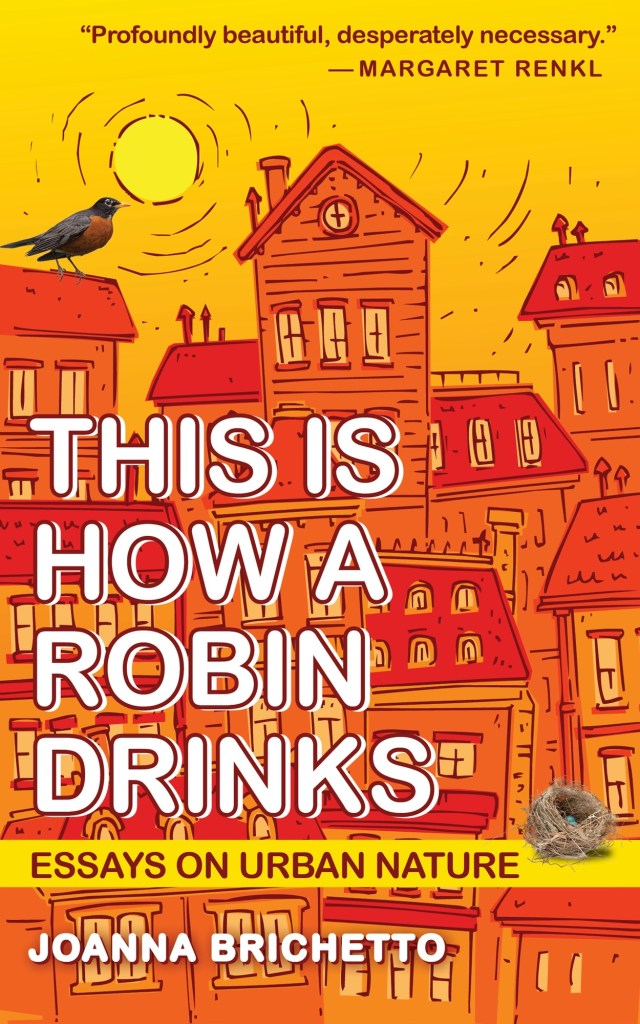
Joanna Brichetto is a naturalist and writer in Nashville. Her book, This is How a Robin Drinks: Essays on Urban Nature, is an almanac of 52 true stories about the world “under our feet, over our heads, and beside us; the very places we need to know first.” Called “Nashville’s Sidewalk Naturalist,” Jo hopes to meet all her plant and animal neighbors, and to help human neighbors add native habitat where we live, work, and play.
She’s at work on her second book, “Hackberry Appreciation Society,” and you can find her at SidewalkNature.com (“Everyday wonders in everyday habitat loss”) and on Instagram @Jo_Brichetto.
 SIDEWALK NATURE