Below, I’m listing local events where I plant to speak or share or both. The first one is this Saturday (Sept 27) at the Hendersonville Public Library.
But first, an update from this month’s Native Nature Share:

At Native Nature Share, each participant brings a seasonal wonder for a grown-up Show ‘n’ Tell, and this time, Vera’s wonder was a munching (and pooping) caterpillar. She borrowed it from the fennel in the garden. In Warner Park Nature Center fashion, Vera showed but delayed telling: she asked the group to tell what we saw, thought or wondered, but I’m pretty sure I instantly blurted “Black Swallowtail butterfly caterpillar,” because this, apparently is my fashion.
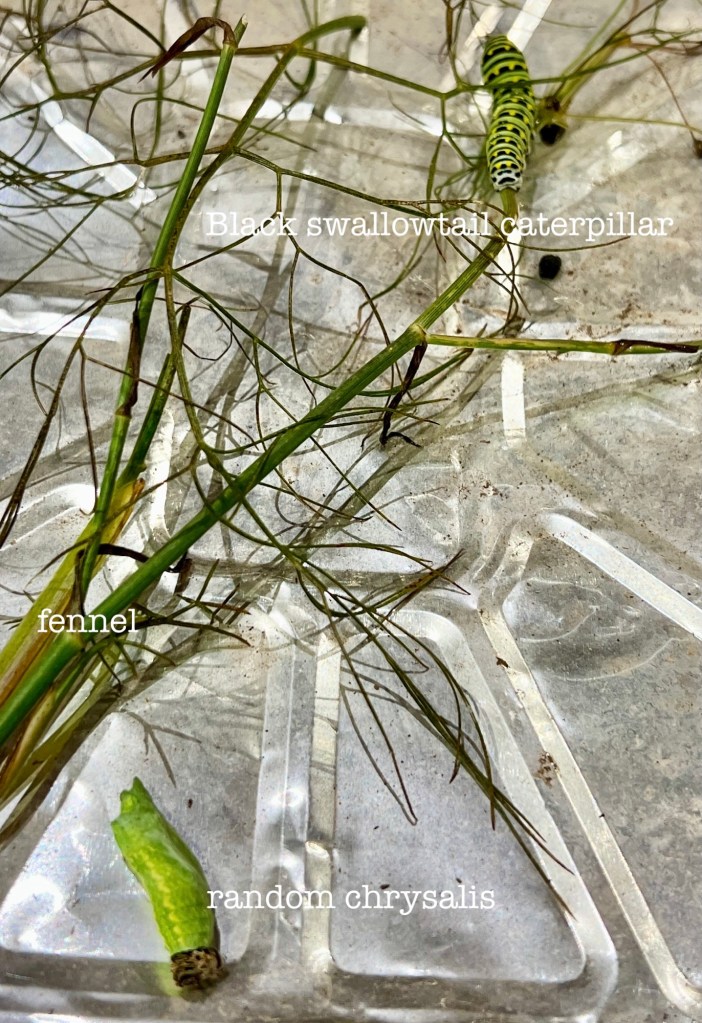
Also in the pan was a green chrysalis Vera found lying flat on the patio. The color, shape, and location suggested Black Swallowtail, but the chrysalis had been knocked loose from its usual moorings: the silk pad at the butt (the cremaster) and the thin, silk girdle that keeps a pupa hung at the proper angle.
How did it get there? And how long had it been flat on the ground? Flat is not ideal for proper development. Was it already dead?
The morning was chilly, and though I let the chrysalis warm in my cupped hand, it didn’t move.
So I asked Vera permission to take it home, where I could “baby it” and see if it was viable.
“You’re taking it home?” a friend asked.
“It’s what I do,” I said, which is sort of true. If there’s a wild caterpillar or butterfly in trouble, I want to help. I don’t raise butterflies per se, but I can raise the odds with temporary shelter, and in the case of a fallen chrysalis, with a hoist to a safe spot.
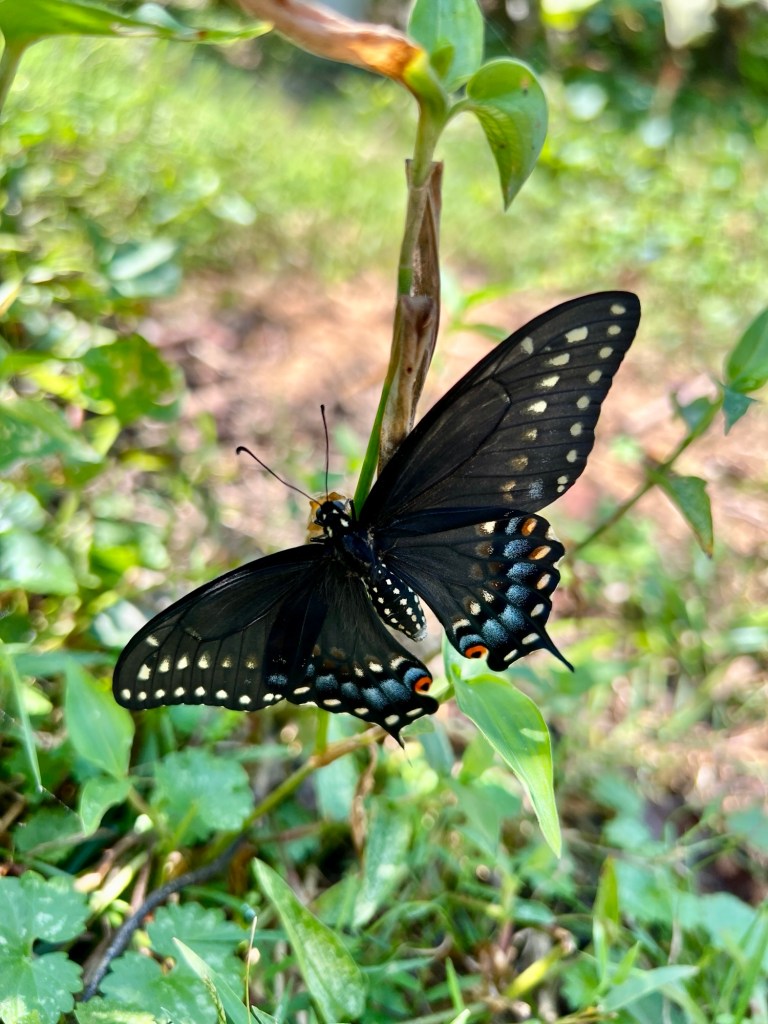
And look who I met six days later: a healthy, beautiful Black swallowtail adult!
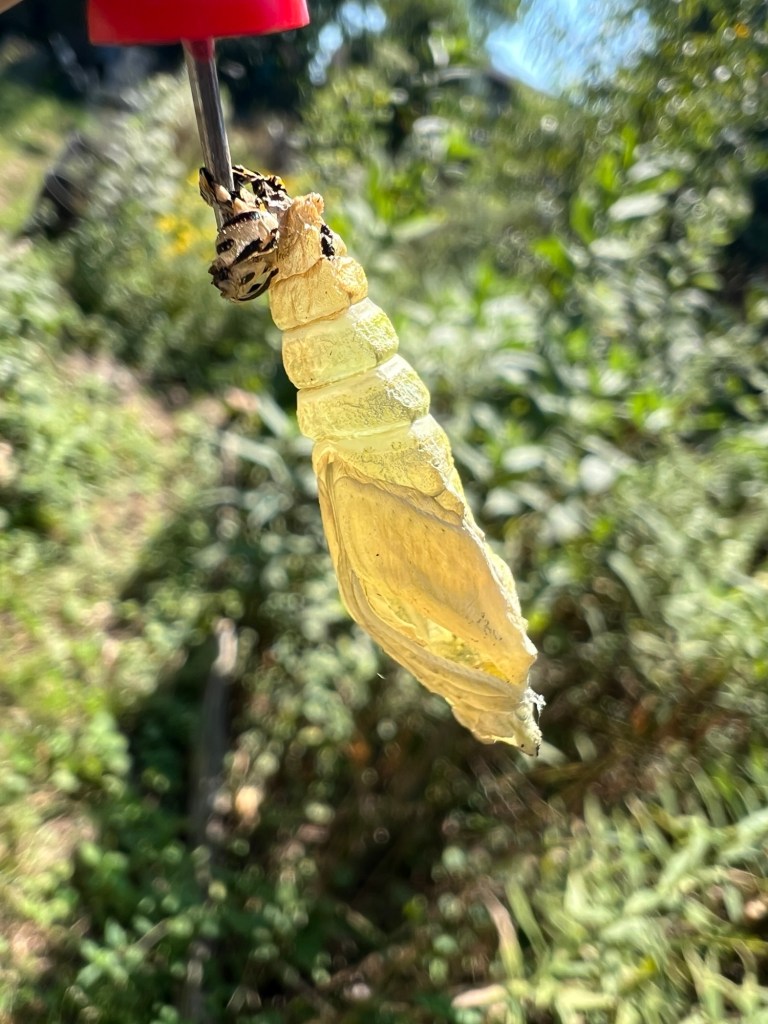
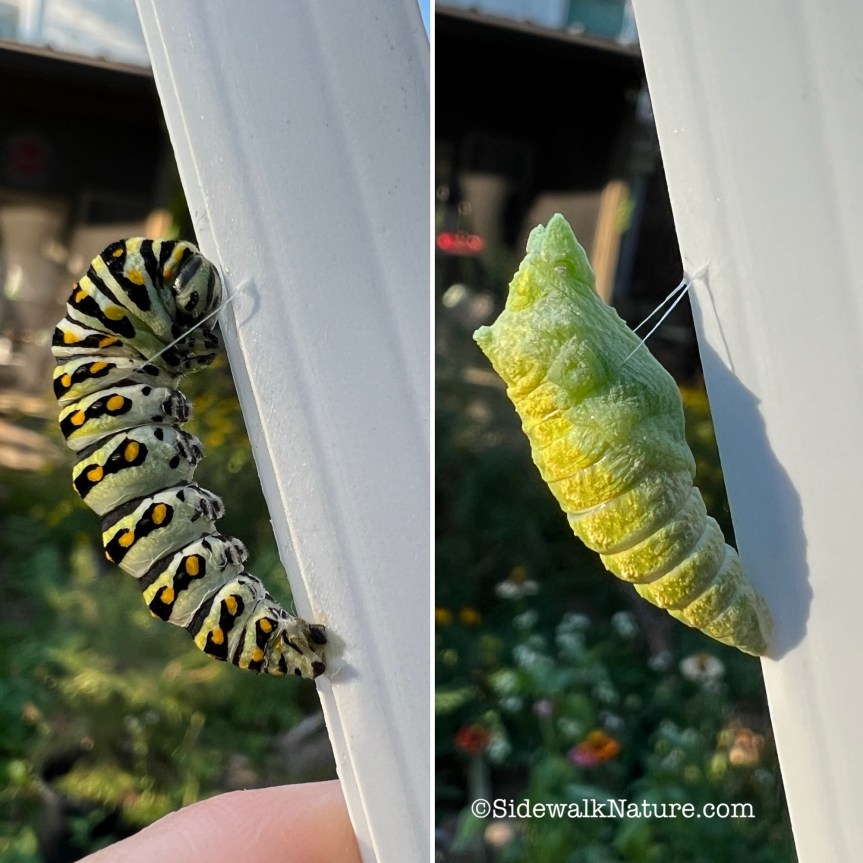
The pic below is the empty chrysalis the butterfly left behind, and you can see where the wad of the last molt got stuck at the cremaster. The wad is usually knocked free during the wiggly pupation dance, just before a new chrysalis calms down and pretends to be leaf. BUT, the wad did give me a safe place to pin the chrysalis to a sturdy mount: a place with something to climb, and with space for eclosion / emergence, where new wings would have room to stretch and fill and eventually, fly.
Host plants for Black Swallowtail caterpillars are plants in the carrot family, including the lovely native perennial Golden Alexanders (Zizia aurea), as well as common garden plants like fennel, dill, parsley, celery. (See my post about making new butterflies with a carrot top or a celery butt: link) Garden rue (Ruta graveolens) is another host.
For reference, below is a proper presentation of a Black swallowtail caterpillar right before and after pupation. See the cute girdle?
Fall color:
Any minute now, new Black swallowtail chrysalises will be brown, not green. The brown is camouflage for winter, because as fall approaches, these caterpillars will pupate but overwinter as a chrysalis, and then emerge as an adult butterfly in spring.
Look for chrysalises away from their host plant: they usually choose another plant when time to pupate. This is another good reason to “leave the leaves” and “save the stems.” Don’t cut, clean up, chip, or burn garden stems.
And it’s a great reason to come participate in the first “Leave the Leaves Day” at Warner Park Nature Center on November 15 (see below)!
Events where I speak or share or both:
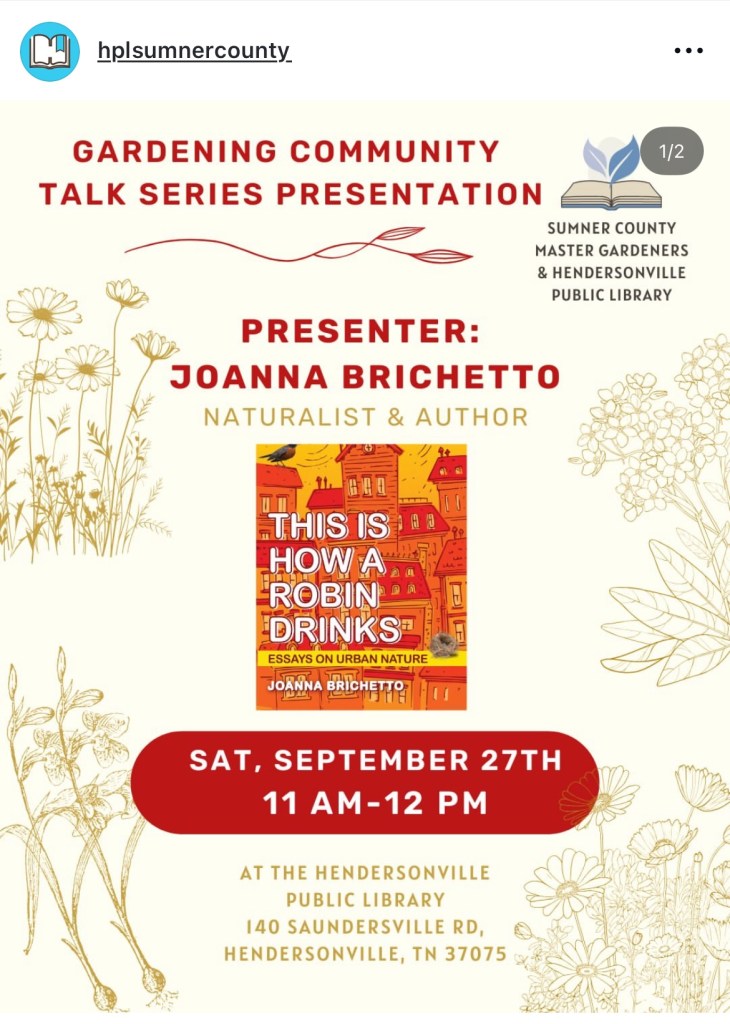
–Sept 27th at 11am, a talk at Hendersonville Public Library. I’ll bring seasonal show ‘n’ tells, and a caterpillar or two on a host plant. Also, mosquito eggs, larvae, and pupae for a Mosquito Bucket of Doom demo.
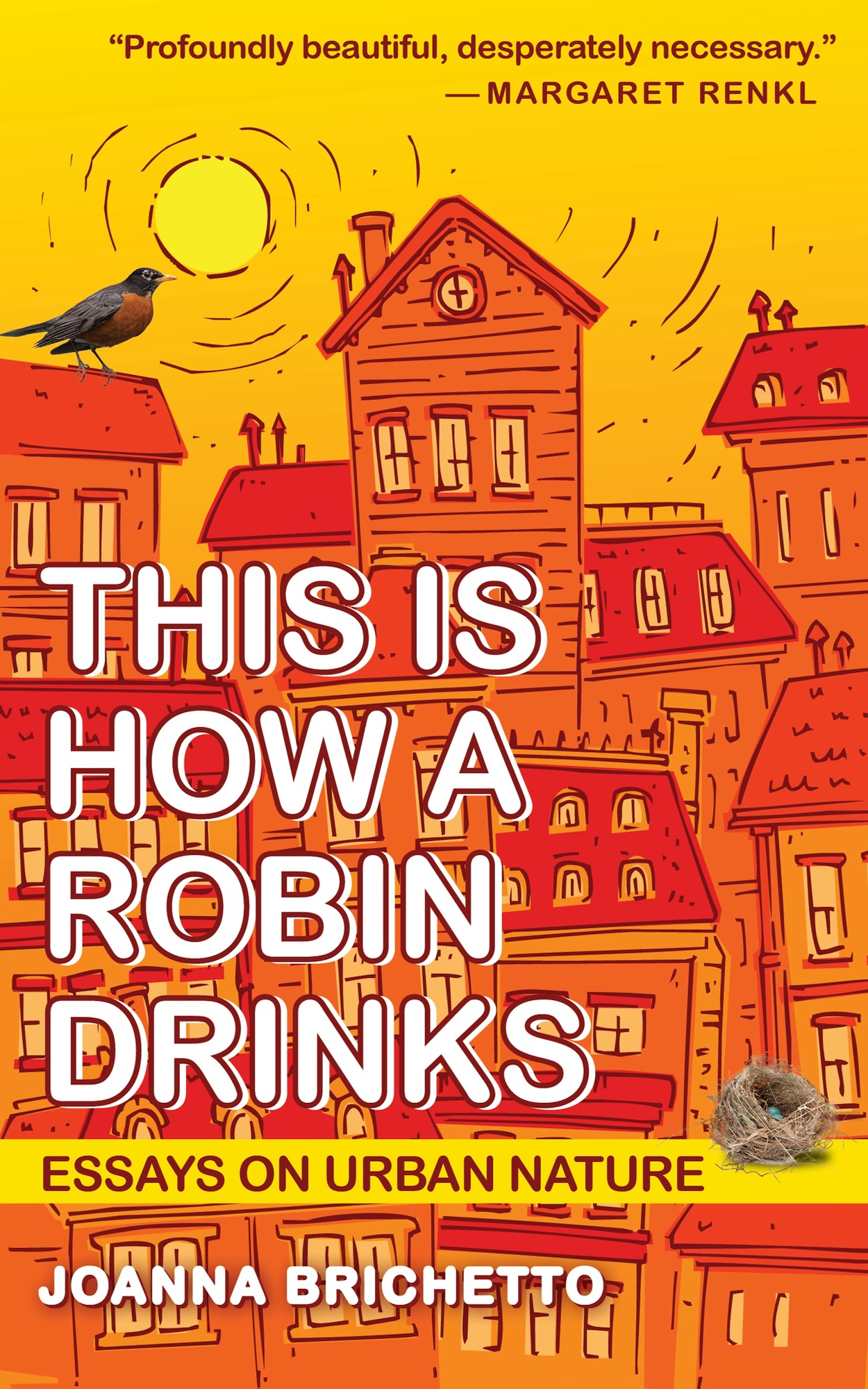
But this *is* an author event, so I’ll have books on hand, and will share a September excerpt from “This is How a Robin Drinks: Essays on Urban Nature.” Looking forward to good discussionsLibrary is at 140 Saundersville Road | Hendersonville, TN 37075)
**
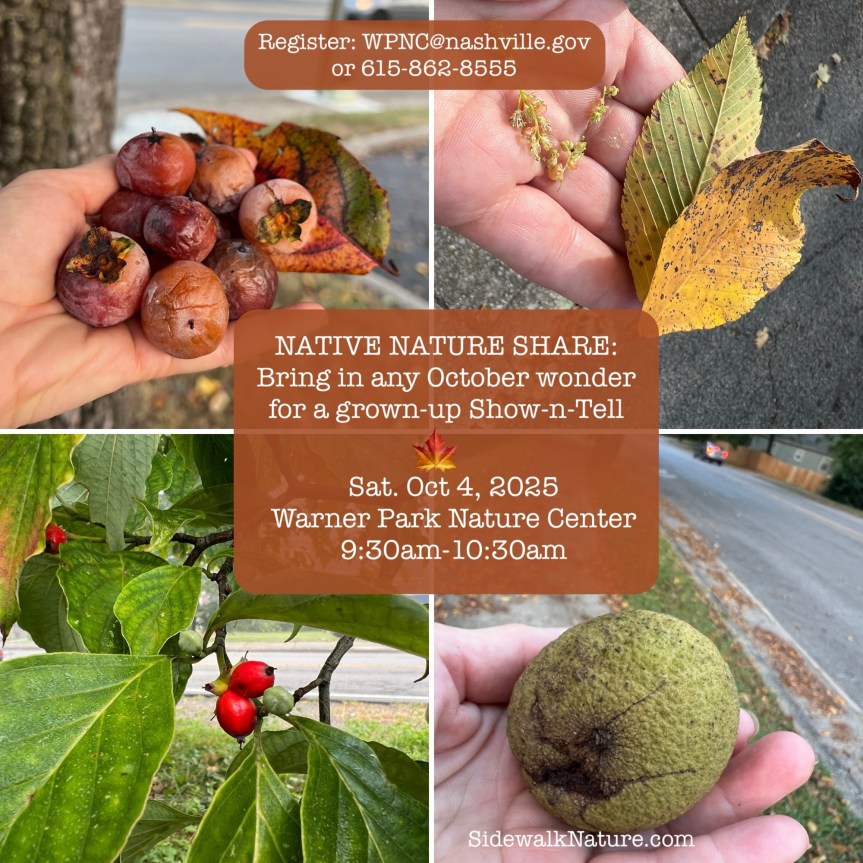
–Oct 4: “Native Nature Share,” Warner Park Nature Center, 9:30-10:30am.
Native Nature Share is a chance to learn from each other about our local habitats and to build community in an informal, supportive gathering. Bring a seasonal wonder, or just bring yourself.
Register: wpnc@nashville.gov or call WPNC at 615-862-8555.
**
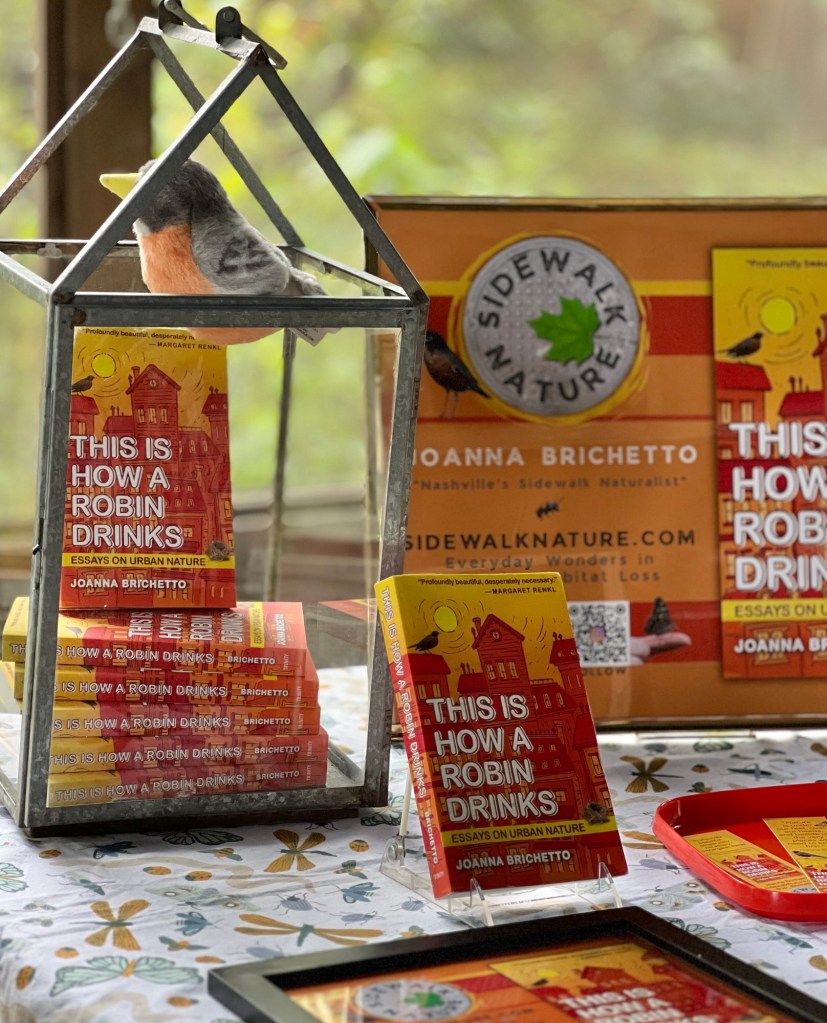
–Oct 11 (Saturday) from 11:15-12:30: Author table at the “Conservation in Action Expo.”
Wilderness Station in Barfield Crescent Park (Rutherford County, south of Murfreesboro). The gift shop has copies of “This is How a Robin Drinks!”
Afterwards, I’ll hang out with the Wild Ones Middle Tennessee table, so come see us.
The Conservation in Action Expo (link) runs from 9am – 3pm.
**
–Nov 1: Native Nature Share, Warner Park Nature Center, 9:30-10:30am.
–Nov 15: First annual “Leave the Leaves” Day at Warner Park Nature Center!
Saturday, Nov. 15 from 10am – 2pm.
“Did you know … Without leaves on the ground, we would not see fireflies, butterflies, moths, and many more of our favorite summer pollinators? Without leaves on the ground, the soil couldn’t rebuild its nutrients and structure in the forest and your garden? Leaves are nature’s mulch, compost, and so much more! Celebrate the bounty, beauty, and benefits of leaves during our first “Leave the Leaves” Day! Participants will be able to create leaf art, ID native trees, build leaf compost, experience leaf-litter critters, and learn why and how to “Leave the Leaves.”
More
SidewalkNature:
-Follow me on Instagram or Facebook, where posts are 100% nature.
-Subscribe to Sidewalk Nature to get an email when I update. I never share your info.
SUBSCRIBE
-General comment or question? Click Contact.
-Corrections, suggestions, new friends always welcome.
Bio:
Joanna Brichetto is a naturalist and writer in Nashville. Her book, This is How a Robin Drinks: Essays on Urban Nature, is an almanac of 52 true stories about the world “under our feet, over our heads, and beside us; the very places we need to know first.” She’s at work on her second book, “The Hackberry Appreciation Society,” and you can find her at SidewalkNature.com (“Everyday wonders in everyday habitat loss”) and on Instagram @Jo_Brichetto.
 SIDEWALK NATURE