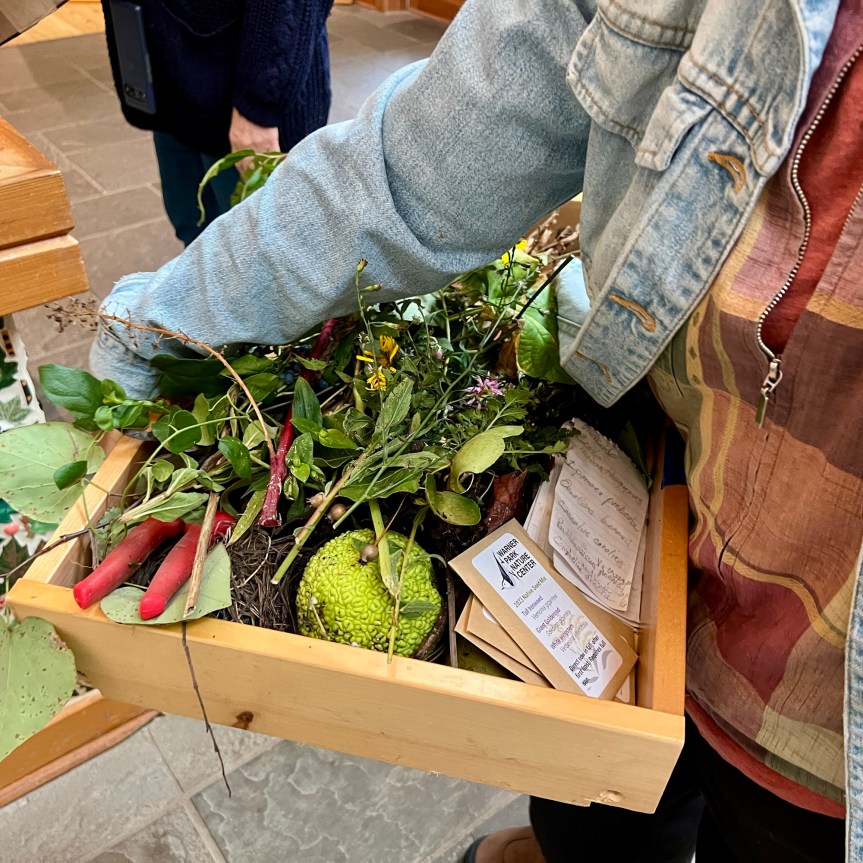
Here are some highlights from the past few Native Nature Shares. What is Native Nature Share? It’s a monthly get-together at Warner Park Nature Center: “an opportunity to learn from each other about our local habitats, and to build community in an informal, supportive gathering.”
Basically, It’s show ‘n’ tell for grownups. Everyone is welcome. All you have to do is bring one seasonal, right-now wonder that you think is urgently interesting and probably native: a plant, leaf, fossil, rock, stick, feather, fungus, bug, whatever.
You can ask the group to identify your treasure or you can tell us what it is, but either way, we’ll talk about it, and we’ll learn from each other.
The collective enthusiasm and experience and curiosity around that table is itself a wonder.
It’s like a Book Group, but without the guilt of not reading the book.

I’m showing and telling you about the Show ‘n’ Tell for three reasons:
1) if you are local, you are welcome to join us
2) Native Nature Share is an idea easy to replicate anywhere, anytime
3) it’s a friendly way to connect with nearby nature, including humans
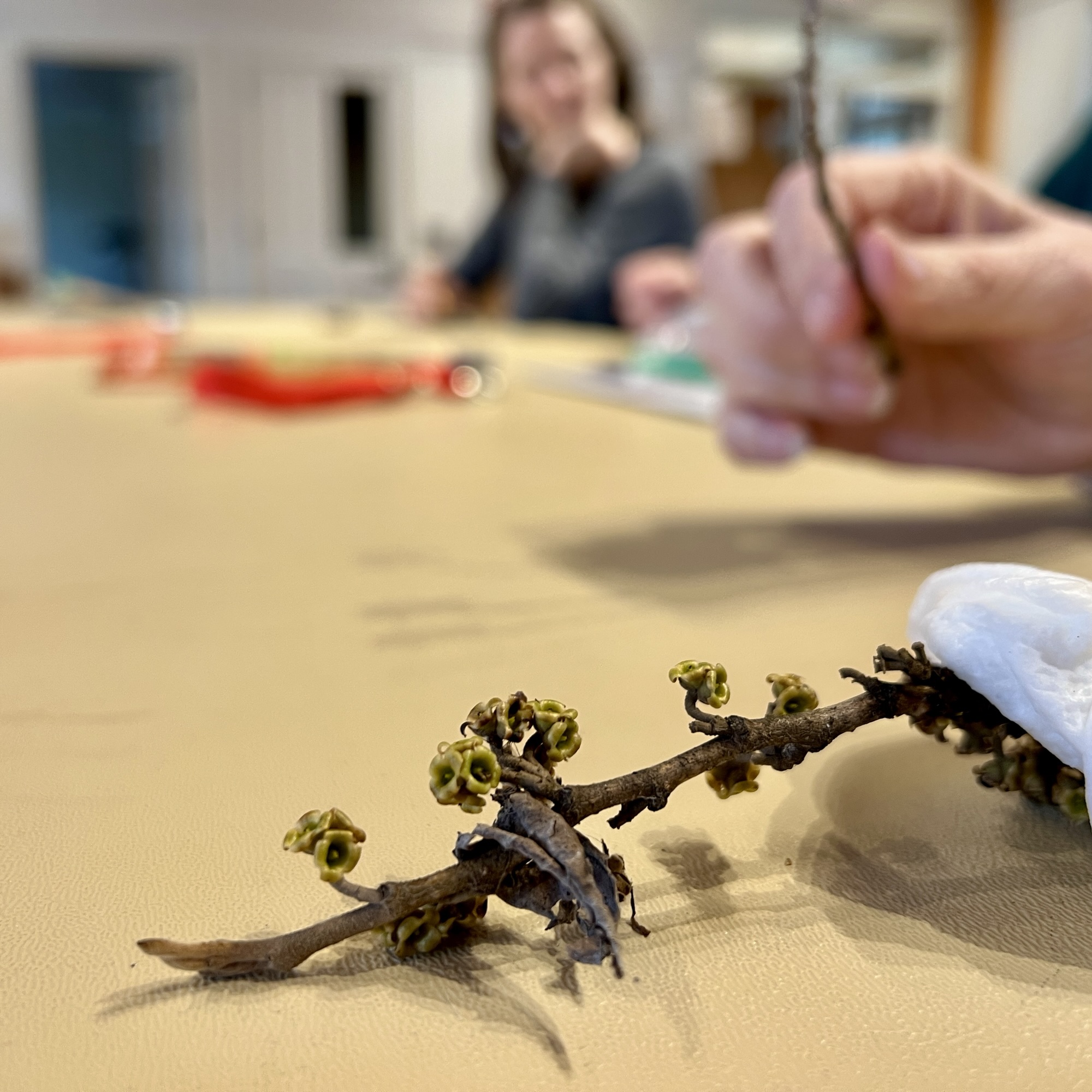

One of the marvels we enthused over this month was a Pipevine fruit capsule (above), full of improbably flat, triangular seeds. We talked about the Pipevine Swallowtail butterfly who lays eggs only on Pipevine, we talked about how Pipevine used to be a common front porch plant and could be again, and then I mentioned how amazing it is to walk outside my door and watch the entire lifecycle of a butterfly species right there on the porch, every day, all summer.
That’s when Vera offered to pot up a tray of the seeds, so that we could all get a chance to grow our own Pipevines and Swallowtails!


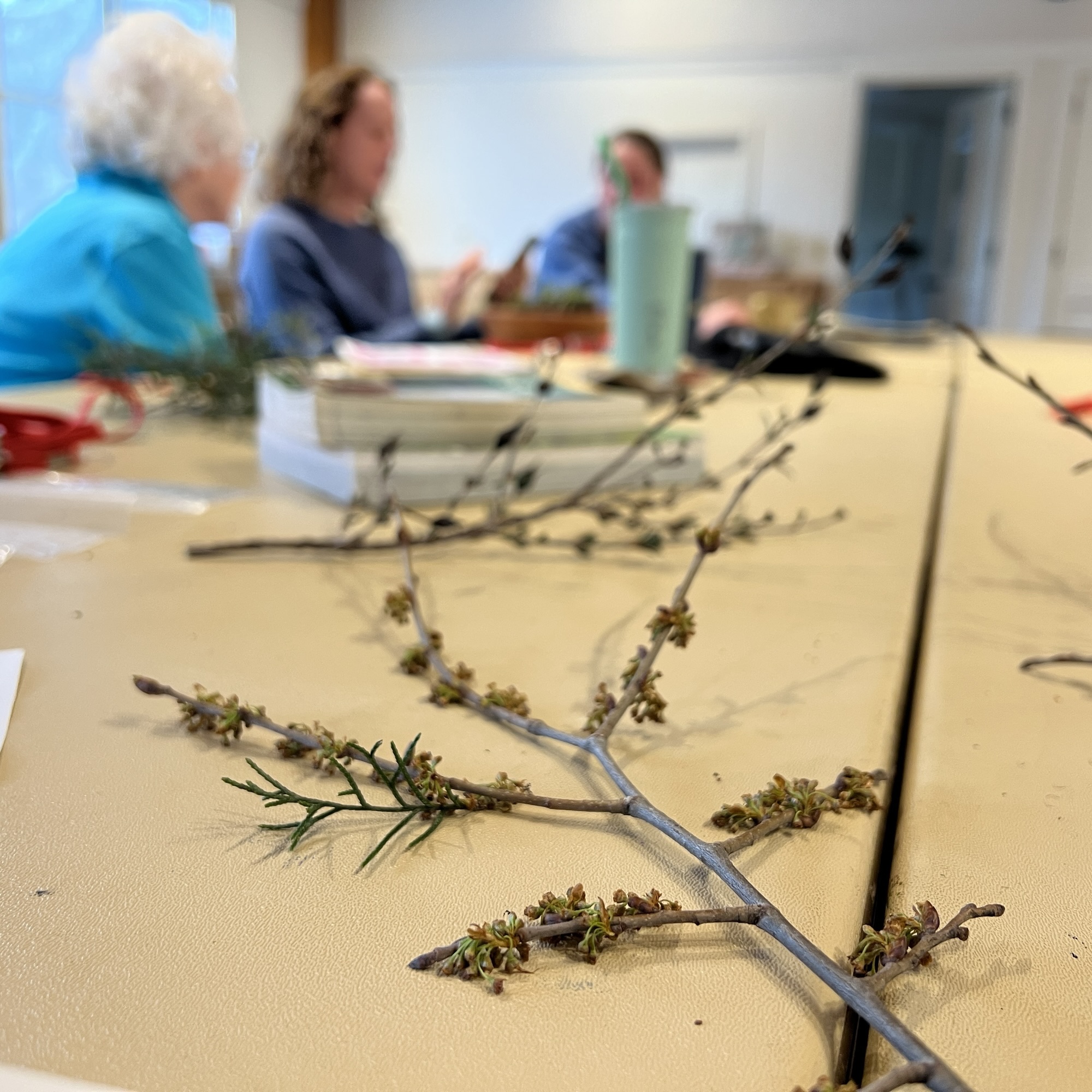
And here are more seasonal wonders from recent meetings:


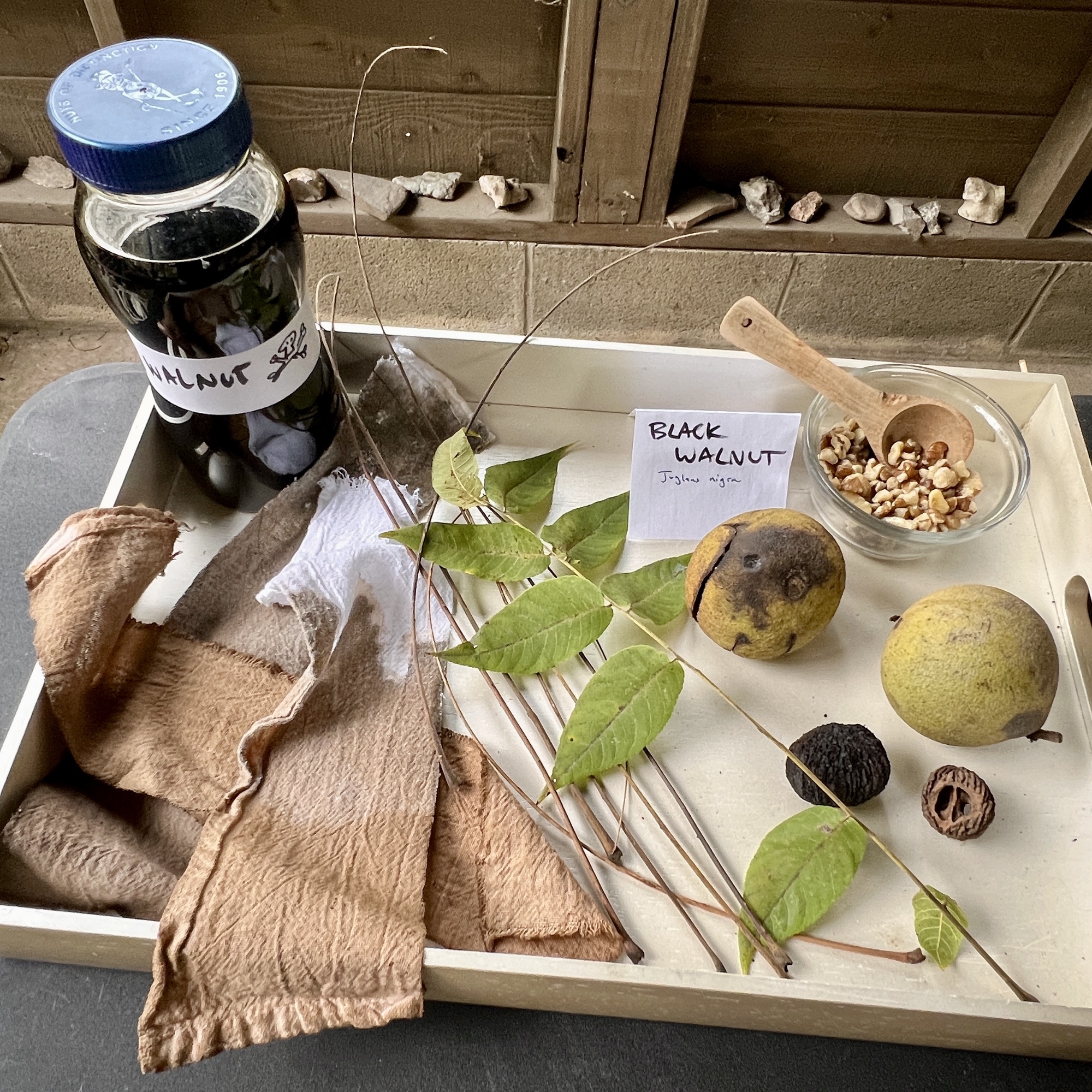

Bonus: If the weather’s decent, we often slip outside for exploration suggested by something we’ve just talked about. And at Warner Park Nature Center, “outside” is heavenly.
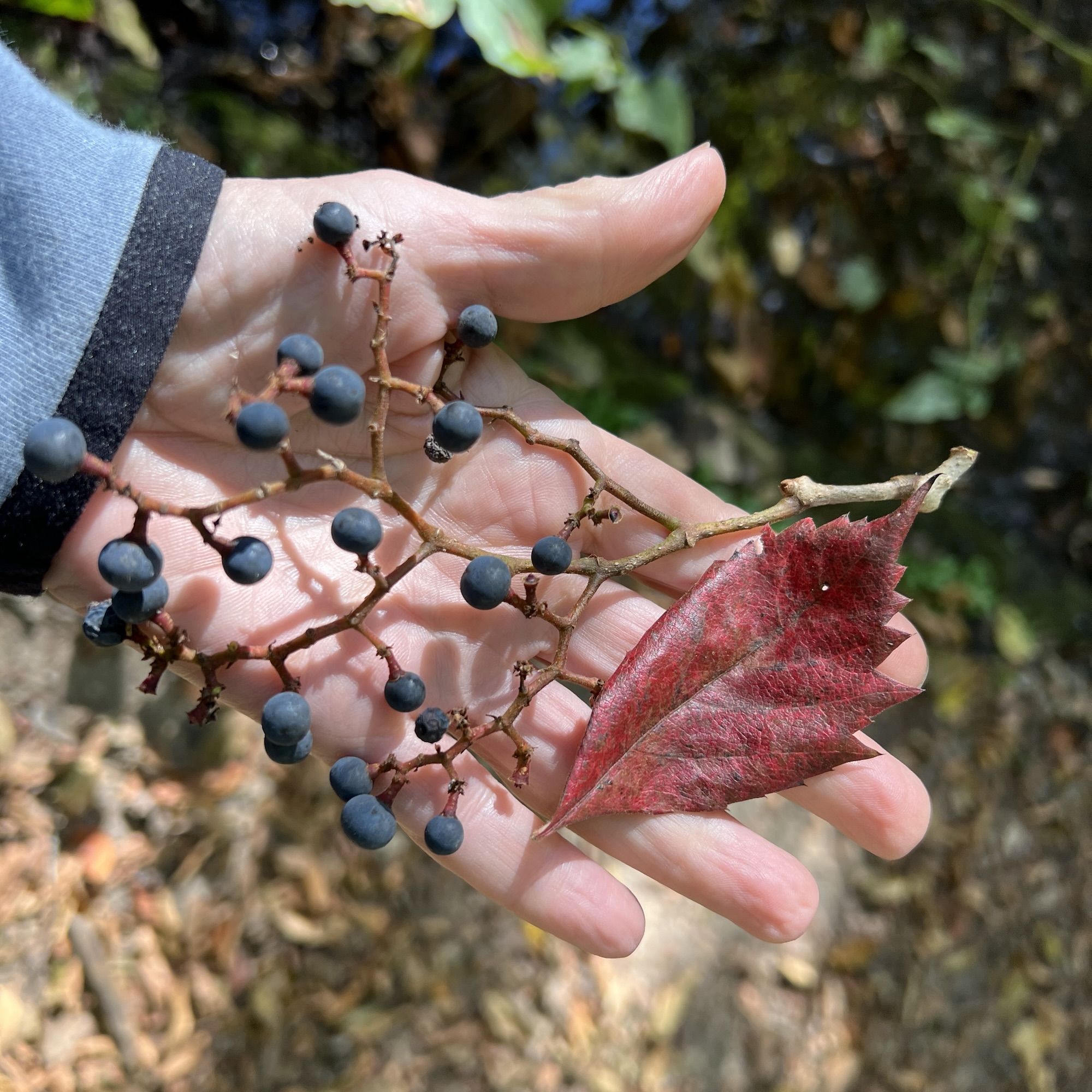

The idea for a monthly Native Nature Share started when I needed to schedule a book reading for This is How a Robin Drinks. I knew I wanted it to be at Warner Park Nature Center: it’s my “home” park and one of my favorite places in the world, and it’s where some of the essays are set. But how to make it more of a participatory event, rather than a solo?
By inviting guests to bring something for a group Nature Show ‘n’ Tell.
And they brought!
We sat at tables facing each other, and ended up with plenty of “urgently interesting” wonders to pass around, feel, eyeball, sniff, and discuss.
The Show ‘n’ Tell was so much fun that Vera Roberts, director of Warner Park Nature Center, suggested we do it every month.
The next Native Nature Share is at Warner Park Nature Center on March 15, 2025. Registration here: https://warnerparks.org/event/native-nature-share-a-season-show-n-tell-for-grownups/
If you don’t have a seasonal wonder to share, come anyway.
Think of it as a monthly, informal check-in to find out what people are noticing, wondering at, and wondering about.
More
SidewalkNature:
-Follow me on Instagram or Facebook, where posts are 100% nature.
-Subscribe to Sidewalk Nature to get an email when I update. I never share your info.
SUBSCRIBE
-General comment or question? Click Contact.
-Corrections, suggestions, new friends always welcome.
Bio:
Joanna Brichetto is a naturalist and writer in Nashville. Her book, This is How a Robin Drinks: Essays on Urban Nature, is an almanac of 52 true stories about the world “under our feet, over our heads, and beside us; the very places we need to know first.” She’s at work on her second book, “The Hackberry Appreciation Society,” and you can find her at SidewalkNature.com (“Everyday wonders in everyday habitat loss”) and on Instagram @Jo_Brichetto.
 SIDEWALK NATURE