Purple Martin “migratory roosting” is a right-now, must-see wonder in downtown Nashville.

Go see them while you can. Their nightly, massive, communal roost won’t last long, and no one — not even a Purple Martin — knows if they’ll be back next year.
The birds have been in Tennessee since March, but come summer, after they’ve raised families, they start teaming up to socialize, eat, and prepare for the long journey to their winter homes in South America.
This year, around 200,000 Purple Martins have chosen to team up outside Nissan Stadium, where bird conservation heroes got permission to host “Purple Martin Watch Parties.” The Warner Park Nature Center and BIRD program bring an information table and are joined by experts from Nashville Urban Bird City and BirdSafe Nashville, the Nashville Zoo, the Nature Conservancy, as well as many birders, banders, researchers, and habitat-restorers. One fan had driven in from 4 hours away.
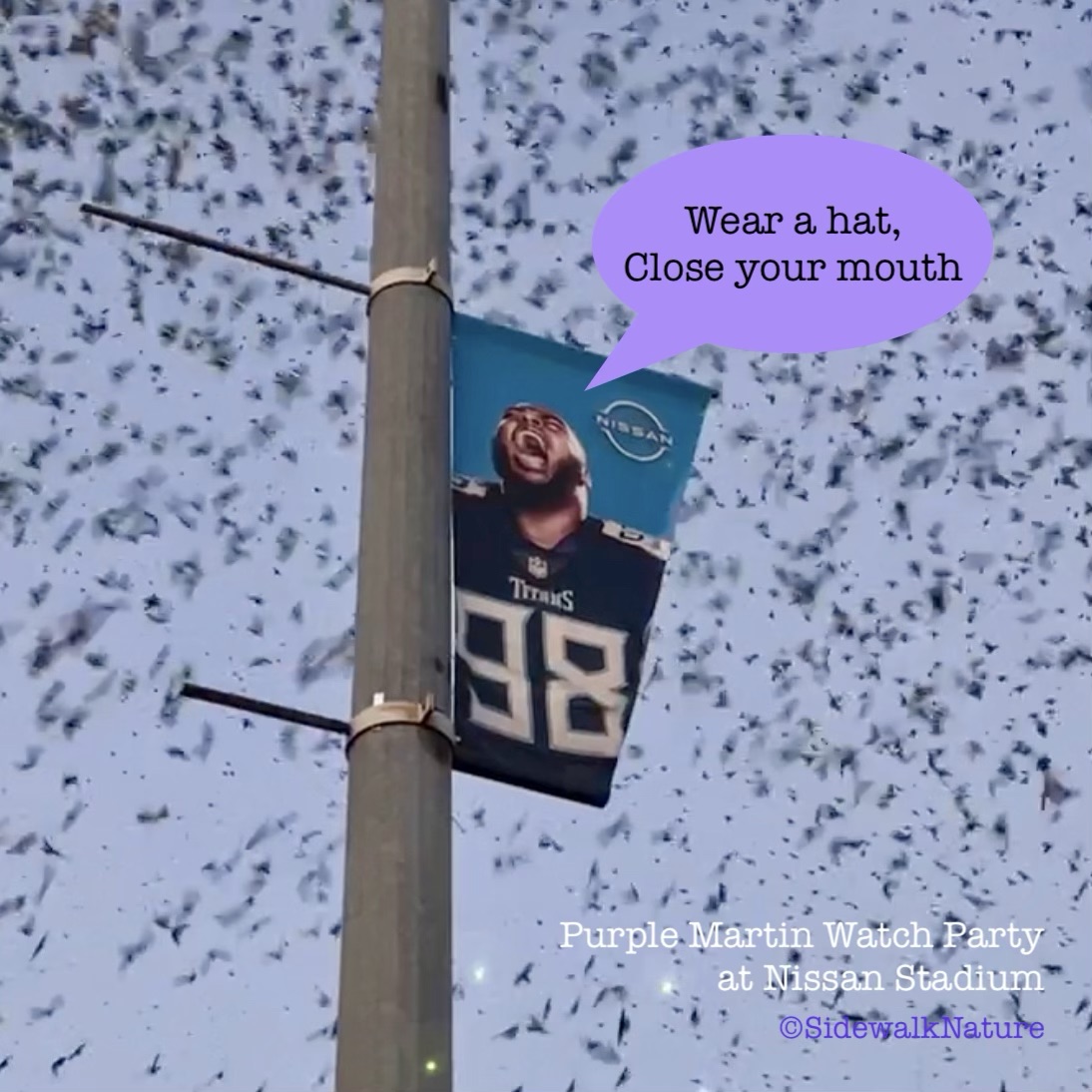
But even when we can’t access Parking Lot H for official Watch Parties, Nashville’s pedestrian bridge is always available, and with a bigger view of sky. Lean on the rail, catch a breeze, and watch thousands of birds start flying to the river from 360 degrees. They begin around 7:45p, then the few become the many, and the many become the AMAZING.
From the bridge, you won’t be able to watch the Grand Finale, when birds land on their target trees to bunch up and rest till dawn. But there are compensations. You can watch tourists land on their target pedal-taverns, and it’s always a thrill to dilly-dally above the Cumberland River at sunset.
Tell a Friend
What I learned the next morning as I chatted with several neighbors: not everyone has heard about our annual Purple Martin Spectacle. One neighbor said, “We heard about the cicadas for weeks, but not a word about these birds?”
So let’s keep spreading words.
We protect what we love, but we can’t fall in love with something we haven’t met.
“Purple Rain”
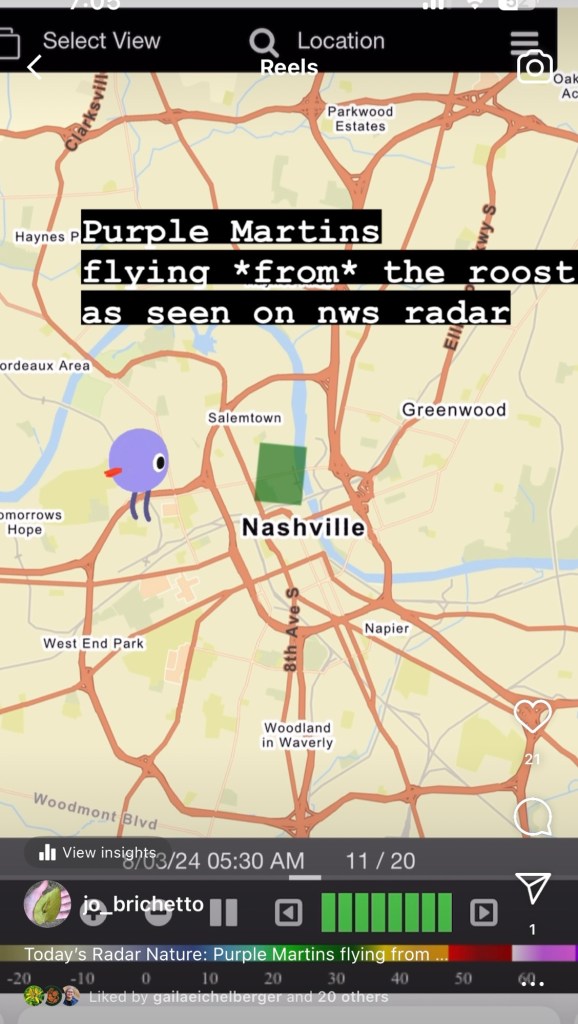
And what I learned this morning was that we can see the roosts when we are miles away, just by zooming in on the National Weather Service radar page. When the birds land and take off, they show up as rain.
What do Purple Martins need?
-Yards free of pesticides, herbicides, artificial fertilizers, weekly leafblowers, mosquito contracts.
-Yards with more native flowers, vines, shrubs, and trees, with their attendant invertebrates (food).
-Bird-safe windows and safe exterior lights—especially during migration—as described at BirdSafeNashville, where you can take the “Lights-Out Nashville Pledge” (link).
-Artificial homes provided by humans. (Start here: link.)
Resources:
–Nashville Urban Bird City for updates about Purple Martin Watch Parties, Purple Martin Patrol, the Urban Bird Treaty, local birding, and other resources: @NashvilleUrbanBird on Instagram, or website, here.
–BirdSafe Nashville (website) (@BirdSafeNashville)
–Great place to see Purple Martin nests: Warner Park Nature Center field (link).
–[National] Purple Martin Conservation Association (link): info, research, and a shop w/ approved martin housing.
–Three New York Times Op-Eds about Nashville’s Purple Martins by Margaret Renkl that my neighbors obviously missed: from 2020, 2022, 2023.
More
SidewalkNature:
-Follow me on Instagram or Facebook, where my posts are 100% nature.
-Subscribe to Sidewalk Nature to get an email when I update. I never share your info.
SUBSCRIBE
-General comment or question? Click Contact.
-Corrections, suggestions, new friends always welcome.
Bio:
Joanna Brichetto is a naturalist and writer in Nashville, the Hackberry-tree capital of the world.
She writes about everyday marvels amid everyday habitat loss at SidewalkNature.com and Instagram (@Jo_Brichetto); and her essays have appeared in Short Reads, Brevity, Ecotone, Fourth Genre, Hippocampus, The Hopper, Flyway, The Fourth River, and other journals.
Her first book is forthcoming from Trinity University Press: This is How a Robin Drinks: Essays on Urban Nature.

 SIDEWALK NATURE