

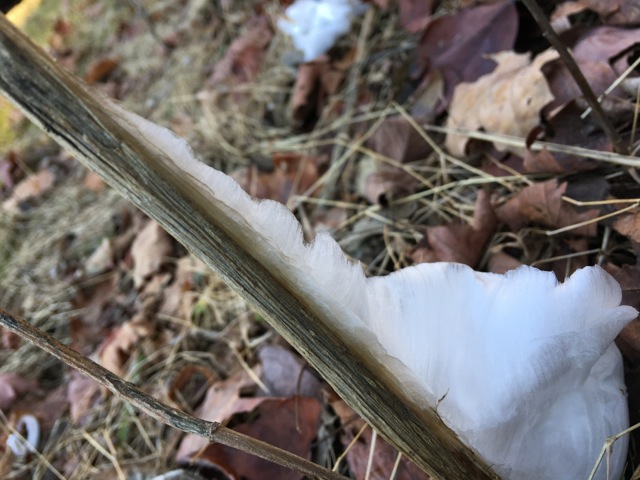
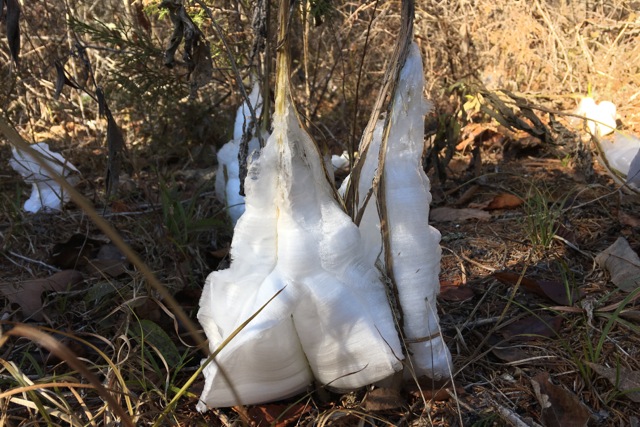
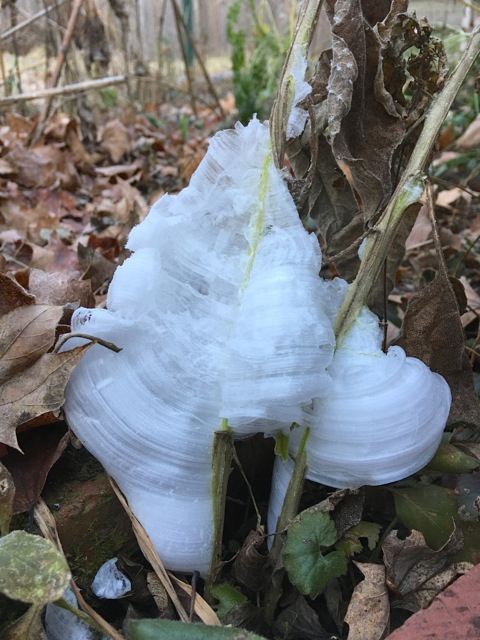
Frostflowers are neither frost nor flower, but are “blooming” right now.
Frostflowers form when air temperature drops below freezing while warmer groundwater rises to extrude itself through the convenient conduit of a real flower stem, especially if that stem is a white crownbeard (Verbesina virginica). The water freezes on contact with air, and fresh waves push older crystals forward and out. A few other plants can produce frostflowers, but white crownbeard is such a common enabler that the plant’s most common common name is frostweed.
For photos of the real flowers of white crownbeard (which are white!) see this entry at my friend Gail’s native-gardening blog, Clay and Limestone. The plant is lovely, native, and an important nectar source for insects (including Monarch butterflies), and “the foliage is a larval host plant for the Summer Azure, Bordered Patch, and Silvery Checkerspot butterflies.” (source). Birds eat the seeds in fall and winter.
Almost as easy as growing frostflowers.


 SIDEWALK NATURE
Extraordinary! Will be many more with the cold of this day! First time in recognizing these. So many thanks for alerting me!
I hope you have some near you! Maybe at the nature center down the road?